 GambleLore
Introduction to Risk-Free Blackjack Practice in 2026
Players searching for effective ways to build blackjack skills without risking real money benefit greatly from structured home drills. These exercises target core areas such as memorizing basic strategy charts, refining decision speed under pressure, and recreating authentic table conditions using only a deck of cards or free digital applications. In 2026, many online platforms feature evolving rule variations including modified surrender options, multi-deck configurations, and updated payout structures, making targeted practice essential for consistent results.
Home practice removes financial pressure while allowing players to focus purely on technique and accuracy. This approach leads to measurable improvement over time through repeated drills and performance tracking. The following sections detail comprehensive routines, real-world examples, progressive difficulty levels, and strategies for adapting to current rule sets. By committing to regular sessions, players can develop the consistency needed for both online and live casino environments.
Setting Up Your Home Practice Environment
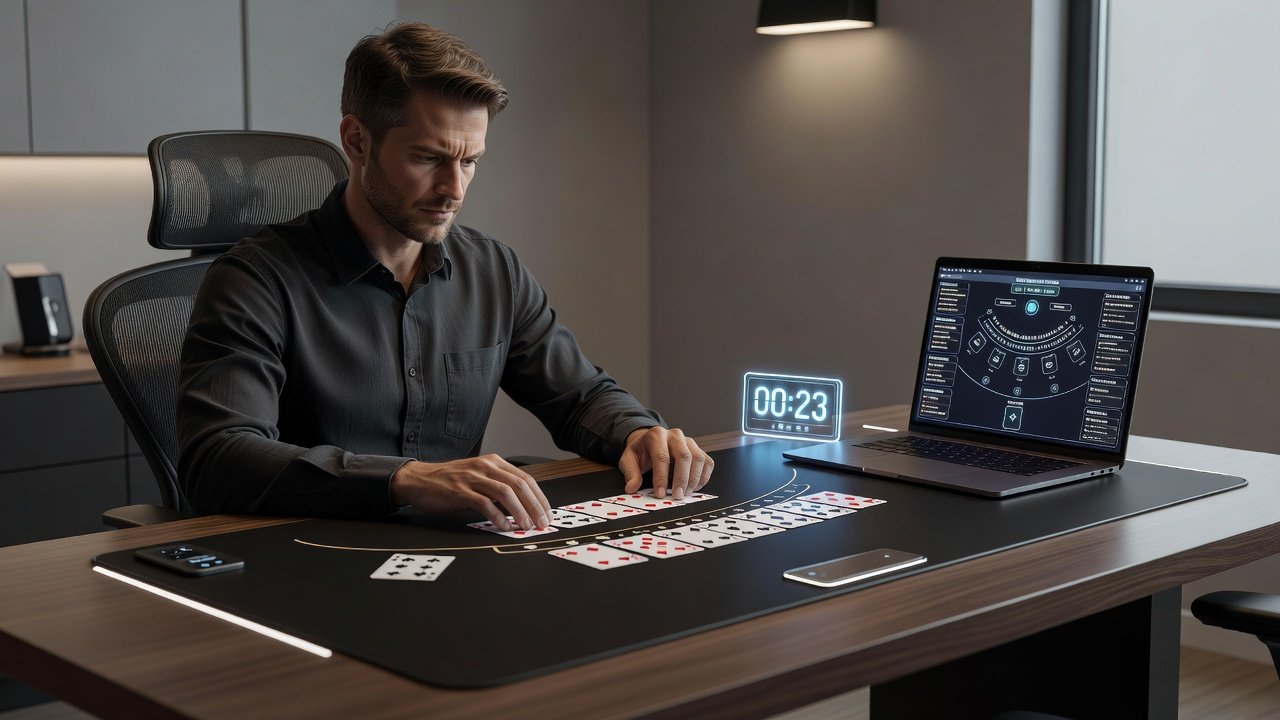
Creating an effective practice space requires minimal investment. Essential items include one or two standard decks of cards, printed or digital basic strategy charts, a stopwatch or timer application, and a notebook for logging results. Many free online trainers and simulators are available to supplement physical cards, allowing users to practice specific rule variations common in 2026 games.
Select a distraction-free area with adequate lighting and a flat surface. Begin each session by reviewing the full strategy chart for five to ten minutes. This reinforces memory before any hands are dealt. Players should also verify the exact rules of their target games, such as whether the dealer hits or stands on soft 17, to ensure drills match real conditions.
Drill 1: Basic Strategy Chart Memorization
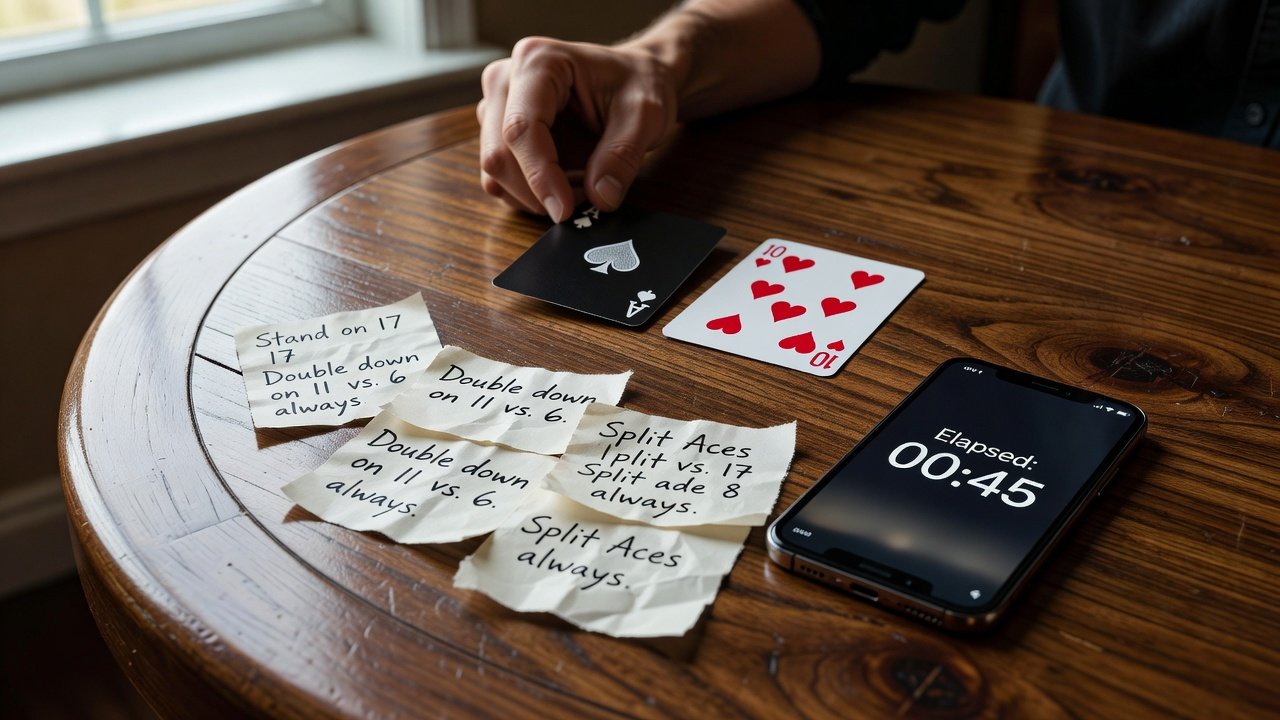
Memorization forms the foundation of all successful blackjack play. Break the chart into manageable sections: hard totals, soft totals, and pair splits. Start with a focused approach over the first week by isolating one category per day. For example, dedicate the initial three days exclusively to hard hands ranging from 8 through 17 against each possible dealer upcard.
Progress to soft hands and pairs in subsequent days. Use repetition techniques such as covering portions of the chart and verbally stating the correct action before checking. An example routine involves dealing 100 hands daily while referencing the chart only when uncertain, then scoring accuracy. Aim to reach and maintain 95 percent correctness before moving to timed variations. Real examples show that players who isolate problematic sections, like soft 18 decisions, see faster gains than those attempting full-chart memorization immediately.
Drill 2: Decision Timing Practice
Speed matters at live tables where hesitation can lead to mistakes or unwanted attention. Introduce a strict time limit using a smartphone timer set to 10 or 15 seconds per hand. Deal cards face up and commit to an action before the timer expires, then immediately verify against the chart.
A sample 20-minute session consists of 50 hands completed in sequence. Record instances where the time limit was exceeded or the decision was incorrect. Focus subsequent rounds on recurring trouble spots such as doubling on soft totals or splitting low pairs. Over two weeks of daily practice, most players reduce average decision time by 40 percent while maintaining high accuracy.
Drill 3: Simulating Table Scenarios
Full scenario simulation bridges the gap between isolated drills and actual play. Use multiple decks shuffled together to replicate casino penetration and deal to two player positions plus the dealer. Incorporate realistic actions including splitting, doubling, and insurance decisions when appropriate.
Build progression across difficulty levels. Level one covers basic pair splits for 30 hands. Level two adds soft hand doubling and late surrender choices. Level three introduces multi-hand play with varying bet sizes simulated through markers. An example weekly schedule alternates these levels while logging every deviation from optimal strategy. This method helps players internalize adjustments for different dealer upcards and personal totals under varied conditions.
Tracking Accuracy Metrics for Improvement
Consistent measurement drives progress. Maintain a simple spreadsheet or notebook with columns for date, total hands practiced, accuracy percentage, average seconds per decision, and notes on frequent errors. Weekly reviews reveal patterns, such as consistent mistakes on hard 16 versus dealer 10.
Players commonly advance from 70 percent accuracy in week one to 92 percent or higher by week three when following structured tracking. Celebrate incremental gains and adjust drill emphasis accordingly. This data-driven method ensures practice remains targeted rather than repetitive.
Adapting Drills to 2026 Online Rule Variations
Online environments in 2026 often include unique elements like side bets, dynamic shuffling, or altered payout ratios. Practice with free demo versions of popular platforms to experience these differences firsthand. Cross-reference decisions with updated charts available on wizardofodds.com and training resources from blackjackapprenticeship.com. Additional guidance appears on blackjackinfo.com.
Adjust drills by modifying charts for specific rules before each session. This preparation prevents surprises when transitioning to live play and supports better long-term results across multiple game types.
Common Mistakes to Avoid During Home Drills
Many beginners overlook insurance bets or misapply pair-splitting rules under time pressure. Another frequent error involves ignoring table position when simulating multiple hands. Correct these by dedicating isolated drill blocks to the problematic area and reviewing video recordings of your sessions if possible.
Avoid rushing through accuracy checks, as this undermines the purpose of deliberate practice. Instead, pause after every 20 hands to analyze patterns and reinforce correct responses through immediate repetition.
Transitioning Drills to Live Casino Play: Short FAQ
How long before drills translate to real tables?
Most dedicated players observe noticeable improvements after completing 800 to 1200 practice hands, which typically occurs within three to four weeks of 30-minute daily sessions.
Should I use the same chart in casinos?
Yes, but always confirm house rules upon arrival. Use mental adjustments developed during drills for variations such as dealer peek procedures or surrender availability.
What if I make mistakes during live sessions?
Document errors immediately after play and revisit the corresponding drill section the following day. This targeted reinforcement accelerates correction.
Can I incorporate bankroll management into home practice?
Yes, simulate bet sizing with chips or tokens while maintaining strategy focus. This adds realism without financial exposure.
How do online multi-hand games differ in drills?
Practice dealing to three positions simultaneously and track decisions across all hands to mirror the increased cognitive load found in many 2026 online formats.
Conclusion
Structured home drills provide a proven pathway to blackjack mastery without any bankroll risk. By combining chart memorization, timed decision practice, and realistic scenario simulations, players achieve measurable gains in accuracy and speed. Regular tracking, adaptation to 2026 rule variations, and attention to common pitfalls ensure steady progress. With consistent effort, these routines prepare participants for confident performance in both online and live casino settings.

No comments yet. Be the first!