 GambleLore

Introduction: Blending Strategies for Modern Casino Success
In 2026, players are increasingly turning to mixed casino strategies that combine elements from blackjack, roulette, and baccarat. This approach allows for flexibility across table games while managing variance effectively. The following case studies highlight real-world applications, focusing on player backgrounds, tactic selection, session adaptations, and measurable outcomes such as improved win rates and bankroll growth. These anonymized examples draw from observed trends in both land-based and online casinos, with strong emphasis on practical risk management to promote sustainable play. For authoritative guidance on responsible gaming practices, consult the National Council on Problem Gambling.
Understanding the appeal of mixed strategies starts with recognizing how single-game focus can lead to stagnation. By rotating between games, players can exploit shifting table dynamics, psychological resets, and probability edges that emerge at different times. This method has gained traction among both recreational and semi-professional gamblers seeking consistent, long-term results rather than short bursts of luck.
Why Mixed Strategies Work in 2026 Casinos
Traditional single-game approaches often limit adaptability when tables turn cold or house edges compound over extended play. Mixed strategies enable players to switch between games based on table conditions, personal bankroll status, and observed patterns. Key rationale includes diversifying risk exposure and capitalizing on favorable odds where they appear naturally during sessions.
Blackjack offers skill-based elements with house edges as low as 0.5% using basic strategy, making it a foundation for many blends. Roulette introduces even-money bets with clear probability structures around 48.6% for outside wagers, while baccarat provides straightforward banker/player decisions with house edges near 1.06% on banker bets. Blending them creates a dynamic session flow that can stabilize results over time by preventing overexposure to any single variance source. Players also benefit from mental breaks when switching games, reducing fatigue-related errors that often plague prolonged single-table sessions.
Case Study 1: From Conservative Play to Balanced Blending
Player A, a mid-level recreational gambler with a $5,000 starting bankroll, began sessions focused solely on blackjack. After reviewing performance data from early 2026, they incorporated roulette for variance control and baccarat for quick decisions during losing streaks. Their background included weekend visits to regional casinos and a preference for structured play over impulsive betting.
Strategy Selection Rationale: Blackjack formed the core due to its low house edge and decision-making depth. Roulette was added for even-money outside bets to recoup losses gradually without high volatility. Baccarat served as a low-stress option during high-pressure moments when emotional control was tested.
Step-by-Step Session Breakdown:
- Start with 60% bankroll allocation to blackjack using basic strategy charts and minimum table bets.
- Shift 25% to roulette after two consecutive losses, targeting red/black or odd/even bets with flat progression.
- Allocate remaining 15% to baccarat when table momentum shifts or to close out sessions on simpler decisions.
Adaptation During Sessions: When blackjack tables tightened due to unfavorable card distributions, Player A moved to baccarat to maintain momentum without increasing bet sizes aggressively. Real-time observation of dealer patterns prompted timely switches that preserved capital.
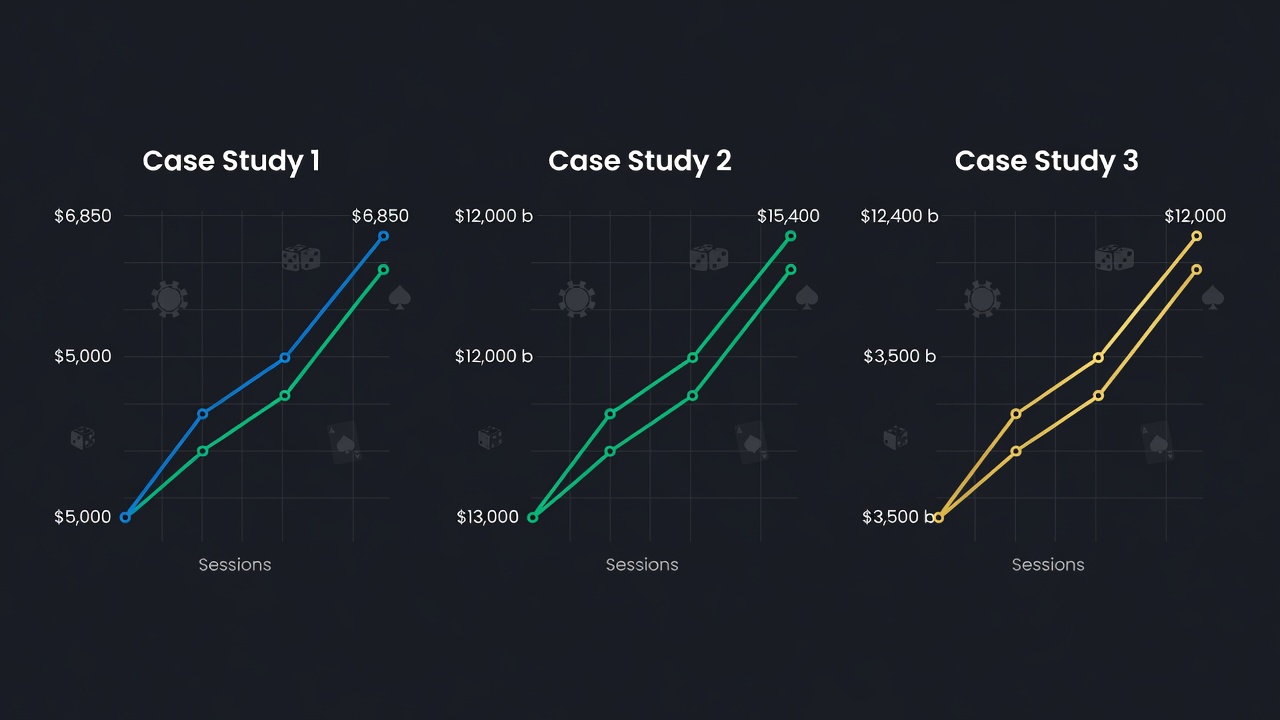
Risk Management Example: Strict 2% per-bet limit prevented rapid depletion even during extended play. Before-and-after data showed an initial $5,000 bankroll growing to $6,850 after 12 sessions, with a 62% win rate across mixed games and average session length of 90 minutes.
Case Study 2: Scaling Up with Data-Driven Adjustments
Player B entered with a $12,000 bankroll and prior experience in roulette. They integrated blackjack card counting elements and baccarat pattern tracking for a more analytical blend. Coming from a professional background with experience in data analysis, this player emphasized record-keeping throughout every session.
Strategy Selection Rationale: Roulette provided the entry point for comfort and familiarity, while blackjack added skill depth through count-based decisions. Baccarat balanced the portfolio with its near 50/50 outcomes and minimal decision fatigue.
Step-by-Step Session Breakdown:
- Begin sessions allocating 50% to roulette columns for steady progression and moderate risk.
- Transition 30% to blackjack upon identifying favorable dealer upcards or positive running counts.
- Reserve 20% for baccarat tie bets only during confirmed streaks or as a closing game.
Adaptation During Sessions: Real-time tracking of shoe composition in blackjack prompted switches to baccarat when counts turned unfavorable. This fluid movement helped avoid prolonged negative expectation periods.
Risk Management Example: Session stop-loss at 15% of daily allocation and win goals at 25% ensured disciplined exits. Bankroll progressed from $12,000 to $15,400 over 18 sessions, achieving a 58% overall win rate with detailed logs showing reduced drawdown periods.
Case Study 3: Short-Session Blending for Busy Players
Player C, with a $3,500 bankroll and limited time due to work commitments, focused on rapid-cycle mixed play across all three games in 45-minute blocks. Their approach prioritized efficiency while maintaining discipline across multiple short visits per week.
Strategy Selection Rationale: Emphasis on high-frequency, low-duration games allowed efficient use of limited time while spreading exposure across different probability structures.
Step-by-Step Session Breakdown:
- 15 minutes blackjack with minimum bets and basic strategy to build early stability.
- 15 minutes roulette on even-money wagers for potential quick recovery plays.
- 15 minutes baccarat on banker bets to finish with lower cognitive load.
Adaptation During Sessions: Early wins in one game triggered slight bet increases only within predefined limits, while losses prompted immediate game switches rather than chasing.
Risk Management Example: Time-based exits combined with a 10% stop-loss yielded consistent small gains. Bankroll advanced from $3,500 to $4,200 after 25 short sessions at a 55% win rate, demonstrating how structured brevity can compound positively.
Bankroll Management Deep Dive
Effective mixed strategies rely heavily on disciplined bankroll allocation. Players should divide their total funds into session-specific portions, typically no more than 10-15% per visit, and further subdivide across games. Tracking every bet in a simple spreadsheet reveals which blends perform best for individual styles, allowing ongoing refinement. This data-driven layer turns anecdotal wins into repeatable processes.
Common Pitfalls and How to Avoid Them
Many players fail by ignoring stop-loss rules or over-allocating to one game during hot streaks. Another frequent mistake involves emotional switching without predefined triggers. To avoid these, establish clear entry and exit criteria before sitting down and review logs weekly. Practicing in free-play modes first builds the muscle memory needed for real-money transitions.
Actionable Takeaways for Replicating Results
- Track all sessions meticulously to identify personal patterns and optimize game rotation timing.
- Allocate bankroll percentages dynamically based on real-time game performance and observed trends.
- Set clear win/loss and time limits before each visit and adhere to them strictly.
- Practice strategies in free modes first to build familiarity without financial pressure.
- Review outcomes weekly to refine the blend and eliminate underperforming combinations.
- Consider consulting resources from the UK Gambling Commission for regulatory context and best practices.
Additional insights on probability fundamentals can be found through established gaming authorities.
Short FAQ on Mixed Casino Strategies
Can these results be replicated by beginners?
Yes, with disciplined bankroll management and practice of basic strategies, though individual outcomes vary based on consistency and emotional control.
How important is session adaptation?
Critical—flexibility prevents overcommitment to underperforming tables and supports long-term sustainability across varying casino conditions.
Are there legal considerations in 2026?
Always verify local regulations; mixed strategies remain legal where casino gaming is permitted, but responsible limits are universally recommended.
What tools help track performance?
Simple spreadsheets or dedicated apps for logging bets, outcomes, and game switches prove highly effective for ongoing analysis.
How long should players test a mixed approach before evaluating?
A minimum of 10-15 sessions provides enough data to assess viability while accounting for natural variance.


No comments yet. Be the first!