 GambleLore

Introduction to Baccarat in 2026
Baccarat remains one of the most elegant and popular casino games, especially as online platforms evolve with VR and AI features in 2026. Whether you're a beginner or seasoned player, understanding rules, strategies, and pitfalls can significantly improve your odds. This guide covers everything from basics to advanced tactics, including updated house edges for variants like Punto Banco.
Understanding Baccarat Rules
Baccarat is a comparing card game between two hands: the Player and the Banker. The goal is to bet on which hand gets closest to 9. Cards 2-9 are face value, 10s and face cards are 0, and Aces are 1. Tens digit is dropped (e.g., 15 becomes 5).
- Dealing: Two cards each to Player and Banker. Third cards follow strict rules—no decisions needed.
- Natural: 8 or 9 ends the hand immediately.
- Tie: Both hands equal; pays 8:1 or 9:1 depending on the table.
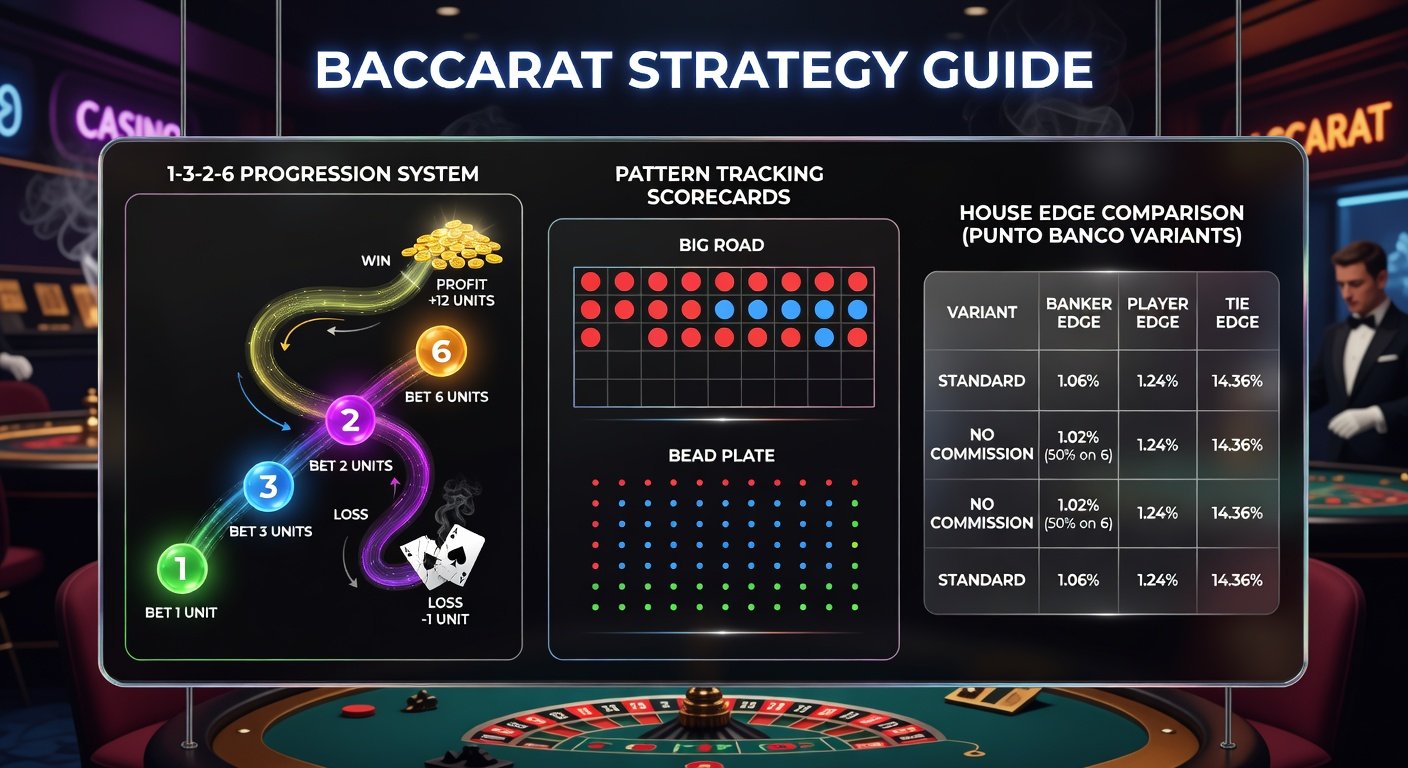
Punto Banco, the most common variant, has a house edge of 1.06% on Banker, 1.24% on Player, and 14.36% on Tie. For full rules, check the Wikipedia Baccarat page.
Baccarat Variants: Punto Banco vs. Others
Punto Banco
The standard in most casinos, fully rule-driven. House edges: Banker 1.06%, Player 1.24%, Tie 14.36% (8:1 payout) or lower with 9:1.
Chemin de Fer
Players take turns as Banker, with drawing decisions. Higher skill element, but house edge varies ~1.5% on Player bets. Less common online.
Baccarat Banque
Similar to Chemin, but one permanent Banker. House edge around 1.2-1.5%.
Mini-Baccarat
Faster-paced Punto Banco at lower stakes. Same edges, ideal for 2026 mobile play.
Stick to Punto Banco for best odds in modern casinos.
Side Bets: Worth the Risk?
Side bets like Dragon Bonus, Perfect Pairs, or Lucky 6 add excitement but inflate house edges (5-20%). For example:
- Dragon Bonus: Pays on natural wins or margins; house edge ~2.65% Player, 9.37% Banker.
- Pairs: Player/Banker pair bets at 11:1; edge ~10-12%.
Avoid unless chasing fun—core bets offer better value.
Optimal Betting Systems: 1-3-2-6 and More
1-3-2-6 Progression
A positive progression minimizing losses. Bet sequence after wins: 1 unit, 3, 2, 6. Reset on loss. Example with $10 base:
- Win: +$10 (total +10)
- Win: +$30 (total +40)
- Win: +$20 (total +60)
- Win: +$60 (total +120)
Survives one loss per cycle. Great for flat house edge games like baccarat.
Other Systems
- Martingale: Double after loss—risky due to table limits.
- Paroli: Double wins, reset after 3—conservative.
- Fibonacci: Sequence betting; safer than Martingale.
No system beats the house edge long-term, but 1-3-2-6 suits baccarat's even-money vibe.
Bankroll Management Essentials
Key to longevity: Set a session bankroll (50-100x base bet). Example: $1,000 for $10 bets.
- Win goal: 20-50% of bankroll.
- Loss limit: 20-30%.
- Unit sizing: 1-2% per bet.
Track via apps in 2026. Visit the UK Gambling Commission for responsible play guidelines.
Advanced Pattern Tracking
Scorecards track Banker/Player/Tie streaks (Big Road, Bead Plate). Patterns like "chops" (alternating) or "streaks" emerge, but they're random—gambler's fallacy beware.
Tips:
- Follow Banker bias (lowest edge).
- Ignore long streaks; bet against if overconfident.
- Use AI tools in 2026 apps for stats.
Combine with 1-3-2-6 for edge.
Pitfalls to Avoid for Higher Win Rates
- Tie Bets: High edge—skip.
- Chasing Losses: Stick to limits.
- Side Bets: Fun, but drain bankroll.
- Alcohol/Emotions: Play sober, set timers.
- Progressions in Streaks: Flat bet during volatility.
In 2026, leverage bonuses (e.g., cashback) but read terms—wager requirements apply.
Conclusion: Play Smart in 2026
Armed with these baccarat tips—rules mastery, 1-3-2-6, bankroll discipline, and variant knowledge—you're set for better sessions. Remember, the house edge persists; gamble responsibly for entertainment. Track progress, adapt to tech like live VR tables, and enjoy the thrill.


No comments yet. Be the first!