 GambleLore

Introduction
Testing casino strategies safely has become essential for players seeking consistent results in 2026. With advanced tools available, you can evaluate performance metrics like ROI and drawdowns without financial risk. This guide covers free demo modes, simulation apps, and spreadsheets in detail, providing step-by-step protocols for popular games including blackjack, roulette, and baccarat. By validating approaches first, players reduce exposure to losses while gaining insights into how different variables affect outcomes over extended play sessions. The process also helps distinguish between short-term luck and sustainable edges, fostering better decision-making when real money is eventually involved.
Understanding the Importance of Strategy Testing
Before committing real funds, rigorous testing reveals whether a strategy holds up under various conditions. House edges remain constant, yet player decisions influence short-term variance. Testing highlights patterns in results, allowing refinement of betting systems and bankroll management. In 2026, digital tools make this process accessible and data-driven, turning guesswork into measurable analysis. Players who skip this phase often face unnecessary losses that could have been avoided through proper preparation and iterative improvement.
Selecting the Right Testing Tools in 2026
Choosing appropriate tools depends on your technical comfort level and the depth of analysis required. Free demo modes suit beginners, while simulation apps appeal to those needing high-volume data. Spreadsheets bridge both worlds by enabling custom calculations. Evaluate tools based on accuracy, ease of data export, and compatibility with specific game rules. Cross-reference multiple sources to confirm reliability before committing to a primary platform.
Using Free Demo Modes Effectively
Most online casinos offer free demo versions of blackjack, roulette, and baccarat. Start by selecting reputable platforms that mirror real-game conditions, including house rules and payout structures. Track sessions over at least 500 hands or spins to gather reliable data. Begin with basic strategy implementation, then introduce variations such as progressive betting. Record every outcome in a separate log to compare against theoretical expectations. This method builds familiarity with game flow while exposing flaws in overly optimistic assumptions. Repeat tests across different times of day to account for any platform-specific randomness variations.
Simulation Apps for Advanced Testing
Specialized apps allow thousands of simulated rounds in minutes. Input custom rules such as deck penetration in blackjack or betting limits in roulette. Export results to analyze variance and long-term profitability trends. Choose applications that support Monte Carlo methods for realistic randomness. Run parallel tests with different starting bankrolls to observe how capital preservation strategies perform during losing streaks. Export CSV files for further processing in other software. Advanced users can script custom scenarios to test rare events like prolonged losing sequences.
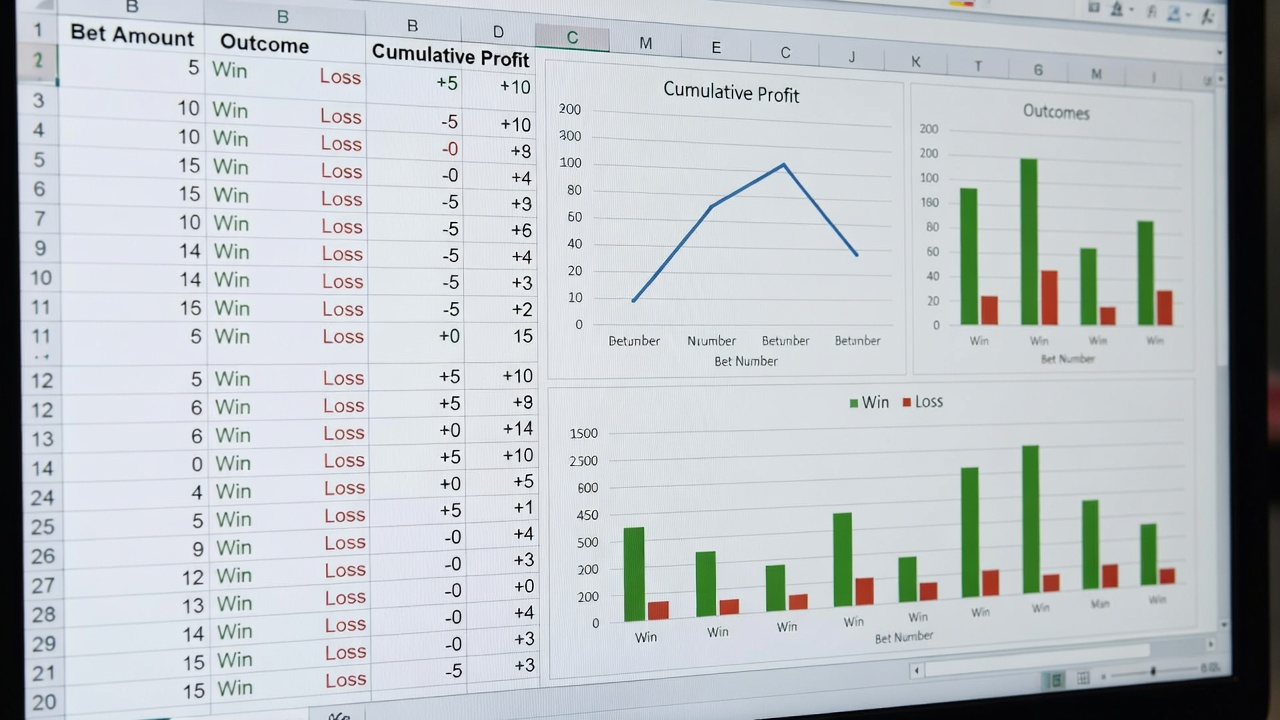
Building and Using Spreadsheets
Create a spreadsheet to log key variables: bet size, outcome, cumulative bankroll, and session duration. Formulas can automatically calculate ROI as (net profit / total wagered) x 100 and maximum drawdown as the largest peak-to-trough decline. Add columns for win streaks, loss sequences, and volatility indicators. Use conditional formatting to highlight sessions exceeding predefined risk thresholds. Update entries after each simulation batch and generate charts showing equity curves over time. This visual representation helps identify when a strategy begins to deviate from expected performance. Include pivot tables to segment results by game type or bet size for deeper insights.
Step-by-Step Blackjack Strategy Protocol
Begin with basic strategy charts and test deviations based on count. Run 10,000-hand simulations, recording hit frequency and expected value per decision. Refine entries where the data shows consistent underperformance. Divide testing into phases: first validate core charts across multiple deck counts, then layer card-counting adjustments. Compare results from single-deck versus multi-deck environments. Track how often insurance bets improve overall returns and adjust frequency accordingly. Real-world example: one tester discovered that skipping certain splits reduced drawdowns by 12 percent across 8,000 hands. Document every deviation and its measured impact to build a personalized reference guide.
Roulette Strategy Testing Framework
For even-money bets, simulate 5,000 spins while varying progression systems. Monitor hit rates against the 2.7 percent house edge on European wheels and adjust stop-loss thresholds accordingly. Test flat betting alongside martingale and d'Alembert variants. Record the number of times the table reaches table limits during extended runs. Analyze how often a chosen system recovers from early losses versus compounding them. Include wheel bias checks if the simulation allows custom wheel configurations. Extend runs to 10,000 spins when testing aggressive progressions to capture tail-risk events.
Refining Baccarat Tips with Real-World Examples
Players often test banker versus player streaks. Log 2,000 coups in spreadsheets to compare commission-adjusted returns. One example showed a modified pattern yielding a 1.8 percent ROI improvement over 50 sessions when avoiding ties entirely. Another test examined side-bet frequency and found that limiting dragon bonuses to specific shoe patterns lowered overall variance. Extend testing by altering bet sizing rules mid-shoe and measuring impact on final bankroll distribution. Compare results against theoretical probabilities published by independent math resources to validate findings.
Manual vs Automated Testing Comparison
Manual methods provide deeper insight into psychological factors but require more time. Automated tools scale quickly yet may overlook edge-case rule variations. Combine both for optimal validation. Manual entry encourages careful review of each decision, while automation handles volume. Hybrid approaches start with automated bulk runs followed by manual spot-checks on outlier sessions. This balance ensures both statistical power and human oversight of subtle factors.
Key Variables to Track
- Return on investment (ROI)
- Maximum drawdown percentage
- Win rate per 100 decisions
- Average session length
- Volatility measured by standard deviation
- Frequency of reaching stop-loss or profit targets
- Recovery time after significant downswings
- Correlation between bet size and outcome streaks
Integrating Bankroll Management into Tests
Effective testing incorporates realistic bankroll rules from the outset. Set session limits at 2 to 5 percent of total capital and enforce them during every simulation. Measure how often strategies breach these limits and adjust accordingly. This step prevents over-optimism and prepares players for live conditions where emotions can interfere with discipline.
Common Mistakes to Avoid During Testing
Many players end trials too early, leading to unreliable conclusions. Others ignore rule differences between demo and live versions. Always verify payout percentages and deck counts match intended play conditions. Avoid cherry-picking favorable runs; instead, complete predetermined test lengths regardless of interim results. Failing to randomize starting conditions can also skew data toward specific patterns.
Short FAQ on Strategy Reliability
Can strategies guarantee wins? No strategy overcomes the house edge long-term, but testing identifies those that minimize losses.
How many trials are enough? Aim for 5,000+ outcomes per game type for statistical significance.
Are demo results transferable? Yes, when rules match live play exactly.
Should I adjust strategies mid-test? Only after completing a full sample size to maintain data integrity.
How do I interpret negative ROI? Review drawdown patterns and consider tightening bankroll rules before live deployment.
What if variance skews early results? Extend the test length or run additional batches to achieve convergence toward expected values.
Conclusion
By systematically testing strategies through demos, simulations, and data tracking, players can approach 2026 casino gaming with greater confidence and reduced risk. Always prioritize responsible practices via resources like the UK Gambling Commission and World Health Organization.


No comments yet. Be the first!