 GambleLore

Introduction to SMART Goals in Responsible Gambling
Responsible gambling requires proactive strategies, and SMART goal setting offers a structured framework to minimize risks associated with betting activities. In 2026, players seeking to maintain control can apply Specific, Measurable, Achievable, Relevant, and Time-bound objectives to manage spending, time allocation, and emotional responses effectively. This approach turns vague intentions like "gamble less" into concrete plans that support long-term safety and enjoyment without crossing into problematic territory. Many individuals struggle with gambling because they lack clear boundaries, leading to escalating habits that affect finances, relationships, and mental health. SMART criteria provide clarity and accountability, making it easier to track progress and make adjustments. Whether you are a casual bettor or someone monitoring habits closely after past issues, adapting these goals supports sustained responsible practices. The framework draws from established goal-setting psychology and adapts seamlessly to gambling contexts where impulsive decisions often override better judgment.
Understanding the SMART Framework for Betting
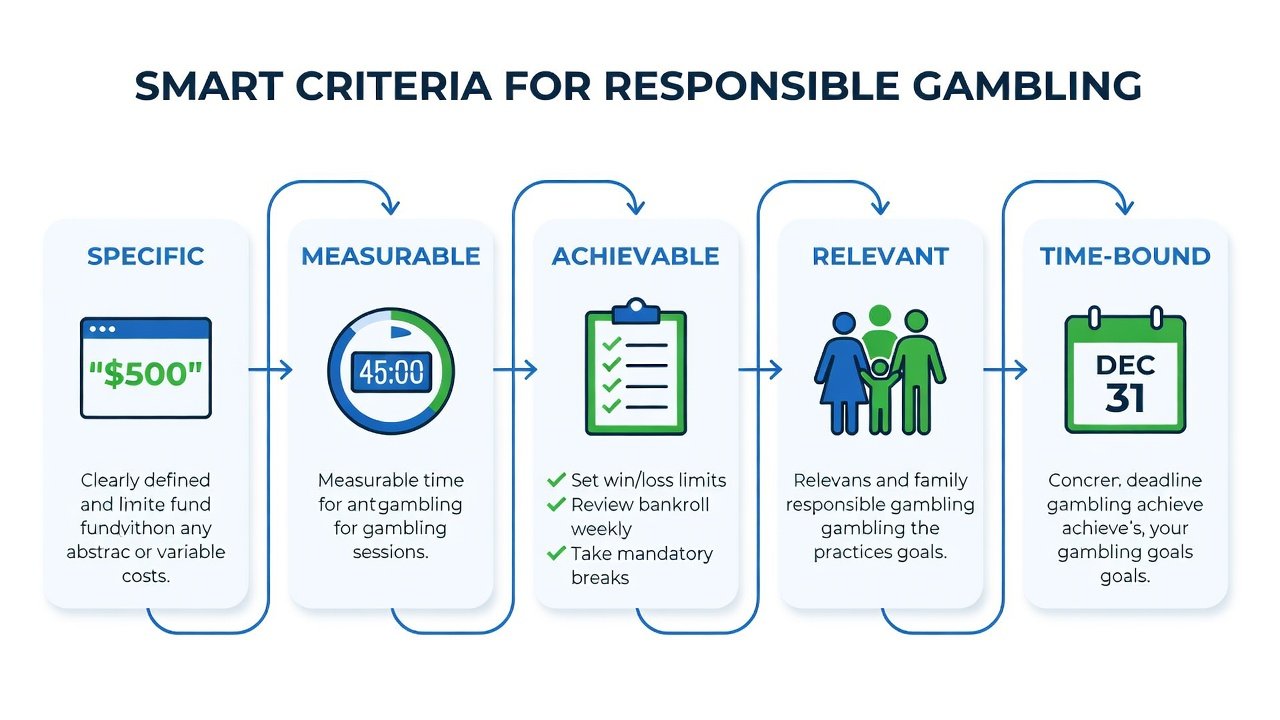
The SMART method breaks down into five interconnected elements that can be tailored specifically to gambling habits. Specific goals define exactly what you want to achieve, such as limiting weekly deposits to a precise amount rather than a general reduction. Measurable aspects allow for objective tracking through numbers, logs, or digital records so you can see real progress or shortfalls. Achievable targets remain realistic based on your income, schedule, and personal circumstances, avoiding overly ambitious plans that lead to quick discouragement. Relevant objectives align directly with your core values like preserving family time, building savings, or protecting mental well-being. Time-bound deadlines create necessary urgency and structure, such as conducting monthly reviews or setting end dates for evaluation periods. Together these elements form a complete system that outperforms loose resolutions by providing both direction and feedback loops essential for behavior change.
Applying SMART to Betting Budgets
Begin by defining a specific monthly gambling budget drawn strictly from disposable income after covering essentials like rent, utilities, and groceries. Make the goal measurable by linking it to transaction tracking through banking apps or dedicated spreadsheets that log every deposit. Ensure achievability by starting with conservative figures that fit comfortably within your overall finances, then scaling only after consistent success. Relevance emerges naturally when you connect the budget to avoiding debt accumulation and maintaining financial security for future needs. Establish a clear time frame such as evaluating performance at the close of each calendar month with adjustments for the next period. For instance, a player might commit to no more than a fixed amount transferred to betting accounts weekly, reviewing statements to confirm adherence and noting any deviations immediately.
Setting Session Limits with SMART Criteria
Define specific session durations in advance, such as capping each betting session at exactly two hours or limiting total weekly playtime to eight hours. Track adherence using phone timers, calendar alerts, or simple logging apps for full measurability. Keep limits achievable by aligning them with realistic openings in your daily routine rather than extreme restrictions that invite rebellion. The relevance factor ties these limits to broader priorities like preserving energy for work, exercise, or social connections outside of gambling. Use weekly or bi-weekly reviews as the time-bound component to assess whether sessions are staying within bounds and whether adjustments are warranted based on life changes.
Managing Emotional Triggers Through SMART Goals
Identify specific emotional triggers such as stress following a difficult workday or boredom during weekends that historically prompt betting urges. Measure progress by maintaining a simple journal that records trigger frequency, intensity on a one-to-ten scale, and immediate responses chosen instead of gambling. Develop achievable coping strategies like a ten-minute walk, calling a friend, or practicing breathing exercises that replace the urge. Ensure relevance by linking these strategies to long-term mental health and relationship goals. Schedule recurring monthly check-ins to evaluate effectiveness and refine the plan, allowing the approach to evolve as circumstances shift over the year.
Step-by-Step Implementation Guide
Follow this detailed sequence to integrate SMART goals into your gambling routine successfully. First, conduct an honest self-assessment of current patterns by reviewing the past three months of activity including deposits, time spent, and any emotional patterns noted. Second, draft one or two SMART goals per key area covering budget, session length, and trigger management, writing them in a dedicated notebook or digital document for reference. Third, select monitoring tools such as budgeting applications, habit trackers, or basic spreadsheets that simplify data collection without adding complexity. Fourth, establish accountability by sharing goals with a trusted friend or using private reminders on your phone. Fifth, perform short weekly reviews to compare actual behavior against targets and document insights. Sixth, make incremental adjustments only after three consistent data points show a goal is either too easy or too difficult. Seventh, celebrate non-monetary milestones like completing a full month of adherence with a non-gambling reward such as a favorite meal or activity.
Real-World Examples of SMART Gambling Goals
One practical example involves a player who sets a specific goal of depositing no more than a predetermined amount monthly into online betting platforms. This target becomes measurable through automated transaction alerts and monthly bank summaries, achievable given their steady income level, relevant to long-term debt avoidance, and time-bound through quarterly evaluations with a spouse for added support. Another case features an individual who limits sessions to three per week maximum, tracked via a digital calendar with automatic reminders, ensuring time remains available for family obligations and exercise routines. A third example focuses on emotional management where someone commits to logging every urge above a moderate level and responding with a pre-chosen alternative activity at least 80 percent of the time, reviewed every four weeks for refinement.
Comparing SMART Goals to Other Prevention Methods
SMART goal setting stands apart from purely reactive tools like self-exclusion lists because it emphasizes daily prevention and personal ownership rather than external barriers alone. It differs from mindfulness or meditation practices by incorporating quantifiable metrics that deliver faster, more objective feedback on progress. While support groups and counseling provide valuable community and professional insight, SMART goals integrate seamlessly with those resources by supplying personal data that can be discussed in sessions for more targeted guidance. Many players find combining SMART planning with occasional professional check-ins creates a robust safety net superior to any single method used in isolation.
Common Mistakes to Avoid When Setting SMART Goals
One frequent error is setting goals that are too vague despite using the SMART label, such as aiming to "reduce gambling" without specific numbers or deadlines. Another mistake involves choosing unrealistic targets that ignore current lifestyle demands, leading to repeated failure and lowered motivation. Players sometimes neglect the relevance component by focusing only on numbers while overlooking personal values, which reduces long-term commitment. Failing to schedule regular reviews allows small deviations to compound unnoticed. Finally, treating goals as rigid rules rather than flexible guides can create unnecessary stress; the framework works best when treated as an evolving tool.
Practical Checklist for Tracking Progress
- Write one specific, measurable goal for each focus area before beginning implementation.
- Select and set up tracking tools such as apps or journals within the first week.
- Log data daily or after every session without exception for the initial month.
- Conduct brief weekly comparisons between targets and actual results every Sunday evening.
- Adjust only after collecting at least three weeks of consistent data showing the need for change.
- Share progress summaries with an accountability partner monthly to maintain motivation.
- Reward consistent adherence with non-gambling activities at the end of each successful review period.
FAQs on Tracking and Adjusting Goals
How often should I review my SMART goals?
Weekly reviews provide timely feedback for most people, while a deeper monthly assessment helps identify broader trends and informs thoughtful adjustments without overreacting to isolated incidents.
What if I fail to meet a goal?
View shortfalls as valuable data points rather than personal failures. Analyze contributing factors, refine the goal to increase achievability, and resume tracking immediately with renewed focus and without self-criticism.
Can I use apps to help with this?
Yes, numerous budgeting, habit-tracking, and timer applications support the measurable and time-bound elements effectively while reducing manual effort required for consistent logging.
How do I know when to increase limits?
Only consider raising limits after three consecutive months of perfect adherence combined with stable financial and emotional indicators confirmed through your review process.
Should I involve others in my goal setting?
Involving a trusted friend or family member for accountability can improve success rates, provided they understand the goals remain personal and non-judgmental support is the priority.
Conclusion
SMART goal setting equips individuals with practical, adaptable tools for responsible gambling throughout 2026 and beyond. By focusing deliberately on budgets, session limits, and emotional triggers with clear metrics and regular reviews, players can significantly reduce risks while continuing to enjoy betting in a controlled manner. Begin with modest, well-defined objectives, track consistently using reliable methods, and adjust thoughtfully as personal circumstances evolve. For additional professional support and resources, visit National Council on Problem Gambling, explore Gamblers Anonymous, or consult SAMHSA behavioral health services.


No comments yet. Be the first!