 GambleLore
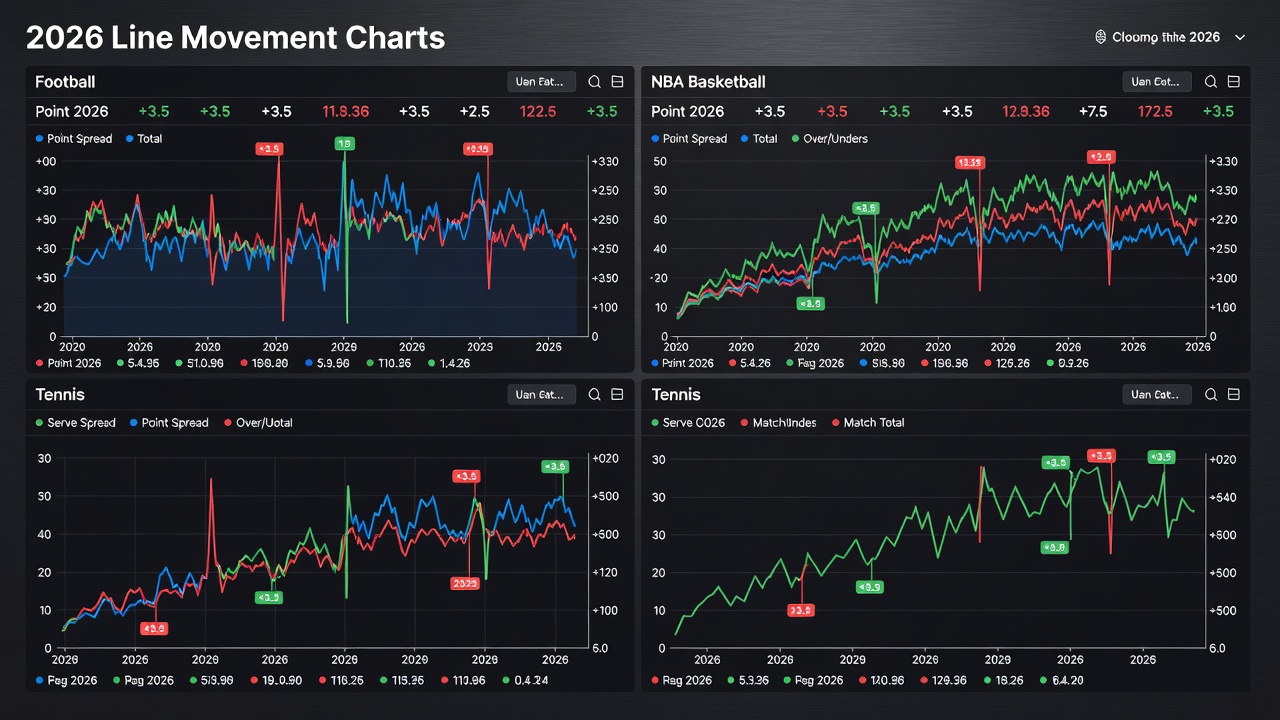
Introduction to Line Movement in 2026 Sports Betting
Line movement analysis remains a cornerstone skill for advanced bettors seeking an edge in football, NBA, and tennis markets throughout 2026. Understanding how odds shift in real time helps identify value before the market fully adjusts. This guide breaks down the mechanics, primary drivers, recommended tools, and practical workflows tailored to each sport. Bettors who master these dynamics can time entries more effectively and avoid common pitfalls that erode bankrolls over the long season.
Core Drivers Behind Odds Shifts
Line movements typically stem from three interconnected factors: sharp money from professional bettors, fresh injury or roster updates, and surges in public betting volume. Sharp action often moves lines first because sportsbooks adjust to limit exposure on one side. Injury reports can trigger rapid changes, especially in NBA and tennis where player availability is fluid and last-minute decisions matter. Public trends amplify these shifts when recreational bettors pile onto one side, creating opportunities on the opposite side that informed bettors can exploit.
Additional influences include weather forecasts for outdoor football games, referee assignments, and even travel schedules in the NBA. These secondary factors rarely move lines alone but can accelerate or reverse primary moves when combined with sharp action. Monitoring multiple data streams simultaneously gives bettors a clearer picture of why a line is moving and whether the move is sustainable.
Recommended Tracking Tools for 2026
Effective monitoring starts with reliable platforms. Bettors commonly use real-time odds aggregators and historical movement databases to spot patterns early. Cross-reference multiple sources to confirm whether a move is steam-driven or merely public noise. Set alerts for key thresholds, such as half-point or full-point changes in spreads and totals. Popular options include dedicated betting software that pulls live data from dozens of sportsbooks and displays movement graphs over time. Some platforms also integrate injury databases and public betting percentages for a complete view. Beginners should start with free tiers of these tools before upgrading to premium features that offer deeper historical comparisons.
Sport-Specific Line Movement Patterns
Football
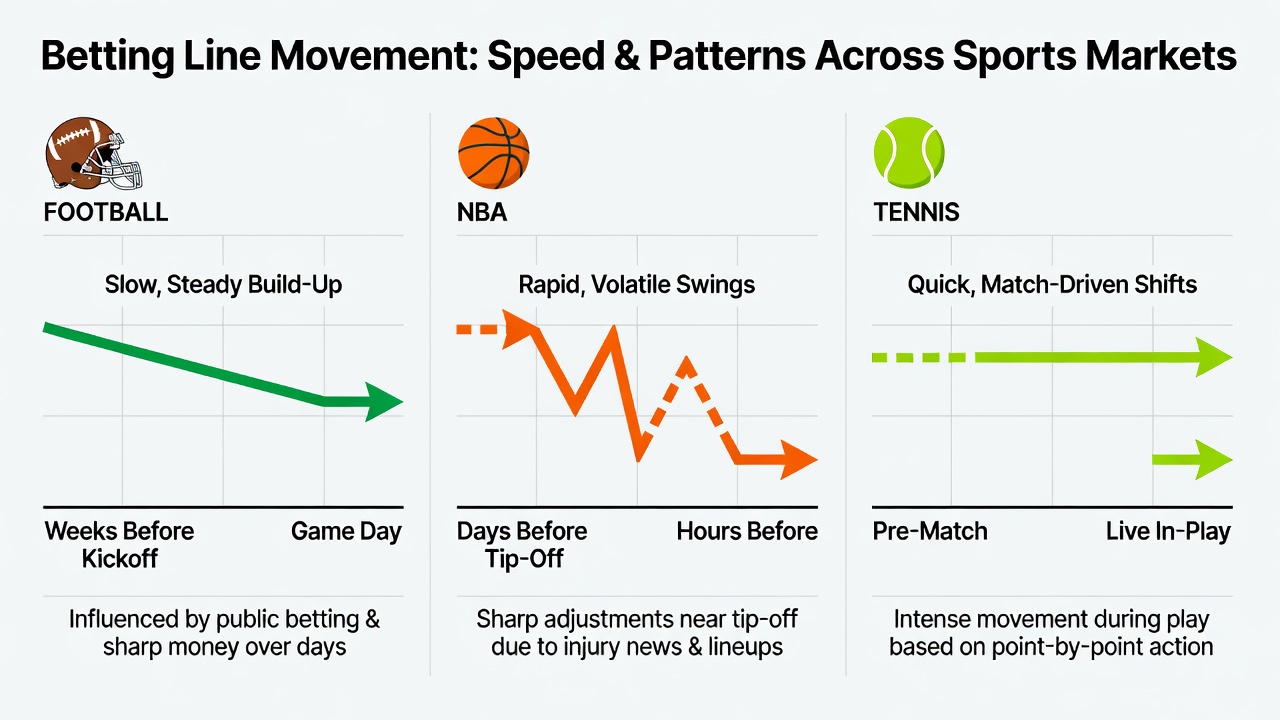
In football, movements often accelerate 24-48 hours before kickoff as injury reports finalize and sharp syndicates place large wagers. Totals tend to move slower than sides because weather and game scripts influence totals later in the week. Watch for reverse line movement where the line shifts against heavy public money, signaling sharp involvement. For example, if the public heavily backs an underdog yet the spread moves toward the favorite, this often indicates professional money on the other side. Resources from NFL.com provide official injury updates that can help confirm whether a movement aligns with new information.
NBA
NBA lines can fluctuate dramatically due to back-to-back schedules and load management decisions. Sharp bettors target early morning lines before public reaction to injury news. Totals move frequently in this league because pace and efficiency stats update rapidly after each game. A single star player resting can shift a total by several points within an hour. Cross-checking with official league sources at NBA.com helps separate legitimate rest news from rumors that might cause temporary overreactions.
Tennis
Tennis odds shift quickly around player withdrawals and surface-specific form. Pre-tournament lines move less than in-game betting, where momentum swings create frequent adjustments. Focus on set and game totals for value when the public overreacts to early breaks. Official tournament data from ATP Tour sites offers reliable player statistics that can validate or refute sudden line changes during matches.
Timing Entry Points for Maximum Value
Step-by-step workflow begins with monitoring opening lines the night before an event. Next, track initial sharp indicators within the first four hours after lines post. Wait for a 20-30% public lean before considering a fade if reverse movement appears. Lock in positions when the line stalls despite continued public betting. Advanced users add a fifth step of reviewing historical movement charts from similar past events to gauge whether the current shift is typical or anomalous. Cross-sport comparisons reveal that NBA totals move fastest while football sides hold steadier over multiple days. Tennis in-game lines offer the quickest reactions but require constant attention.
Case Studies from Major 2026 Events
Consider a hypothetical NBA playoff game where an early line at -4.5 moved to -6.5 after sharp action on the favorite. Public then bet the underdog heavily, but the line held, confirming professional money had entered early. In tennis, a Grand Slam quarterfinal saw the underdog line shorten from +180 to +110 within hours of an injury update, illustrating how quickly markets incorporate new data. A football example from a high-profile Monday night matchup showed the total dropping two points after sharp action on the under despite public support for the over, highlighting the value of monitoring both sides and totals simultaneously.
Cross-Sport Comparisons of Movement Patterns
Football lines tend to stabilize earlier than NBA or tennis because team depth reduces the impact of single injuries. NBA movements are more volatile due to the high number of games and frequent roster changes. Tennis stands apart because individual player performance creates larger swings, especially in best-of-three versus best-of-five formats. Understanding these differences helps bettors allocate time and alerts appropriately across their portfolio of wagers.
Common Mistakes to Avoid
- Chasing every movement without confirming the source through multiple indicators.
- Ignoring timing differences between sports and betting windows.
- Over-relying on one tracking tool instead of cross-verification across platforms.
- Misreading steam moves as public-driven when the opposite is true.
- Failing to account for line shopping across sportsbooks, which can reveal true market consensus.
Advanced Techniques and Building a Tracking Routine
Develop a daily routine that includes morning scans for overnight moves, midday checks for injury updates, and evening reviews of closing line values. Incorporate correlation analysis across related markets, such as player props and game totals in the NBA. Record every tracked movement in a personal journal with notes on outcome to refine future reads. These habits compound over a full season of football, NBA, and tennis action.
FAQ on Line Movement Misreads
How do I distinguish sharp from public action? Sharp moves usually occur early and against the public percentage shown on tracking sites. Should I bet every reverse line move? Only when supported by injury or roster confirmation from reliable sources. Are tennis movements more volatile than football? Yes, due to individual player factors and shorter match durations. What role does timing play in NBA totals? NBA totals often move most in the final two hours before tip-off. How many tools should a beginner use? Start with two or three to avoid information overload while learning patterns.
Conclusion
Mastering 2026 line movement across football, NBA, and tennis equips bettors with timing precision and pattern recognition. Combine disciplined tracking with sport-specific knowledge to consistently find value before the market corrects. The edge comes from consistent application of these principles rather than chasing single big moves.


No comments yet. Be the first!