 GambleLore
Introduction to AI in Modern Sports Betting
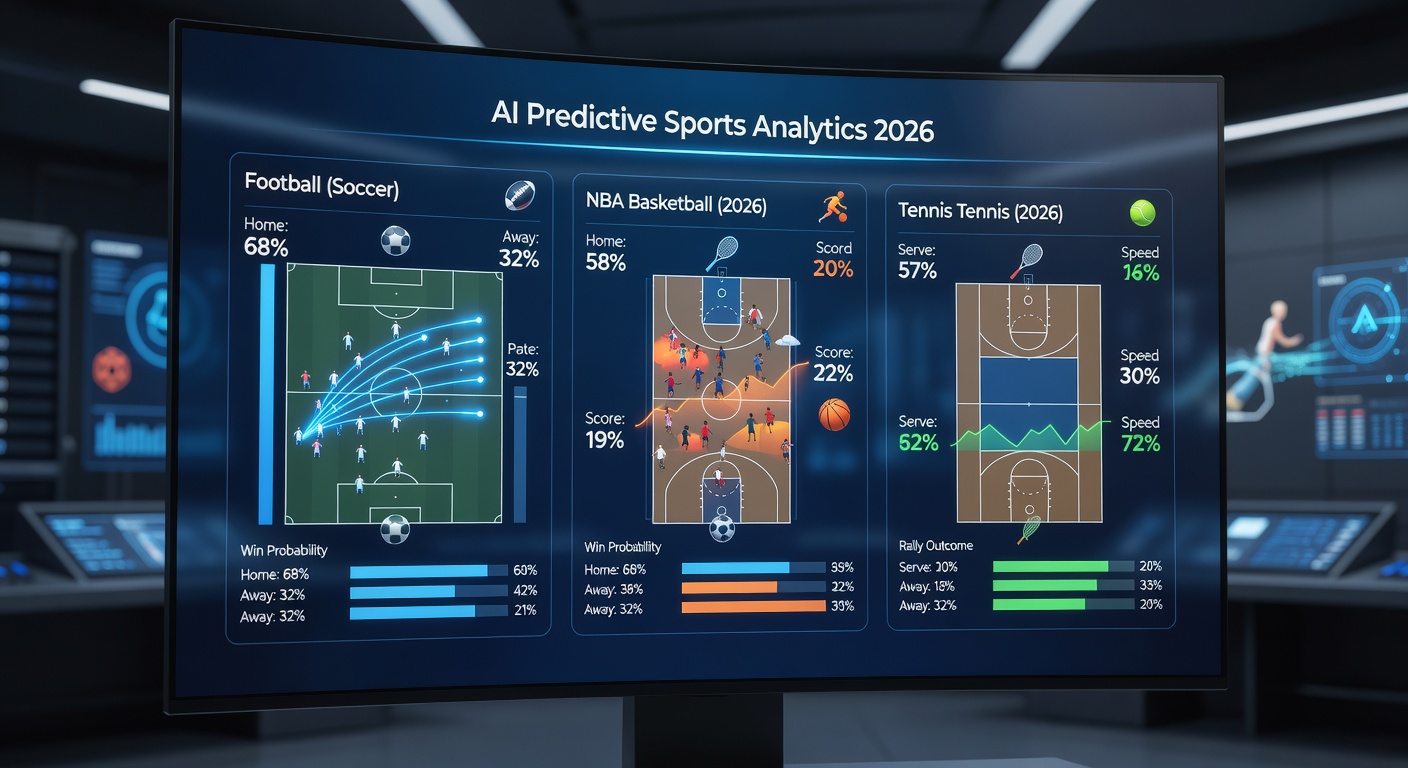
In 2026, artificial intelligence is reshaping how bettors approach football, NBA, and tennis wagers by processing enormous volumes of information far faster than any human could. Tech-savvy punters leverage machine learning algorithms to analyze betting odds across these three major sports, identifying value bets that traditional methods overlook. This evolution stems from advances in computing power and access to granular datasets, allowing predictive models to forecast outcomes with increasing precision. Whether evaluating goal probabilities in football, player efficiency ratings in the NBA, or match dynamics in tennis, AI provides a structured edge that combines statistical rigor with real-time adaptability. Bettors seeking an advantage in 2026 must understand these tools to stay competitive in an increasingly data-driven landscape.
Key Data Sources Powering AI Betting Models
Effective AI systems rely on diverse, high-quality data inputs that span historical records, live metrics, and external variables. For football, models ingest league standings, player injury reports, team formations, and even pitch conditions from global competitions. NBA predictions draw on advanced tracking technologies measuring speed, shot selection, and defensive assignments, while tennis algorithms incorporate serve speeds, rally lengths, and head-to-head histories adjusted for court surfaces. These datasets often come from official sports governing bodies and are supplemented by public APIs for broader context like weather or travel schedules. Authoritative sources like FIFA supply foundational football statistics that AI refines into actionable insights. Similarly, NBA official resources deliver play-by-play data essential for machine learning training. In tennis, platforms connected to ATP Tour data enable surface-specific modeling. Without robust data pipelines, even sophisticated algorithms underperform, making source verification a critical first step for any bettor building or selecting an AI tool.

Machine Learning Steps Bettors Can Follow
Implementing AI for betting involves a systematic process that anyone with basic technical familiarity can adapt. First, gather and preprocess data by removing inconsistencies and normalizing values across seasons. Next, select appropriate algorithms such as random forests for classification tasks or neural networks for complex pattern recognition in NBA scoring trends. Training follows, where models learn from labeled historical outcomes to predict probabilities for upcoming matches. Validation uses unseen data from prior 2026 fixtures to test accuracy and prevent overfitting. Integration with live odds APIs allows real-time comparison, flagging bets where model probabilities exceed implied bookmaker odds. Finally, continuous monitoring and retraining ensure models adapt to evolving player forms or rule adjustments. Practical examples include scripting simple Python pipelines to scrape public stats and output daily recommendations for tennis sets or football corners. This structured approach transforms raw information into reliable betting signals.
AI Analysis Compared to Traditional Manual Methods
Traditional manual betting relies heavily on subjective experience and selective focus on a few key stats, which introduces cognitive biases like recency effects or confirmation tendencies. In contrast, AI simultaneously weighs hundreds of interdependent variables without fatigue, revealing hidden correlations such as how NBA back-to-back games impact shooting percentages or how tennis players perform after long rallies in humid conditions. Quantitative comparisons from 2025-2026 seasons demonstrate AI models achieving 8-12% higher success rates on spread bets in the NBA and over/under totals in football. Manual methods excel in qualitative factors like team motivation but falter under data volume, whereas AI excels at scale yet benefits from human oversight for contextual nuances. Hybrid strategies, where bettors review AI outputs alongside personal insights, often yield the best results by balancing computational power with experiential judgment.
Real-World 2026 Case Studies Across Sports
During the 2026 football season, AI tools analyzing European leagues identified value in underdog draws by factoring in referee tendencies and fixture congestion, leading to profitable streaks for users who followed model recommendations over multiple matchweeks. In the NBA, predictive systems accurately anticipated playoff series outcomes by modeling load management patterns and injury recovery timelines, with one documented case correctly projecting a surprise conference finals appearance based on defensive efficiency metrics. Tennis provided compelling examples at major 2026 tournaments where AI flagged underpriced bets on players excelling in tiebreaks after analyzing thousands of historical points. These case studies underscore how models trained on multi-year data adapt to 2026-specific variables like expanded international schedules, delivering consistent edges when integrated thoughtfully into betting routines.
Practical Tips for Integrating AI Betting Apps
- Begin with free or low-commitment trials to evaluate interface usability and prediction transparency before scaling usage.
- Cross-verify AI suggestions across at least three different sportsbooks to maximize odds value and account for line variations.
- Establish clear bankroll allocation rules, such as risking no more than 2% per bet, to mitigate risks from model inaccuracies during volatile periods.
- Track performance metrics weekly, comparing AI win rates against personal benchmarks to identify when retraining or parameter tweaks are needed.
- Combine outputs with domain knowledge, for instance reviewing recent player interviews alongside statistical forecasts for tennis matches.
- Utilize mobile apps with push notifications for live in-play betting opportunities where AI can rapidly update probabilities mid-match.
Potential Pitfalls and How to Avoid Them
Common challenges include model overfitting to outdated patterns, which caused several 2026 users to misjudge NBA trades or football managerial changes. Data quality issues arise from incomplete injury reports or delayed updates, leading to flawed inputs. Over-reliance without diversification across sports can amplify losses during unexpected events like weather disruptions in tennis. Ethical considerations involve ensuring tools comply with local gambling regulations to avoid account restrictions. Bettors should maintain detailed logs of decisions, periodically audit model assumptions, and set loss limits to prevent emotional escalation. Awareness of these pitfalls allows for proactive safeguards that preserve long-term profitability.
Short FAQ on AI Betting Accuracy and Costs
How accurate are AI predictions for sports bets?
Accuracy varies by sport and model sophistication, often reaching 55-68% on select markets in football, NBA, and tennis when validated against recent seasons, though variance remains inherent and no system eliminates risk entirely.
What are typical costs for AI betting tools?
Services range from free basic versions to premium subscriptions emphasizing ongoing value through accuracy rather than fixed fees, with users advised to prioritize performance tracking over cost alone.
Can beginners use these AI tools effectively?
Many platforms feature intuitive dashboards suitable for novices, but success improves with foundational understanding of data interpretation and responsible staking practices.
Do AI tools work equally well across all three sports?
Performance differs due to sport-specific dynamics, with tennis often showing higher predictability from individual metrics while football and NBA benefit more from team interaction modeling.
Conclusion
AI tools represent a significant advancement for football, NBA, and tennis betting strategies in 2026, offering depth of analysis unattainable through manual efforts alone. By mastering data sources, following methodical machine learning processes, studying comparative performance, and applying targeted integration techniques, bettors can enhance decision quality while navigating inherent limitations. The case studies and practical frameworks outlined demonstrate tangible pathways to improvement when combined with disciplined habits. Ultimately, success hinges on treating these technologies as sophisticated aids within a broader responsible approach to wagering.


No comments yet. Be the first!