 GambleLore

Introduction to Bookmaker Odds Setting in 2026
Betting odds for major sports like football, NBA basketball, and tennis in 2026 are not random guesses. Professional bookmakers rely on sophisticated systems to create lines that balance risk and profit while protecting their margins. Understanding this process helps bettors identify fair value and avoid common pitfalls such as overpaying on vig or missing sharp line movements. This comprehensive guide breaks down the mechanics step by step, with sport-specific comparisons, multiple real-world examples, and actionable strategies that go beyond basic overviews.
The 2026 betting landscape features increased use of artificial intelligence alongside traditional statistics, driven by the global popularity of these three sports. Bettors searching for insights into how odds are truly set often want to know the difference between fair odds and the final posted lines, which is exactly what this article addresses in depth.
Core Probability Modeling Techniques
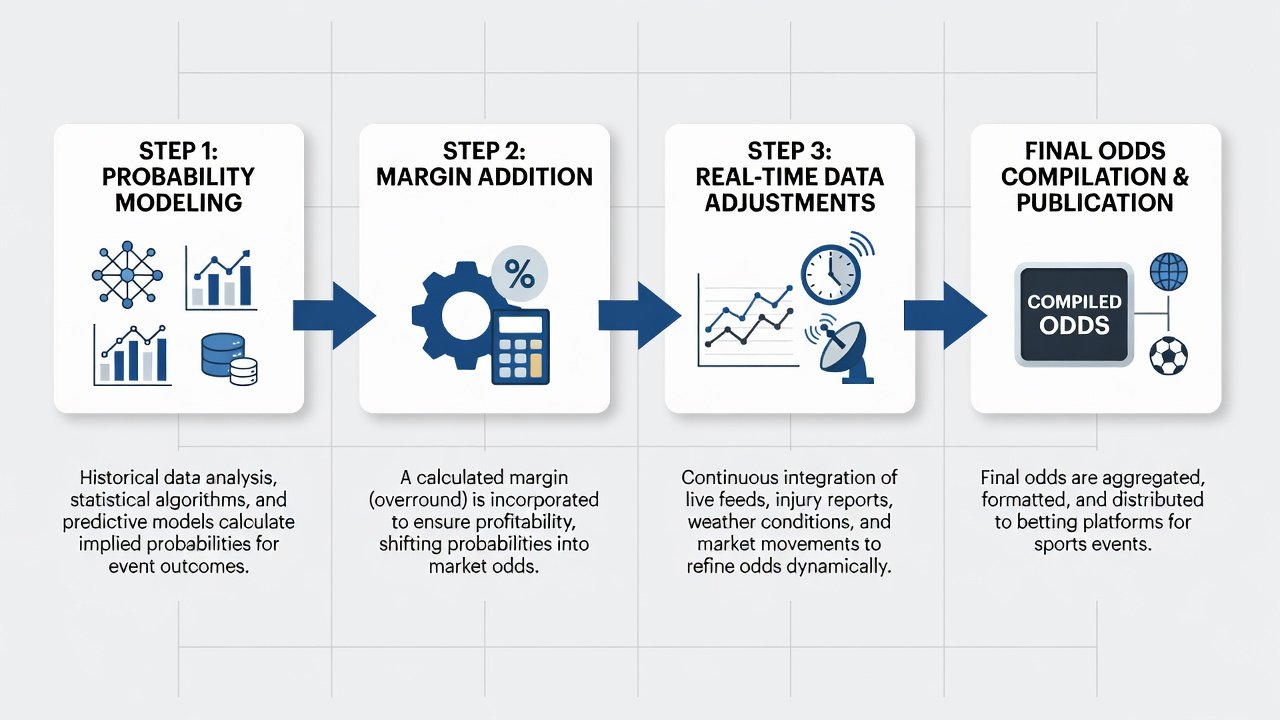
Bookmakers begin with advanced statistical models that estimate true outcome probabilities. These incorporate historical data, player performance metrics, team form, injuries, weather, venue specifics, and even travel schedules. For 2026 events, models often blend machine learning with traditional Poisson distribution methods for goal or point scoring predictions. The goal is to assign accurate percentages to each possible result before any margin is added.
Real-time inputs refine these models constantly through automated data pipelines. Official league feeds update injury reports, lineups, and even betting market trends from competitors. This ensures odds reflect the latest information right up to event start. Advanced practitioners also layer in expected goals metrics for football, pace-adjusted efficiency ratings for the NBA, and surface-adjusted Elo ratings for tennis to improve accuracy over basic win percentages.
Incorporating the Margin and Vig
Once probabilities are calculated, bookmakers add their built-in margin, commonly known as the vig or overround. This ensures the implied probabilities across all outcomes exceed 100%, guaranteeing profit regardless of result. The size of the margin varies by sport and market liquidity but remains a key profit driver. In high-volume football leagues, margins might be tighter on main markets, while NBA player props often carry higher vig to account for greater variance. Tennis match odds typically sit in between, with live betting lines adjusting the margin dynamically as points are played.
Real-Time Data Inputs and Market Movement
Odds rarely stay static. Sharp money from professional bettors or large public bets can shift lines dramatically. Bookies monitor their own liability books and competitor pricing to adjust quickly. In 2026, automated systems handle many of these tweaks within seconds of new data arriving, often before human traders intervene. Market movement also reflects betting volume patterns, with syndicates and betting exchanges providing additional signals that traditional books incorporate to stay balanced.
FIFA official resources supply authoritative match data that feeds many football models, while NBA official site provides verified stats that feed directly into many models. Similar authoritative sources exist for other leagues.
Comparisons Across Football, NBA, and Tennis
Football odds compilation emphasizes low-scoring dynamics and draws, often using more conservative margins on popular leagues. Models prioritize defensive metrics, set-piece efficiency, and expected goals rather than raw possession statistics. NBA lines focus heavily on player props and totals due to high scoring variance, requiring frequent adjustments for pace, rest factors, and load management. Tennis odds hinge on individual matchups, surface preferences, and head-to-head history, with rapid movement during tournaments as fatigue or form changes emerge. Each sport demands unique modeling approaches because the underlying scoring distributions differ significantly.
- Football: Heavy emphasis on defensive metrics, set pieces, and draw probabilities that rarely exceed 35 percent in top leagues.
- NBA: Rapid updates for back-to-back games, travel distance, and usage rate changes that affect totals more than sides.
- Tennis: Surface-specific adjustments, serving statistics, and retirement risk factors that create volatility in live markets.
Practical Examples of Line Shifts Before Major Matches
Consider a 2026 football final where an early injury to a key striker moves the favorite from -180 to -140 within hours as new probability estimates drop the implied win chance. In the NBA, a star guard's questionable status can swing totals by several points overnight, forcing books to widen margins temporarily until clearer information emerges. Tennis examples show even sharper swings during Grand Slams when weather delays or mid-match retirements occur, with opening sets sometimes moving lines by 20 percent or more in implied probability. These shifts demonstrate how quickly models incorporate fresh data and why bettors monitoring multiple books can find temporary value before lines stabilize.
Actionable Tips for Bettors to Spot Inefficiencies
Shop lines across multiple sportsbooks to capture the best price on any given probability. Track closing line value over time to measure skill rather than short-term results. Focus on niche markets where bookie models may lag behind public information, such as alternate totals or first-half props. Avoid chasing steam moves without understanding the underlying data that caused the shift. Use public betting percentages as a contrarian signal when sharp action diverges from the crowd. Maintain records of your bets against the closing line to identify which sports or bet types consistently offer edges. Finally, time your wagers after major injury news but before the market fully reacts, especially in tennis where individual player updates move lines fastest.
Common Mistakes Bettors Make When Analyzing Odds
Many bettors focus solely on the final number without considering how the margin was applied or what data the book used. Others ignore line shopping and accept the first price they see. A frequent error is betting heavy favorites without comparing the vig across books, which can turn a positive expected value play negative. Another mistake involves overlooking sport-specific factors, such as assuming NBA totals behave like football totals. Successful bettors treat odds setting as a dynamic process rather than a static number and adjust their approach accordingly.
Short FAQ on Vig and Line Shopping
What is vig in betting?
The vig is the bookmaker's commission built into the odds, ensuring long-term profitability by making the total implied probability exceed 100 percent.
Why does line shopping matter?
Different books offer varying margins and adjustments, so comparing prices maximizes potential returns on the same underlying probability.
How often do odds change?
Changes can occur multiple times daily based on new information, especially close to major events or after significant betting volume.
Does vig differ by sport?
Yes, football main markets usually carry lower vig than NBA props or tennis live betting due to higher liquidity and more predictable modeling.
Conclusion
Mastering how bookies set 2026 football, NBA, and tennis odds empowers bettors to make informed decisions. By focusing on probability foundations, margin awareness, real-time data dynamics, and sport-specific differences, you can better evaluate value in any betting market. Apply these insights consistently and combine them with disciplined bankroll management for long-term improvement.

No comments yet. Be the first!