 GambleLore
Introduction
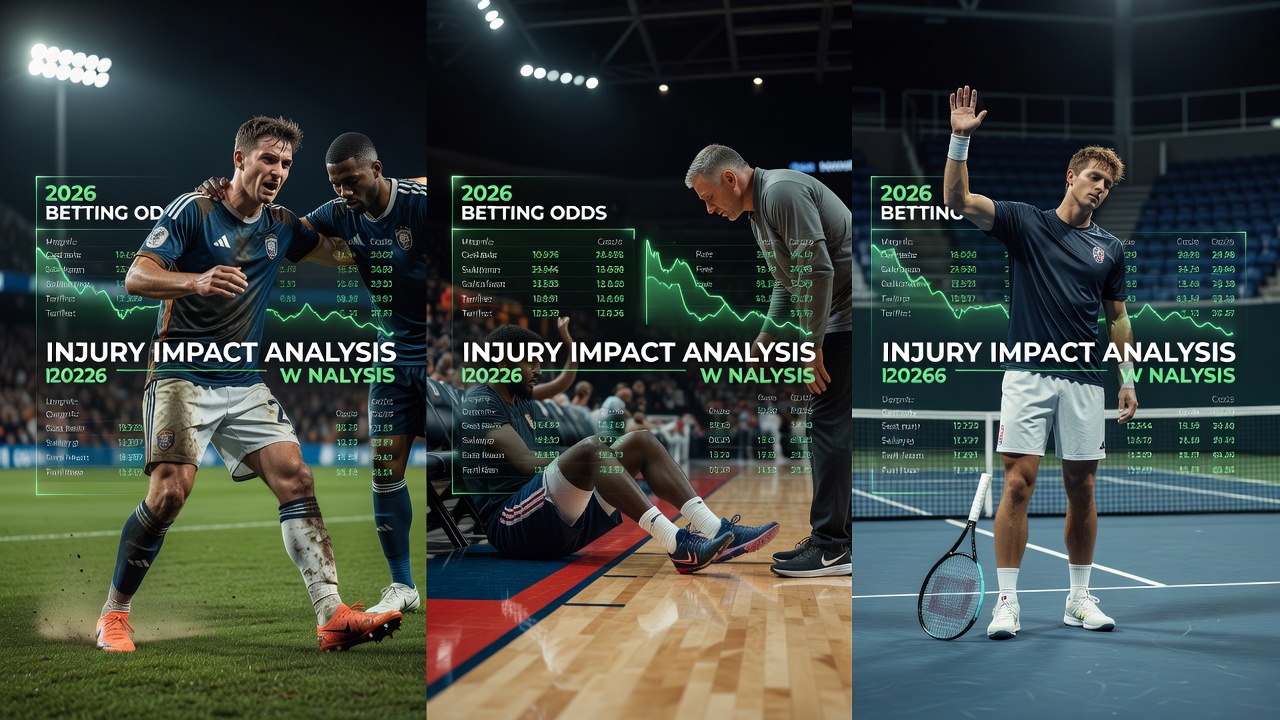
Player injuries remain one of the most powerful variables that reshape betting odds across football, the NBA, and tennis in 2026. Sharp bettors who monitor these developments gain measurable edges by spotting line movements before the broader market reacts. This comprehensive guide breaks down the mechanics of injury-driven odds shifts, provides sport-specific examples with historical context, and delivers practical monitoring frameworks that can be implemented immediately. Understanding how injuries influence expected outcomes allows bettors to identify market inefficiencies that casual participants often overlook.
Real-Time Injury Tracking Tools
Effective bettors rely on multiple data sources rather than a single feed. Official league injury reports, combined with advanced analytics platforms, deliver the earliest signals. Cross-referencing team medical updates with historical performance data after similar absences allows for precise probability adjustments. Tools such as league apps, third-party aggregators, and social media monitoring from verified team accounts provide layered confirmation. In 2026, integration of AI-driven alerts has become standard, notifying users within minutes of official announcements. Bettors should maintain accounts across several platforms to avoid single-point delays during high-stakes periods like playoffs or major tournaments.
Historical Case Studies and Line Movements
Examining past seasons reveals consistent patterns. When a star player exits unexpectedly, totals often drop while moneyline odds for the opposing team tighten rapidly. These movements frequently accelerate within the first 30 minutes of news breaking, creating short windows for value bets. For instance, in previous NBA seasons, the absence of a top scorer shifted point spreads by an average of four to six points within two hours. Similar dynamics appear in football when key defenders are ruled out, pushing under totals lower as offensive efficiency declines. Tennis withdrawals in Grand Slams have historically moved outright winner odds by double-digit percentages in the same day. These case studies underscore the importance of speed and quantitative modeling over reactive betting.
Football Injury Impacts
In football, defensive absences create the largest swings in over/under markets. Midfield injuries tend to affect possession-based totals more than goal-scoring lines. Bettors who track squad depth charts can anticipate how substitutes alter expected goal models. Premier League and UEFA competitions demonstrate pronounced effects during congested schedules, where rotation becomes critical. A hamstring injury to a starting striker, for example, can reduce a team’s expected goals by 0.4 to 0.7 per match based on historical substitution data. Monitoring warm-up reports and pre-match press conferences adds another layer of insight that sharp bettors exploit regularly.
NBA Injury Impacts
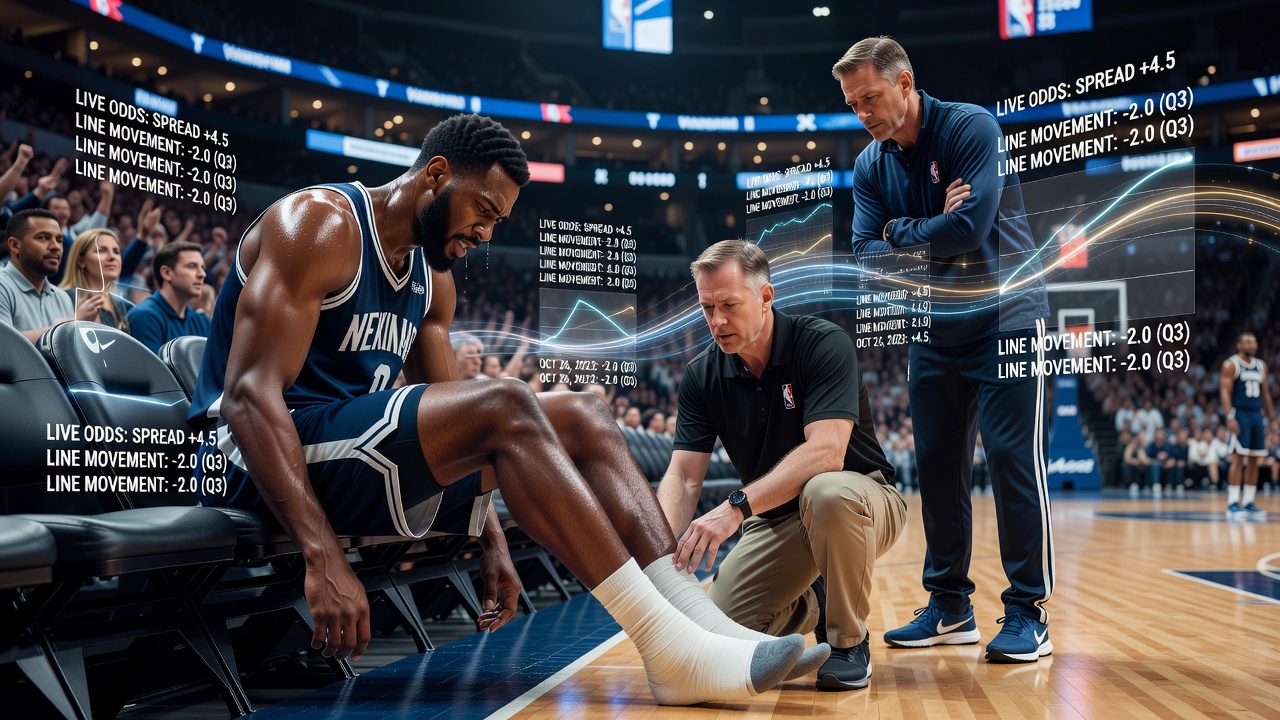
NBA official site reports show that superstar absences produce the sharpest point-spread movements. Load management decisions announced on game day often move totals by several points within hours. Back-to-back scheduling amplifies these effects, particularly for teams already dealing with multiple absences. Historical data from the 2024-2025 season onward illustrates how a single All-Star absence can flip a three-point favorite into an underdog. Bettors benefit from comparing pre-injury and post-injury efficiency ratings to recalibrate projections accurately.
Tennis Injury Impacts
Tennis retirements create binary outcomes. A high-profile withdrawal shifts outright tournament odds dramatically while also influencing set and game totals in remaining matches. Surface-specific recovery data further refines these adjustments. ATP and WTA events show that lower-body injuries affect movement-heavy players more severely on clay than on grass. Bettors tracking practice session footage and medical timeouts can anticipate retirements before they occur. In 2026, increased emphasis on player fitness tracking has made these signals more reliable for live betting opportunities.
Adjusting Betting Models for Injury Severity
Simple binary flags fail to capture nuance. Sophisticated models assign weighted values based on injury type, expected recovery timeline, and positional importance. Integrating these weights into pre-game projections produces more accurate fair odds. Bettors should categorize injuries by severity tiers: minor (under one week), moderate (one to four weeks), and major (season-altering). Each tier requires different adjustment percentages applied to team totals and spreads. Comparing adjusted models against current market lines reveals value discrepancies that persist until the public catches up.
Step-by-Step Monitoring Checklist
- Review official injury reports 90 minutes before tip-off or kickoff.
- Compare current lines against opening numbers using multiple sportsbooks.
- Assess substitute player historical performance in similar roles.
- Monitor public betting percentages for overreaction signals.
- Re-evaluate totals after any late scratches.
- Document each injury’s impact on your personal database for future reference.
- Cross-check with expert analysis from trusted sources to validate your adjustments.
Following this checklist consistently reduces emotional decision-making and highlights repeatable edges across multiple sports.
Integrating Public Betting Trends
Public money often piles onto popular teams after injuries are announced, creating contrarian opportunities. Tracking these percentages alongside sharp action indicators helps isolate true value. When public betting exceeds 70 percent on one side following an injury report, the opposing side frequently offers inflated odds. Combining this data with your own severity-weighted models maximizes profitability over time.
Common Pitfalls and FAQs
How soon after an injury announcement should I bet? The first 15-45 minutes usually offer the largest inefficiencies before limits tighten and books adjust.
Do all injuries affect odds equally? No. Minor ailments that do not alter starting lineups produce negligible movement compared with season-ending injuries.
Should I avoid betting entirely when key players are questionable? Not necessarily. Reduced variance in certain markets can still yield positive expected value when modeled correctly.
What mistakes should new bettors avoid? Overreacting to every minor update and ignoring depth chart quality are the most common errors. Always verify multiple sources before placing wagers.
How do I build a personal injury database? Start by logging every announced injury, the resulting line movement, and the final outcome for at least 50 events across each sport.
Conclusion
Mastering injury-driven odds shifts requires disciplined tracking, quantitative adjustments, and awareness of market psychology. Bettors who implement structured checklists and maintain sport-specific databases consistently outperform those relying on intuition alone. By applying the frameworks outlined above across football, NBA, and tennis, you position yourself to capitalize on inefficiencies that the broader market overlooks in 2026.

No comments yet. Be the first!