 GambleLore

2026 Sports Betting Tips: Spotting and Avoiding Common Pitfalls
Sports betting in 2026 continues to grow in popularity, with millions of enthusiasts analyzing statistics, following expert picks, and placing wagers on major leagues and horse racing events. However, success requires more than luck or intuition. Frequent errors in judgment, such as emotional reactions and flawed analysis, consistently lead to losses. This comprehensive guide explores the most common pitfalls in sports betting and horse racing tips, providing real-world examples, detailed comparisons, and practical tools to help bettors build sustainable habits and improve long-term results.
Understanding Psychological Traps in Betting
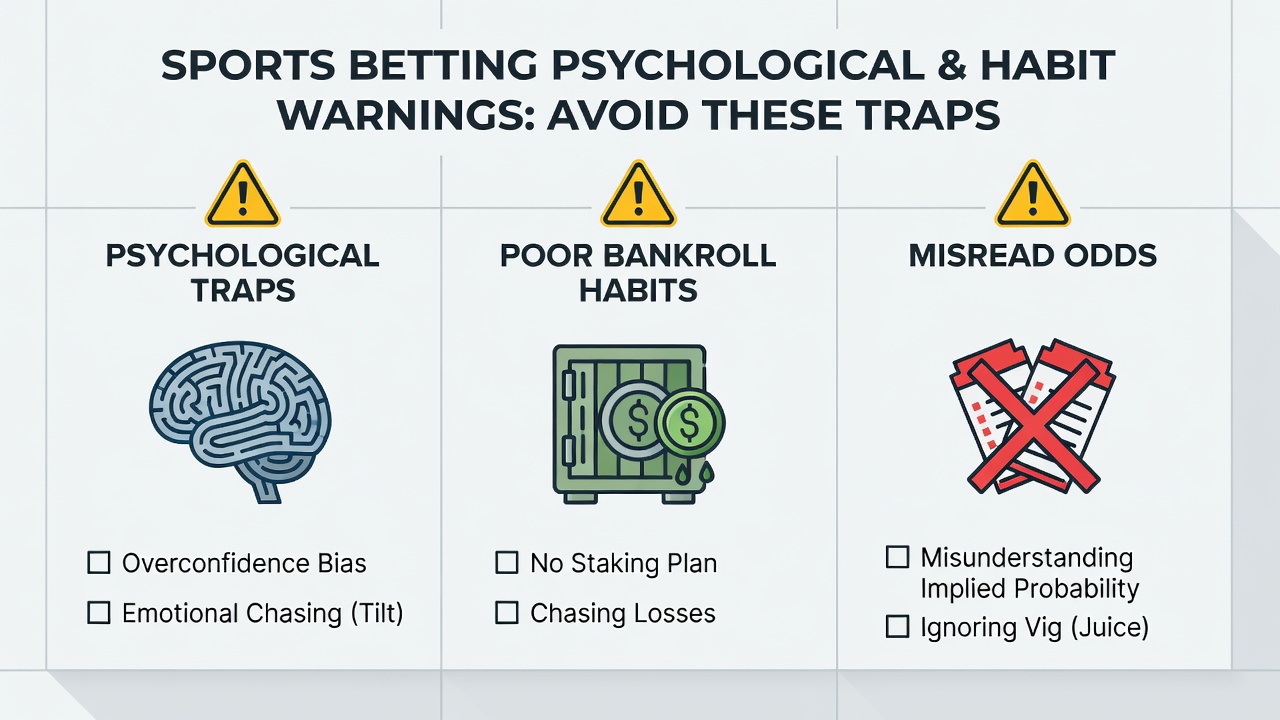
Psychological factors often undermine even the most knowledgeable bettors. One prevalent issue is the gambler's fallacy, where individuals believe that a series of losses increases the likelihood of an imminent win. This misconception ignores the independent nature of most sporting events. Confirmation bias compounds the problem by prompting bettors to selectively focus on information that supports their initial hunch while dismissing contradictory data such as poor recent form or unfavorable weather conditions.
Another trap involves overconfidence after a few successful bets. Bettors may inflate their perceived expertise and increase stake sizes dramatically, only to suffer larger setbacks. Real-world examples from early 2026 illustrate these issues clearly. In the lead-up to the Super Bowl, many casual bettors chased popular moneyline selections on favorites despite defensive vulnerabilities highlighted in advanced analytics. The result was widespread disappointment when underdogs capitalized on overlooked matchups. Similarly, in horse racing during the spring meets, bettors fell victim to recency bias by overvaluing horses with one strong recent performance while ignoring historical trends on specific track surfaces.
Common Bankroll Management Errors and How to Fix Them
Bankroll mismanagement ranks among the top reasons bettors exit the activity prematurely. A core principle is to risk only a small percentage of the total bankroll on any single wager, typically between one and three percent. Impulsive bettors frequently violate this rule by allocating five to ten percent or more after a winning streak, exposing themselves to rapid drawdowns during inevitable losing periods.
Step-by-step checks before placing any wager include calculating the current bankroll precisely, determining the appropriate stake based on the percentage rule, cross-referencing team news and injury reports from multiple outlets, and evaluating odds value across several licensed operators. Disciplined bettors maintain detailed spreadsheets logging every bet, stake, odds, and outcome, allowing weekly reviews for patterns. Impulsive bettors, by contrast, often skip record-keeping and rely on memory, leading to repeated mistakes.
Practical scenarios demonstrate the difference. A bettor starting with a 5000 unit bankroll who adheres to the two-percent rule risks 100 units maximum per bet. This approach preserves capital through a 10-bet losing streak. An impulsive counterpart risking 500 units per wager could deplete the same bankroll in just a few poor results, highlighting why structured limits matter for longevity.
Misreading Odds and Identifying True Value
Odds represent probabilities adjusted by bookmaker margins, yet many bettors misinterpret them. Converting decimal odds to implied probability involves dividing one by the odds figure and multiplying by 100. For example, odds of 2.50 imply a 40 percent chance, but if your independent analysis suggests a 48 percent likelihood, value exists. Failing to perform this calculation regularly leads to bets with negative expected value over time.
Comparisons between disciplined and impulsive approaches reveal stark contrasts. Disciplined bettors shop for the best odds, seek discrepancies across markets, and avoid betting simply because an event feels exciting. Impulsive bettors often accept the first available odds without shopping and chase promotions without verifying underlying value.
Case Studies from Major 2026 Events
The 2026 Kentucky Derby provided clear lessons when bettors overlooked track conditions. Horses with proven mud-running ability outperformed expectations on a rain-softened surface, yet many ignored pace analysis in favor of morning-line favorites. Those who adjusted selections based on workout reports and historical wet-track data achieved better outcomes. In NBA playoffs, overreliance on star player narratives without considering defensive schemes led to losses for impulsive bettors, while disciplined ones factored in travel schedules and back-to-back game fatigue.
Additional examples from European football leagues in spring 2026 showed the cost of ignoring referee tendencies and set-piece statistics. Bettors who incorporated these granular details avoided common traps and maintained positive returns across multiple matchdays.
Building an Actionable Pre-Bet Checklist
A robust checklist helps enforce discipline. Begin by assessing your emotional state and postponing bets if frustration or excitement is high. Verify all statistics from at least two independent sources. Set a strict daily loss limit and stop immediately upon reaching it. Record every wager in a dedicated spreadsheet with notes on rationale. Conduct a weekly performance review to identify recurring errors. Finally, compare your own probability estimates against market odds before committing funds.
Disciplined Versus Impulsive Approaches: A Detailed Comparison
Disciplined bettors treat the activity as a long-term endeavor, emphasizing research, record-keeping, and emotional control. They accept variance and focus on process over individual results. Impulsive bettors prioritize short-term thrills, often increasing stakes after wins and chasing losses after defeats. Over months, the disciplined group typically shows steadier equity curves, while impulsive approaches lead to larger swings and higher rates of account depletion.
Sustaining Long-Term Betting Strategies
Long-term success depends on continuous education and periodic strategy adjustments. Bettors should revisit their methods quarterly, incorporating new data sources and refining probability models. Resources from authoritative organizations support responsible practices and help maintain perspective during downswings.
Frequently Asked Questions
How can I sustain a long-term betting strategy in 2026?
Focus on value identification rather than volume, maintain strict percentage-based bankroll rules, and conduct monthly performance audits. Adjust models based on evolving league trends while avoiding emotional overrides.
What are the biggest mistakes when following horse racing tips?
Common errors include ignoring pace and track bias, overbetting familiar favorites, and failing to account for trainer and jockey changes. Always cross-check tips against primary data sources.
Should I subscribe to betting tips services this year?
Only consider services with publicly verified long-term records and transparent methodologies. Independently verify all recommendations and integrate them into your own research process rather than following blindly.
How do I handle losing streaks without tilting?
Implement mandatory cooling-off periods after three consecutive losses and reduce stake sizes temporarily. Review each bet objectively to separate variance from process errors.
For responsible gambling support and tools, consult the UK Gambling Commission and the National Council on Problem Gambling. Additional guidance on behavioral aspects of gambling is available through established public health channels.
Conclusion
Avoiding common pitfalls in 2026 sports betting requires awareness of psychological biases, rigorous bankroll controls, accurate odds evaluation, and consistent application of checklists. By studying case examples from major events and committing to disciplined processes, bettors can shift from reactive gambling to strategic decision-making. Sustainable results emerge from patience, detailed record-keeping, and ongoing refinement rather than quick fixes or emotional reactions.


No comments yet. Be the first!