 GambleLore

Introduction to Fixed Odds and Spread Betting in 2026
Advanced bettors in 2026 are increasingly exploring beyond traditional fixed-odds wagers to include spread betting for greater flexibility and potentially higher returns. This showdown examines the core differences between fixed odds and spread betting across football and horse racing, focusing on risk profiles, market availability, and strategic applications. The year 2026 brings enhanced data analytics tools and real-time platforms that make both approaches more accessible than ever before. Bettors seeking to diversify beyond standard match-winner bets now have sophisticated options that reward deeper market understanding.
Both methods allow diversification, yet they cater to distinct risk appetites. Fixed odds provide clear, capped outcomes while spread betting introduces variable stakes tied to performance margins. Understanding these distinctions is essential for anyone aiming to build a balanced portfolio of wagers throughout the season.
Key Differences in Risk and Potential Returns
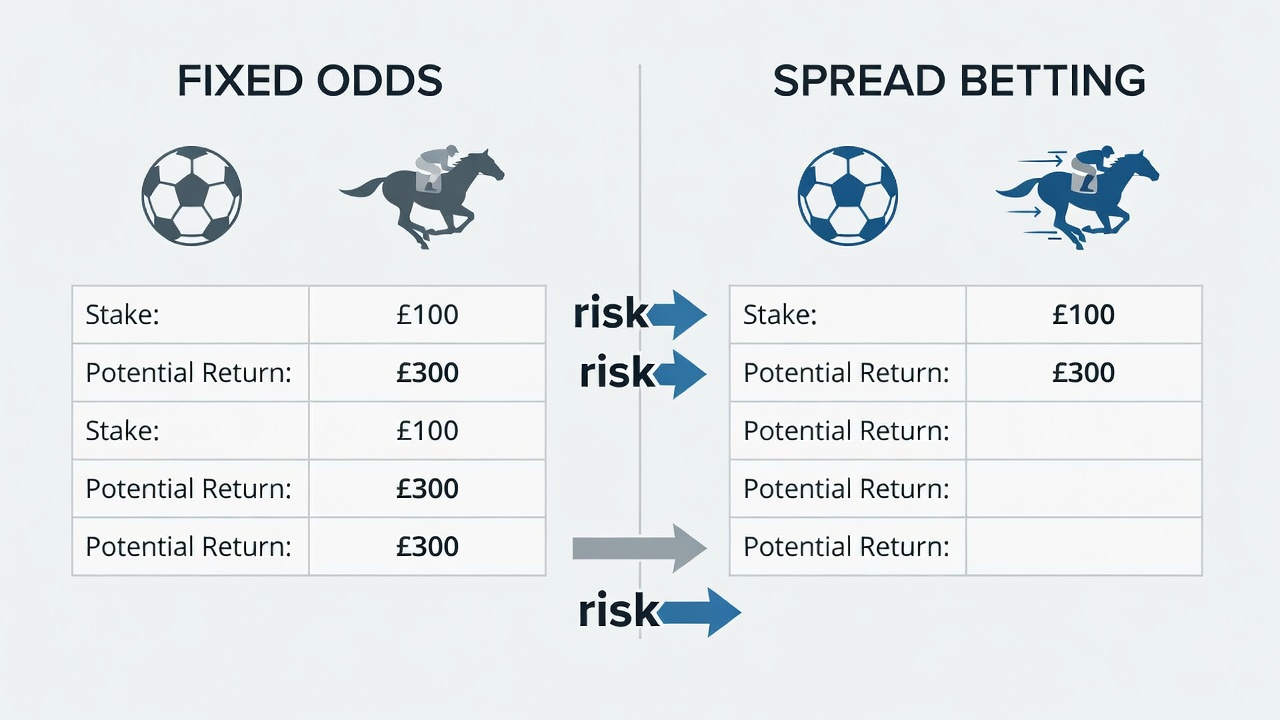
Fixed odds betting locks in a predetermined payout based on the stake and odds at placement. If a team wins at 3.0 odds, a £100 stake returns £300 total. Spread betting, by contrast, involves buying or selling points on a margin; profits or losses scale with how far the actual result deviates from the spread. This creates asymmetric reward potential where small edges can compound dramatically.
Risk is inherently higher in spread betting because losses can exceed the initial stake. Market availability also differs: fixed odds dominate mainstream football leagues, while spread betting often appears in niche horse racing ante-post markets. Advanced users must also consider margin requirements and overnight financing costs that can erode returns over multi-day events. Liquidity plays a major role too, as popular football fixtures offer tight spreads while obscure racing markets may carry wider quotes that reduce profitability.
Real-World Examples in Football and Horse Racing
Consider a Premier League match between Manchester City and Liverpool. A fixed-odds bettor might wager on City to win at 1.8, securing a known return regardless of the final scoreline. A spread bettor could buy City’s win margin at +1.5 goals; if City wins 3-0, the profit multiplies accordingly, but a narrow 1-0 victory would result in a loss. Another football scenario involves total goals markets where fixed odds pay on over 2.5 goals while spread betting allows traders to sell the total at 3.2, profiting if the match finishes goalless or with only two goals.
In horse racing, the Grand National offers clear contrasts. Fixed odds on a favourite at 5.0 deliver straightforward returns on a win. Spread betting on a horse’s finishing position allows traders to sell at 8.5 places; better performance yields scaled gains while poor runs create amplified losses. The Cheltenham Festival provides further examples where spread markets on distance beaten or winning margins reward precise form analysis that fixed odds cannot capture. These real-world applications highlight how the same event can produce very different outcomes depending on the chosen method.
Step-by-Step Decision Framework
Follow this framework when choosing between approaches:
- Assess your risk tolerance: fixed odds suit conservative profiles; spread betting fits those comfortable with unlimited downside. Start by reviewing your historical drawdown tolerance over the past twelve months.
- Review market liquidity: check depth on major exchanges for your chosen sport or race. Thin markets often hide poor value even when the directional call appears correct.
- Calculate implied probabilities versus spreads to identify value. Convert fixed odds into percentages and compare against the midpoint of the spread quote for misalignment opportunities.
- Simulate outcomes across multiple scenarios before committing capital. Use historical data sets from at least three comparable events to stress-test both strategies.
- Monitor regulatory updates affecting each product in your jurisdiction. Changes in leverage limits or tax treatment can shift the economics overnight.
Market Availability and 2026 Trends
Fixed odds remain the most widely available product across global operators, especially for high-profile football leagues. Spread betting has grown in horse racing and certain tennis and basketball player-performance markets. In 2026 many platforms now integrate both products within the same interface, allowing seamless switching between styles during live events. Liquidity has improved thanks to institutional participation, yet retail traders still face wider spreads outside peak hours.
Side-by-Side Comparison Table
| Aspect | Fixed Odds | Spread Betting |
|---|---|---|
| Risk Level | Limited to stake | Potentially unlimited |
| Return Structure | Fixed multiplier | Variable per point |
| Best For | Predictable outcomes | Margin-based analysis |
| Availability | Wide across sports | Stronger in racing |
| Tax Treatment | Generally tax-free | Generally tax-free for recreational users |
| Learning Curve | Low | Medium to high |
Common Pitfalls to Avoid
Many advanced users over-leverage in spread markets without position sizing. Others ignore tax rules or select platforms lacking robust risk controls. Always diversify and maintain strict bankroll discipline. Another frequent mistake is failing to account for slippage on live spread bets during fast-moving events such as injury time in football. Traders also sometimes chase losses by doubling exposure after an adverse price movement, which can quickly exhaust capital. Finally, neglecting to compare effective margins across multiple operators leaves value on the table.
Advanced Strategies for Diversification
Experienced bettors combine both methods within the same event. For instance, a fixed-odds bet on a horse to win can be hedged with a spread sell on its finishing position. This creates a layered position that reduces variance while preserving upside. Another tactic involves using fixed odds for primary directional views and spread markets only for fine-tuning expected margins once the event is underway.
FAQ: Tax Implications and Platform Selection
Are winnings from spread betting taxable?
In most jurisdictions including the UK, betting winnings remain tax-free for recreational punters as of 2026-07-04. Professional traders should consult local revenue authorities.
How do I choose a reliable platform?
Prioritise operators regulated by bodies such as the UK Government and offering transparent margin structures. Cross-reference user reviews on established forums before depositing.
What regulatory bodies oversee spread betting?
The Financial Conduct Authority provides oversight for spread betting products in the United Kingdom, ensuring client money protection and fair pricing.
Conclusion
Mastering the 2026 showdown between fixed odds and spread betting empowers sophisticated bettors to tailor strategies precisely. By weighing risk, applying structured decision processes, and avoiding common errors, users can optimise returns across football and horse racing while staying compliant. Continuous education and disciplined execution remain the cornerstones of long-term success in these evolving markets.


No comments yet. Be the first!