 GambleLore

Introduction to Bankroll Mastery in Horse Racing
Horse racing betting offers excitement and potential rewards, but without proper bankroll management, even skilled bettors can quickly deplete their funds. This 2026 guide focuses on sustainable strategies that protect and grow your betting capital over time. Rather than chasing quick wins, the emphasis is on disciplined approaches that align with responsible gambling principles and help you stay in the game for the long haul.
Effective bankroll management starts with treating your betting funds as a dedicated business resource. By setting clear rules for allocation, sizing, and tracking, you create a framework for consistent decision-making throughout the racing season. Whether you are a complete beginner or an intermediate punter looking to refine your approach, these fundamentals will help you build resilience against the inevitable ups and downs of the sport.
Setting a Dedicated Betting Budget
The foundation of any successful horse racing strategy is a separate betting budget. Determine an amount you can comfortably afford to lose without impacting daily life or financial obligations. This budget should be fixed for the year and reviewed only at set intervals, such as quarterly reviews where you assess overall performance without making impulsive increases.
Once established, divide the total bankroll into segments for different race types or meetings. This prevents overexposure to a single event and maintains flexibility across flat racing, jumps, and international fixtures in 2026. Practical steps include calculating your monthly disposable income, subtracting essential expenses, and allocating no more than 10-15% of that remainder to betting. Revisit this allocation only after demonstrating consistent profitability over at least three months.
Unit Sizing: The 1-2% Rule
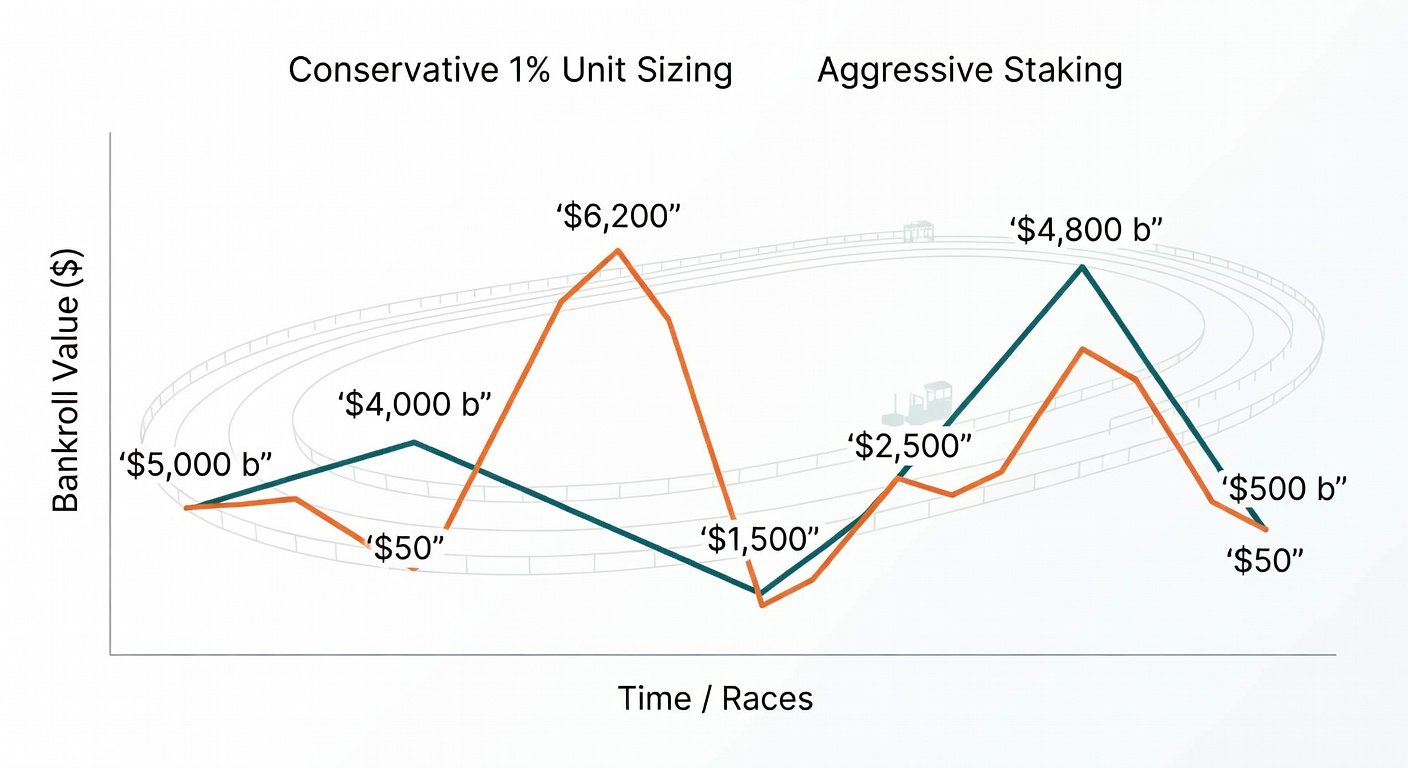
Professional bettors size each wager as a small percentage of their current bankroll. The standard recommendation is 1% for standard bets and up to 2% for higher-confidence selections. This approach limits the impact of losing streaks while allowing steady growth during winning periods. For example, with a $5,000 bankroll, a 1% unit equals $50. Even after a sequence of losses, the unit size adjusts downward automatically, protecting the overall capital. This method has proven effective across thousands of races worldwide.
Variations exist for different bet types. Place bets on favorites might stay at 1%, while each-way bets or longer-priced selections could use 0.75% to account for higher variance. Always recalculate your unit size after every session based on the updated bankroll total.
Tracking Wins and Losses with Simple Tools
Accurate record-keeping transforms guesswork into data-driven decisions. A basic spreadsheet can track date, race, selection, stake, odds, result, and profit or loss. Free tools like Google Sheets or Excel templates allow filters by track, jockey, or distance, revealing patterns over time. Include additional columns for notes on why the bet was placed and post-race analysis to capture lessons learned.
Review your data weekly to identify strengths and weaknesses. Bettors who maintain detailed logs consistently outperform those relying on memory alone, especially when analyzing 2026 seasonal trends. For instance, you might discover that your strike rate improves significantly on certain surfaces or distances, allowing you to focus future stakes accordingly. Export monthly summaries to visualize win rates, average odds, and return on investment.
Adjusting Stakes Based on Confidence Levels
Not every bet carries the same conviction. Create a simple confidence scale from 1 to 5. A level-5 selection might warrant 1.5% of the bankroll, while a level-3 bet stays at the standard 1%. This graduated system rewards thorough analysis without abandoning risk controls. Level 1 and 2 bets should be avoided entirely or treated as speculative with minimal stakes.
Always document the reasoning behind each confidence rating. Over time, this practice sharpens judgment and reduces emotional betting. Combine this with value assessment by comparing your estimated true odds against the available market odds before finalizing the stake.
Aggressive vs Conservative Approaches Compared
Aggressive bettors often use 3-5% units or chase short-term variance for rapid growth. While occasional big wins occur, this style frequently leads to sharp drawdowns and eventual bankroll destruction. Conservative bettors, by contrast, stick to 1% units and focus on value over volume.
Data from 2026 racing seasons shows conservative strategies deliver superior long-term returns with far lower volatility. The difference becomes especially clear during losing runs that test even experienced punters. Aggressive approaches may suit short-term tournaments but rarely survive a full season of flat and national hunt racing. Conservative methods build compounding gains that become substantial after 12 months of disciplined execution.
Real-World Examples from 2026 Races
Consider a bettor who started 2026 with a $4,000 bankroll and applied strict 1% unit sizing. After six months of disciplined tracking and selective staking, the bankroll grew to $6,200 despite several losing weeks. This success came from avoiding bets below level-3 confidence and consistently reviewing spreadsheet data to eliminate unprofitable angles.
Another bettor using aggressive sizing on the same races saw their $4,000 bankroll reduced to under $1,500 after a poor run at Royal Ascot. A third example involves an intermediate punter who started with $2,500, used 1.5% units on high-confidence selections only, and reached $4,800 by mid-year through careful tracking of trainer form and going conditions. These contrasting outcomes highlight how unit discipline, rather than picking winners alone, determines sustainability.
Common Pitfalls and How to Avoid Them
Many bettors fail by increasing stakes after wins or doubling down after losses. Set strict rules in advance and stick to them regardless of recent results. Another frequent mistake is mixing personal funds with the betting bankroll, which clouds judgment and leads to overspending. Maintain complete separation by using a dedicated account or envelope system for betting money only.
FAQ: Tools and Pitfalls for 2026 Bettors
How do I avoid chasing losses?
Set a daily loss limit equal to three units. Once reached, stop betting for the day. This simple rule prevents emotional decisions that compound losses and derail long-term plans.
What tools help 2026 bettors track performance?
Popular options include dedicated betting journals, spreadsheet templates shared by professional syndicates, and mobile apps with automated import from betting exchanges. Choose tools that export clean data for monthly reviews and performance graphs.
Is bankroll management suitable for small starting amounts?
Yes. Even a $500 bankroll benefits from 1% units. The principles scale regardless of total size and build habits that support growth as the bankroll increases over successful seasons.
Should I adjust my bankroll mid-season?
Only make adjustments after quarterly reviews and only if you have achieved at least 20% growth. Never increase the bankroll simply because you feel lucky or after a single big win.
Conclusion
Bankroll mastery in horse racing is not about finding secret systems but about consistent application of proven money-management rules. By setting a dedicated budget, using conservative unit sizing, tracking every bet, and adjusting stakes thoughtfully, you position yourself for long-term profitability in 2026 and beyond. Prioritize process over results, and sustainable success will follow.

No comments yet. Be the first!