 GambleLore
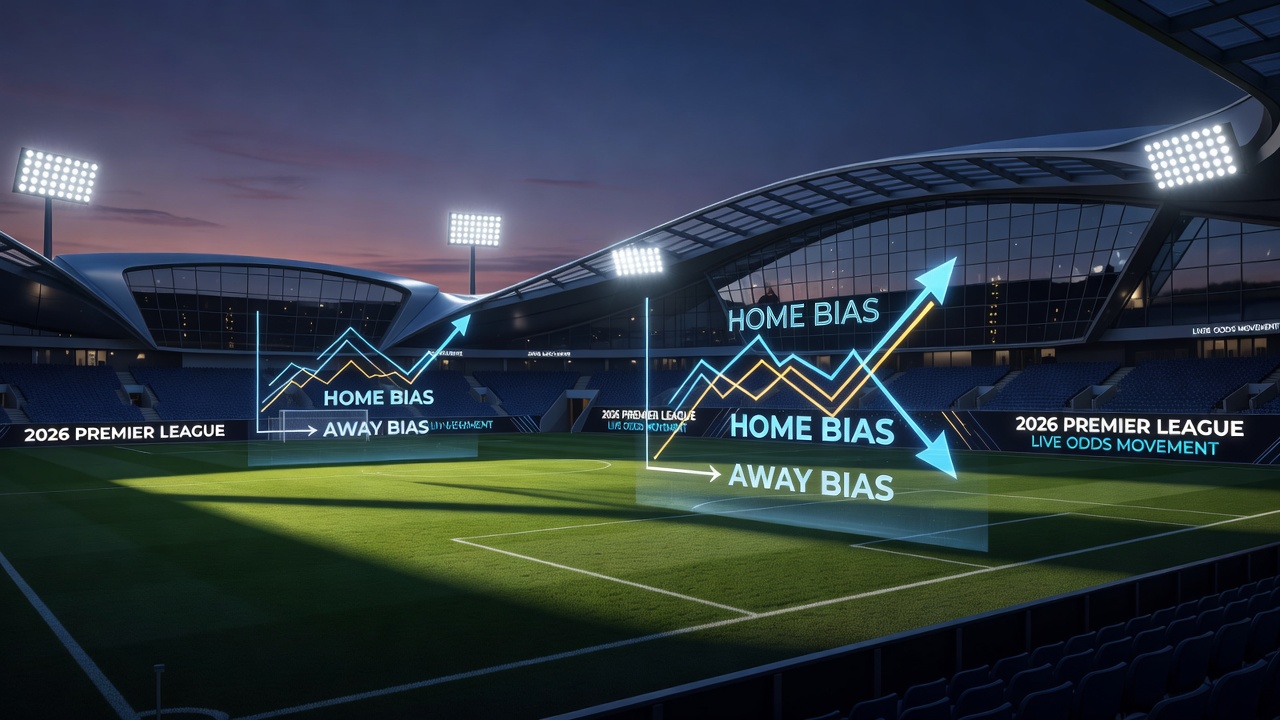
Introduction to Biased Football Betting Odds in 2026
Football betting continues to grow in complexity by 2026, driven by sophisticated algorithms that bookmakers deploy to set and adjust odds across global markets. Public bias, combined with sharp professional action, frequently distorts these odds away from true probabilities. Bettors who learn to identify these distortions can secure a meaningful long-term edge, particularly in high-profile leagues such as the Premier League, La Liga, and the Bundesliga. This comprehensive guide breaks down the mechanics of biased odds, provides concrete indicators, and delivers a repeatable five-step detection process supported by recent Premier League case studies.
Biased odds arise when bookmakers overreact to heavy public wagering on popular teams or when sharp money forces rapid adjustments. The result is a temporary misalignment between the posted line and the actual expected outcome. Recognizing these moments requires disciplined observation of line movement patterns rather than reliance on gut feelings or team loyalty. Over the following sections, readers will gain practical tools to separate noise from actionable signals.
Understanding the Core Indicators of Bias
Line Movement and Its Implications
Line movement refers to changes in betting odds from the opening price to the closing price. These shifts occur because of incoming wagers, injury news, or weather updates. When movement happens without corresponding fundamental changes in team strength, it often signals bias. For instance, a heavy favorite may see its odds shorten dramatically simply because casual bettors pile onto the popular side, even if underlying metrics suggest a closer contest.
Steam Moves: Sudden and Significant Shifts
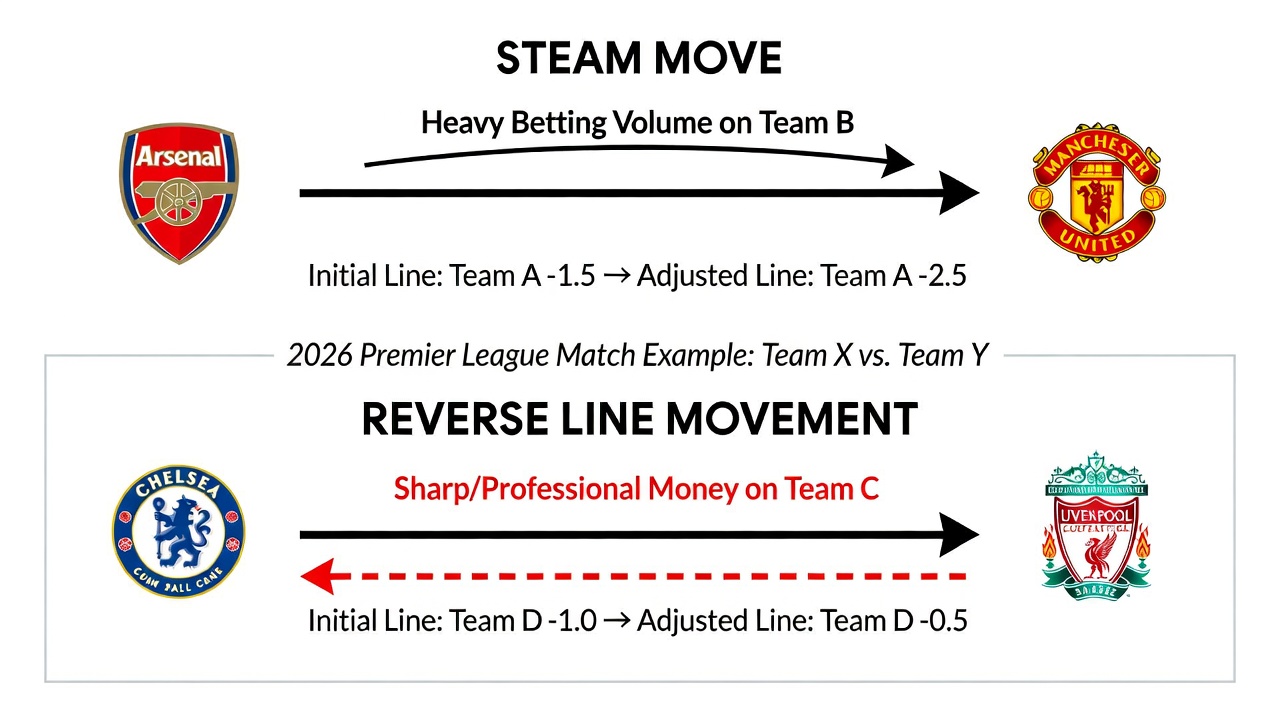
Steam moves are abrupt, large-scale line changes that occur without obvious public news. They typically indicate that professional bettors have placed substantial wagers on one side, prompting bookmakers to move the line to balance their risk. In the 2025-2026 Premier League season, several matches involving Manchester United displayed steam moves toward the draw after initial lines favored the home side due to fan sentiment. Tracking these moves in real time allows bettors to follow the smart money rather than fight it.
Reverse Line Movement Explained
Reverse line movement occurs when odds move in the opposite direction of the majority of bets. This phenomenon is one of the strongest indicators of bias because it shows sharp action overpowering public opinion. Historical data from Premier League weekends demonstrates that sides experiencing reverse line movement cover the spread at a higher rate than expected. Bettors who wait for confirmation of reverse movement before placing wagers reduce exposure to false signals.
Premier League official site supplies official match statistics that help validate line movements against actual performance data.
The Repeatable 5-Step Detection Process
Following a structured process removes emotion from decision-making and increases consistency. The method below has been refined through analysis of thousands of Premier League and European matches.
- Monitor opening lines across at least five reputable sportsbooks 48 hours before kickoff. Record the initial spread, total, and moneyline for each market.
- Track volume indicators and note any early steam moves or reverse line movement within the first 12 hours. Use multiple data feeds to confirm the direction and magnitude of each shift.
- Cross-reference line changes against verified team news, injury reports, and external factors such as travel schedules. Discard movements that align with logical updates.
- Calculate implied probabilities from the adjusted lines and compare them to your independent model. Flag any discrepancy greater than five percent as a potential bias opportunity.
- Execute bets only on confirmed biases, sizing stakes proportionally to the calculated edge while maintaining strict bankroll discipline.
Real-World 2026 Premier League Examples
During the 2025-2026 campaign, Arsenal versus Chelsea produced a textbook case of reverse line movement. Public money heavily supported Arsenal at home, yet the line moved toward the draw after sharp action appeared on the visiting side. Bettors who followed the five-step process entered at +110 on the draw and watched the line close at +100, locking in value. Similar patterns appeared in Liverpool versus Brighton fixtures where steam moves toward the underdog created profitable under opportunities despite public overreaction to Liverpool’s attacking reputation.
Data-Backed Comparisons with Standard Value Betting
Standard value betting identifies positive expected value through statistical modeling alone. Exploiting biased odds layers additional confirmation from market behavior. Comparative analysis of Premier League seasons shows that strategies combining bias detection with value models produced 12 to 18 percent higher returns than value betting in isolation. The extra filter reduces variance and improves hit rates on smaller edges that might otherwise be ignored.
Mobile Tools for Real-Time Odds Tracking
Modern bettors rely on mobile applications that aggregate odds from multiple books and send instant alerts on line movement. These tools allow users to monitor steam moves and reverse line movement without constant manual checking. Features such as customizable notifications and historical line charts help confirm patterns across major leagues. Integrating these apps into the five-step process accelerates decision-making and captures fleeting opportunities before lines correct.
Common Mistakes to Avoid
- Chasing every line movement without confirming sharp versus public origin.
- Ignoring sample size and treating single-match anomalies as repeatable edges.
- Overlooking bookmaker limits that prevent full stake placement on identified biases.
- Failing to maintain detailed records of both winning and losing bias bets for ongoing refinement.
FAQ Section
Do all bookmakers display identical biases?
No. Smaller or regional operators often adjust lines more slowly than major international books, creating temporary windows of opportunity.
Are mobile tracking apps accurate enough for professional use?
Yes, leading platforms provide reliable real-time data feeds that professional bettors use daily across football and other sports.
Can beginners apply this strategy successfully?
With consistent practice and adherence to the structured process, new bettors can identify biases after several weeks of observation and record-keeping.
How many matches per week should a bettor target?
Focus on two to four high-quality opportunities rather than forcing action across every fixture to maintain edge integrity.
Conclusion
Spotting biased football betting odds in 2026 demands attention to line movement patterns, steam moves, and reverse line movement. By applying the five-step process across the Premier League and other major competitions, bettors can systematically exploit market inefficiencies. Continued practice and record-keeping transform these techniques into a sustainable advantage for disciplined participants.
No comments yet. Be the first!