 GambleLore
Introduction to Futures Betting in Major Sports
Futures betting allows bettors to wager on long-term outcomes such as season champions or tournament winners well before events conclude. Unlike game-by-game wagers, futures markets in the NBA, NFL, and tennis offer opportunities for value when odds shift due to injuries, form changes, or schedule adjustments throughout 2026. This approach appeals to bettors seeking long-term value rather than the volatility of daily plays. By locking in prices early, you can capitalize on inefficiencies that arise from limited information in the offseason or early season periods. This guide explores how futures odds differ across these sports, when to enter and exit positions, and practical evaluation methods backed by real-world examples from each league and tour.
Successful futures bettors treat these markets like investments, requiring research into team dynamics, player health, and external factors that evolve over months. In 2026, with expanded schedules and potential rule changes in professional sports, staying ahead of trends becomes even more critical for identifying value.
How Futures Odds Differ from Standard Betting Markets
Futures odds are quoted with longer payouts and reflect cumulative probabilities over months rather than single games. In the NBA and NFL, early season futures often feature inflated prices on favorites because books account for uncertainty around roster moves and performance consistency. Tennis futures, especially for Grand Slams, move rapidly based on player fitness and draw positions. Standard betting odds reset with each event, providing fresh lines, while futures accumulate risk factors like cumulative fatigue or mid-season trades. Understanding these differences helps identify mispriced markets before public money corrects them. For instance, an NBA championship future might start at +800 for a contender but shorten dramatically after a strong start, rewarding early entrants who correctly assessed roster depth.
Timing Your Entries and Exits in 2026 Futures
Optimal entry points occur during offseasons or early regular season when information is limited. Exits become profitable once teams or players demonstrate sustained form. Monitoring injury reports and training camp updates provides edges in football and basketball futures. For tennis, entering after a player’s strong performance in early-year events can lock in value before odds shorten. In the NFL, the best entries often come right after the draft when team-building narratives are still forming. NBA futures benefit from summer league observations, while tennis requires watching Australian Open results closely for hard-court specialists. Exiting too early forfeits potential gains, but holding through major injuries can erase value, so set alerts for key milestones like trade deadlines or quarterfinal appearances.
Evaluating Team and Player Form for Futures Value
Assess recent performance trends, head-to-head records, and coaching changes. In the NBA, focus on roster continuity and young talent development, including how new additions integrate during preseason. NFL evaluations should weigh offensive line strength and quarterback health, factoring in how offensive schemes adapt to personnel. Tennis requires analysis of surface-specific results and recent match loads, particularly how players handle back-to-back tournaments. Combine these factors with statistical models for repeatable decision-making. Advanced metrics such as efficiency ratings in basketball or expected points added in football provide objective layers beyond basic win-loss records. For tennis, serve percentages and return games won on specific surfaces reveal hidden strengths that futures odds may undervalue early in the year.
Accounting for Injury Trends and Schedule Strength
Injuries significantly impact futures prices. Track player availability through official league sources such as the NBA official site and NFL official site. Schedule strength analysis reveals teams facing tougher opponents later in the season, affecting championship probabilities. Tennis players with packed calendars risk burnout before majors, creating betting opportunities on rested competitors. In 2026, pay close attention to load management policies in the NBA that could sideline stars during critical stretches. NFL teams with difficult late-season road games may see their Super Bowl futures lengthen despite strong early records. Cross-reference injury histories with recovery data from previous seasons to project availability more accurately.
Concrete Examples of Profitable 2026 Futures Bets
In the NBA, a mid-tier team with strong depth could offer plus-money odds on conference winner futures if star players remain healthy; for example, a squad adding veteran leadership in the offseason might outperform expectations at +1200. An NFL example involves betting a rising defense-heavy squad for Super Bowl futures early in training camp, especially if their division features weaker competition. Tennis futures might target an in-form player for a specific Grand Slam after strong clay-court results, such as entering a French Open future at +900 following a Masters 1000 victory. Each case demonstrates how early analysis yields positive expected value when combined with schedule scrutiny and injury monitoring. Another NBA scenario could involve betting on a rising Eastern Conference team to reach the Finals at +2500 if their young core shows improvement in training camp metrics.
Repeatable Evaluation Checklist for Futures Bets
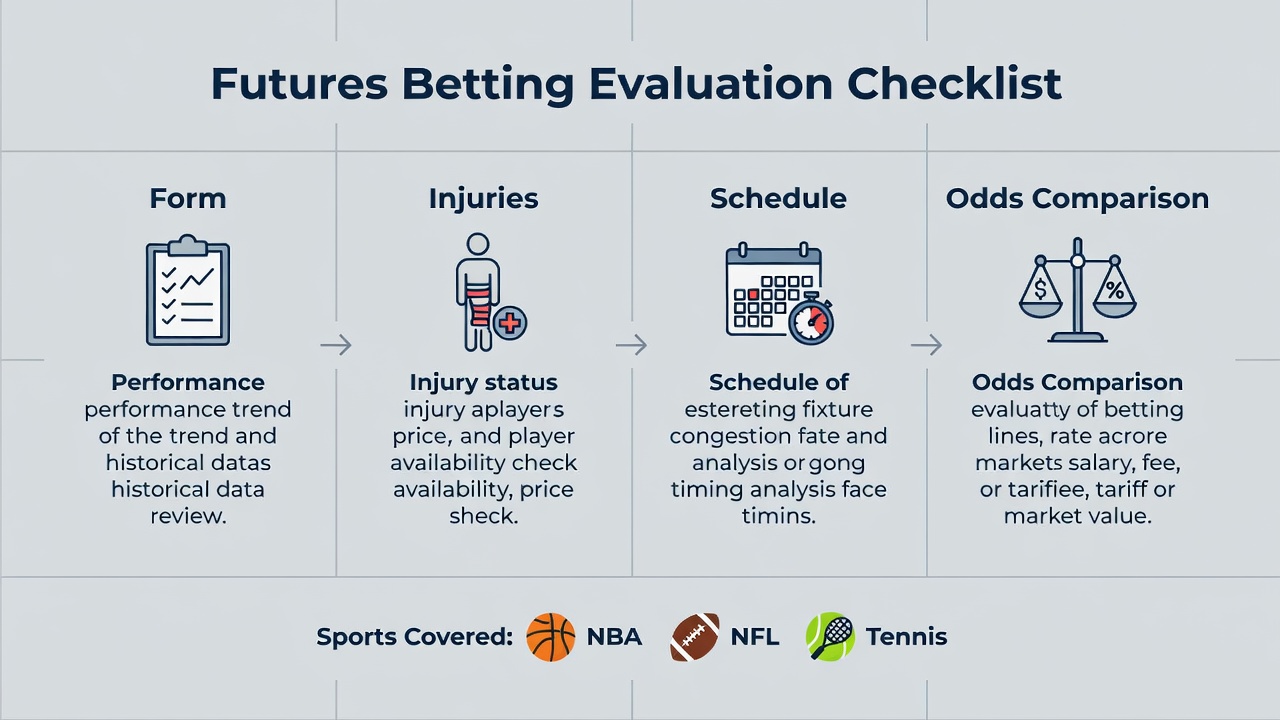
- Review current odds across multiple sportsbooks for discrepancies and shop for the best price before committing capital.
- Analyze last 10-15 games or matches for momentum indicators, including advanced stats like pace-adjusted efficiency or serve win percentages.
- Cross-reference injury reports and recovery timelines from reliable medical updates and team announcements.
- Evaluate remaining schedule difficulty using advanced metrics such as strength of schedule rankings and travel impact.
- Compare implied probabilities to your own calculated chances derived from historical data and current form.
- Set entry price targets and predetermined exit rules based on specific performance thresholds or injury events.
- Document all research notes and revisit them weekly to adjust for new developments like coaching changes or weather impacts in outdoor tennis events.
Risk Management Techniques for Long-Term Success
Limit futures exposure to 5-10% of your bankroll per position to avoid overcommitment on single outcomes. Use partial hedging when odds move favorably by placing smaller counter bets on related markets. Diversify across sports to reduce correlation risk, such as balancing an NBA title future with tennis Slam bets. Maintain detailed records of every futures wager to refine future strategies and identify patterns in your wins and losses. Consider setting stop-loss rules where you exit if a key player suffers a season-ending injury. Position sizing should also account for volatility, with smaller stakes on longer-shot futures that carry higher variance.
Frequently Asked Questions About Futures Betting
What makes futures different from live betting?
Futures lock in prices months ahead, while live betting reacts to in-game developments and offers constantly updating lines.
How do injuries affect 2026 futures odds?
Major injuries can lengthen odds dramatically, creating value for bettors who act quickly on updated assessments.
Is there a best time to cash out futures?
Exit when your researched probability exceeds current implied odds by a meaningful margin, often after key milestones like conference finals berths.
Can futures be combined with other bet types?
Yes, many bettors use futures as anchors and hedge with live or prop bets during the season for balanced exposure.
Conclusion
Mastering futures betting in the NBA, NFL, and tennis requires disciplined evaluation, timely entries, and strict risk controls. Apply the checklist and examples above to identify 2026 opportunities with lasting value while maintaining a structured approach to bankroll protection and ongoing research.


No comments yet. Be the first!