 GambleLore

Introduction to Prop Bet Mastery in 2026
Proposition bets, commonly known as prop bets, offer sports bettors a specialized path to potential value beyond traditional moneyline or point spread wagers. In 2026, with advanced analytics more accessible than ever, prop betting continues to attract those seeking an analytical edge in markets like player performance and game-specific events. This guide explores how to approach prop bets systematically, using data-driven methods to identify opportunities while minimizing risks associated with emotional decision-making. Prop bets differ from standard wagers by focusing on micro-outcomes within a match, allowing skilled bettors to leverage deep knowledge of individual players, team dynamics, and situational factors that general markets often overlook. As sports data evolves rapidly, mastering these bets requires ongoing adaptation to new statistical models and betting market efficiencies.
Understanding Prop Bet Categories
Prop bets fall into several key categories that allow bettors to focus on granular aspects of a contest. Player stats props center on individual achievements, such as points scored, assists, or rebounds in basketball, or shots on target in soccer. Game events include occurrences like total goals in soccer or turnovers in a quarter. Team milestones cover collective outcomes, including total team points or defensive records. These categories provide flexibility compared to match result bets, enabling targeted wagers based on specific insights. Within player props, distinctions exist between over/under lines on metrics like passing yards or goals scored, while game event props often involve timing elements such as first-half scoring totals. Team milestone props can include season-long accumulators or single-game team totals, broadening the scope for strategic diversification across a betting portfolio.
Research Methods Using Form Data and Analytics
Effective prop betting begins with thorough research. Start by reviewing recent form data, including player performance trends over the last five to ten games. Incorporate advanced analytics such as expected goals in soccer or player efficiency ratings in basketball. Cross-reference injury reports and matchup histories to refine predictions. Tools from official league sources enhance accuracy, for example by consulting NBA official resources for basketball stats or FIFA platforms for soccer insights. Consistent tracking of these elements builds a foundation for informed selections. Additional methods include analyzing home versus away splits, opponent defensive rankings, and pace-of-play metrics that influence scoring opportunities. Bettors should also monitor weather impacts for outdoor sports and rest advantages in back-to-back schedules, integrating multiple data layers to build robust probability models before committing to a prop.
Spotting Value in Prop Bet Odds
Value emerges when the implied probability from odds underestimates the true likelihood of an outcome. Compare bookie lines against your calculated probabilities derived from historical data. Look for discrepancies in niche props where public betting volume is lower. Adjust for external factors like weather in outdoor sports or travel schedules. This disciplined comparison helps isolate bets with positive expected value over time. To operationalize value spotting, calculate implied probabilities by converting decimal odds and then benchmark them against your own models built from at least 20 similar historical scenarios. Focus on props with low correlation to popular markets, as these often retain mispricings longer due to reduced sharp money influence.
Avoiding Common Traps in Prop Betting
Many bettors fall into pitfalls such as chasing recent hot streaks without context or selecting props based on favorite players rather than data. Overlooking variance in small sample sizes can lead to misleading conclusions. Emotional picks, influenced by fandom or media hype, often erode bankrolls. To counter these, maintain objective records of past bets and review them regularly for patterns in decision errors. Another frequent trap involves ignoring line movement; sharp bettors often move lines quickly on props, so monitoring early odds can reveal value before it disappears. Avoid props on injured or returning players without sufficient sample data, and steer clear of correlated props that amplify risk without proportional reward.
Practical Steps for Building a Prop Selection Checklist
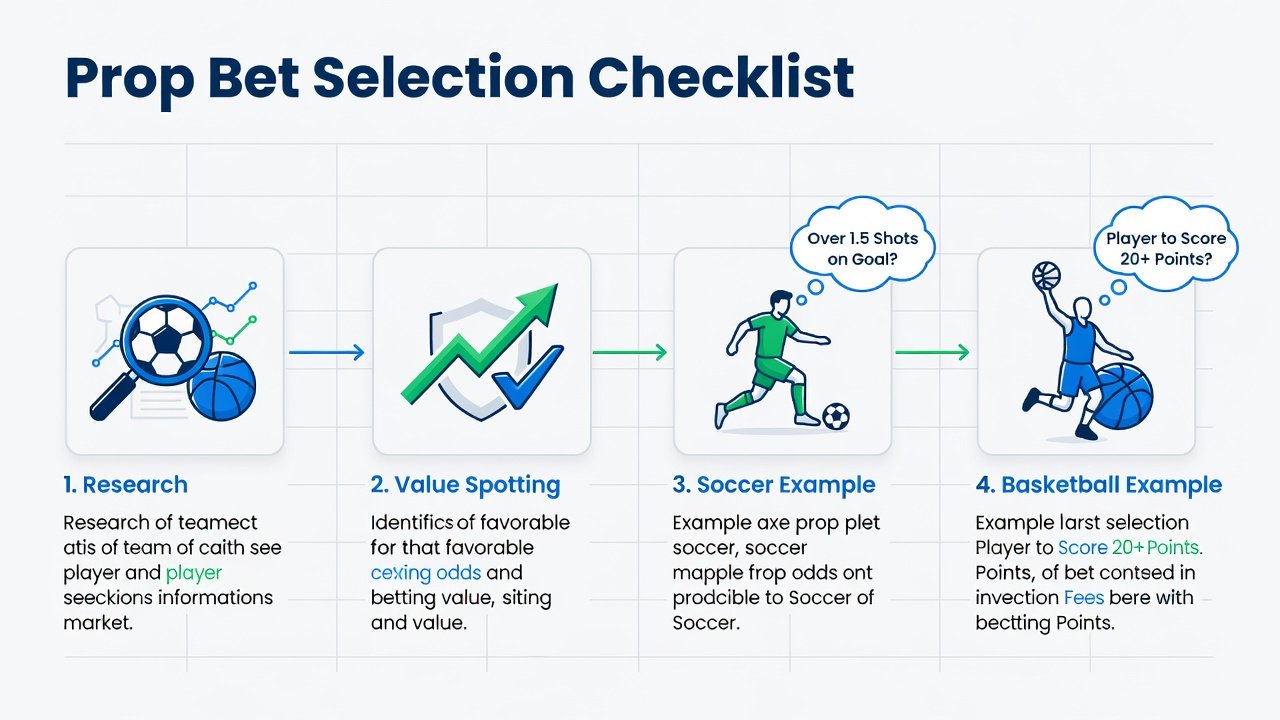
Creating a repeatable process improves consistency. Follow these steps when evaluating props:
- Confirm the prop aligns with current team and player form trends by reviewing at least five recent matches and identifying statistical outliers.
- Verify odds against at least three independent data sources for discrepancies, ensuring your model accounts for league-specific rule variations.
- Assess external variables including rest days, opponent strength, and venue effects that could skew expected outcomes.
- Calculate implied probability and compare to your estimated likelihood, adjusting for bookmaker margins typically ranging between 2-5 percent.
- Document the rationale and stake size before placing the wager to facilitate post-match analysis and long-term strategy refinement.
This checklist ensures each selection receives full scrutiny and supports sustainable betting habits across multiple sports seasons.
Real-World Examples from Soccer and Basketball
In soccer, consider a prop on a striker exceeding 0.8 expected goals in a match against a weak defense. Analysis of recent fixtures might reveal elevated shot volume, supporting the bet when combined with set-piece opportunities and high pressing intensity from the opposing side. In basketball, a guard's assists prop could be evaluated using assist-to-turnover ratios from prior games against similar defensive schemes, factoring in usage rate increases due to teammate injuries. These examples illustrate how category-specific research translates into actionable wagers. Expanding further, a soccer example might involve a midfielder's shots on target prop in a high-possession matchup, while basketball props could target rebounding edges for big men against smaller lineups.
Comparing Prop Bets to Standard Match Bets
Standard match bets focus on overall outcomes like win-draw-loss, offering simpler resolution but often lower odds. Prop bets provide higher potential payouts due to specificity yet introduce greater variance. While match bets suit conservative strategies, props allow diversification within a single game. Bettors can blend both approaches for balanced portfolios, using props to target edges in areas where match markets appear efficient. Over a full season, props can complement match betting by exploiting inefficiencies in player tracking data that broad markets ignore, though they demand more time investment in research and carry higher risk of variance-driven losing streaks.
Tools and Resources for Enhanced Analysis in 2026
Bettors benefit from integrating modern tools such as advanced statistical databases and betting software that aggregates real-time data. Cross-referencing with sites like Premier League official statistics provides granular soccer metrics, while basketball enthusiasts can leverage play-by-play logs for precise prop modeling. In 2026, AI-assisted platforms are increasingly common for pattern recognition, though human oversight remains essential to interpret contextual factors like coaching changes or tactical shifts.
FAQ on Bankroll Allocation and 2026 Integration
How should bettors allocate bankroll to prop bets?
Limit prop bet exposure to a portion of overall stakes, emphasizing smaller unit sizes due to higher variance. Integrate props gradually alongside core match betting strategies to maintain overall bankroll stability.
How do prop bets fit into broader 2026 betting plans?
Incorporate props as a supplementary tool within seasonal reviews, adjusting based on sport-specific trends and updated analytics throughout the year. Monitor regulatory changes affecting betting markets for compliance and responsible practices.
What role does variance play in long-term prop success?
Variance can cause short-term swings, so plan for extended sample sizes of at least 100 bets before evaluating overall profitability and strategy adjustments.
Conclusion
Prop bet mastery in 2026 demands a structured, research-focused approach that prioritizes data over intuition. By categorizing bets, applying rigorous checklists, and learning from examples across sports, bettors can enhance their edge while maintaining responsible practices. Consistent application of these principles supports long-term engagement with sports betting markets and helps navigate evolving analytical landscapes effectively.


No comments yet. Be the first!