 GambleLore

Introduction to Sustainable Betting in 2026
Betting success in 2026 demands a shift from chasing quick wins to building resilient, data-driven systems. Sustainable practices focus on long-term edge preservation across sports betting tips and horse racing tips, helping bettors maintain profitability season after season. This approach emphasizes realistic expectations, diversification, and regular reviews rather than impulsive decisions. Many bettors fail because they overlook variance and emotional fatigue. By adopting disciplined methods, you can create a framework that withstands market fluctuations and rule changes in major leagues throughout the year.
The modern betting landscape in 2026 features advanced analytics platforms and real-time data feeds that reward those who prioritize process over results. Bettors who treat their activity like a professional endeavor rather than entertainment often see compounding benefits over multiple seasons. This article explores practical steps to develop such systems while addressing common pitfalls that derail long-term progress.
Defining Realistic ROI Expectations
Start by setting achievable return on investment goals based on historical data. Professional bettors typically target modest annual returns rather than doubling bankrolls overnight. Track your performance over multiple seasons to establish baselines, adjusting for market conditions in 2026 events like the FIFA World Cup qualifiers and Premier League campaigns. Realistic targets prevent overbetting and preserve capital. For example, a bettor focusing on value bets in tennis might aim for consistent small edges instead of high-risk accumulators that produce volatile swings.
Understanding the difference between short-term variance and true edge requires patience. In 2026, many online forums promote unrealistic 20-30% monthly returns, yet sustainable operators focus on 5-10% annual growth after accounting for vig and variance. Document every bet in a spreadsheet and review quarterly to refine projections. This data-backed mindset separates recreational players from those building lasting profitability.
Diversifying Across Sports Betting Tips and Horse Racing Tips
Diversification reduces risk by spreading wagers across different markets. Combine football, basketball, and horse racing tips to avoid overexposure to one sport's volatility. In 2026, this might mean allocating portions of your bankroll to NFL futures while monitoring thoroughbred racing circuits in Europe and North America. Practical steps include researching multiple leagues weekly using statistical models, limiting exposure per sport to 25-30% of total stake, and rotating focus seasonally to capitalize on form trends.
This method builds resilience against unexpected outcomes such as weather impacts on horse racing or injuries in team sports. Consider a 2026 scenario where a bettor balanced Premier League soccer with Kentucky Derby prep races. When soccer markets tightened due to fixture congestion, horse racing provided offsetting opportunities. Diversification also extends to bet types, mixing moneyline, spread, and totals to smooth results over time.
Implementing Periodic Audits
Regular audits ensure your system remains effective. Conduct monthly reviews of bet logs, win rates, and closing line values. In 2026, incorporate adjustments for new league rules, like expanded video assistant referee protocols in soccer. Audits reveal hidden leaks such as poor bankroll allocation or over-reliance on certain bookmakers.
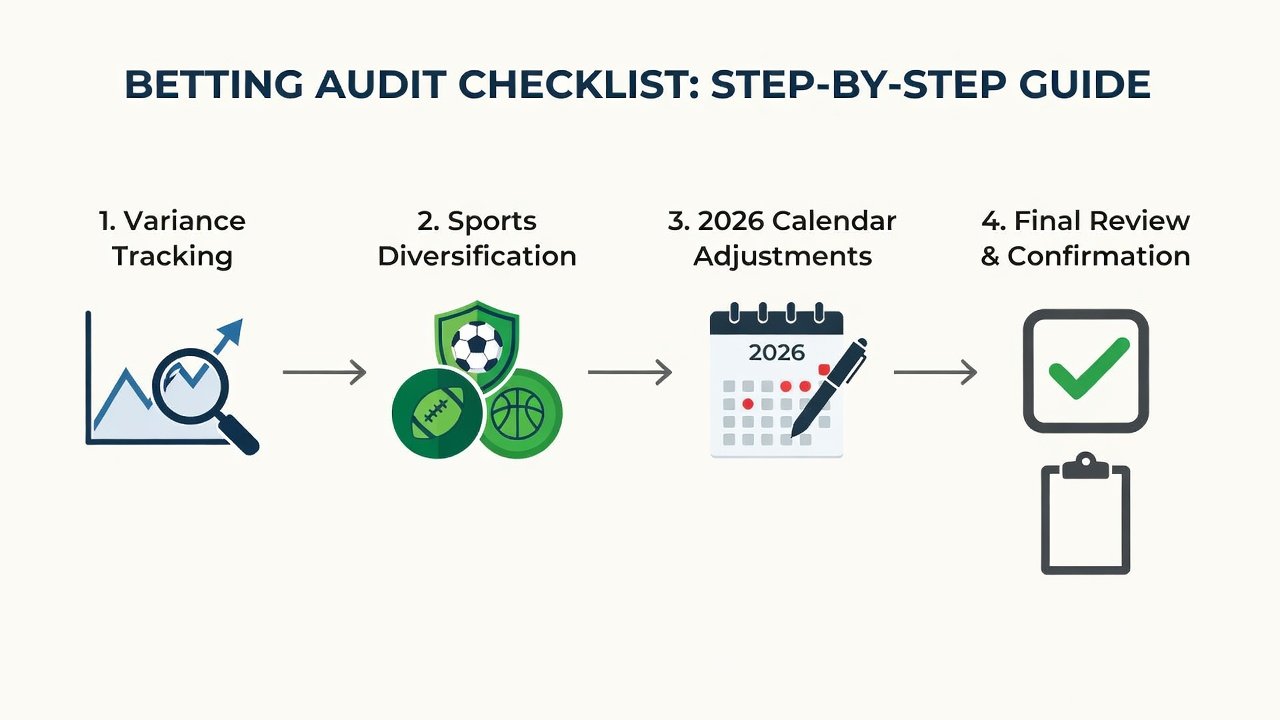
Step-by-Step Audit Checklist
- Compile all wagers from the past 30 days with outcomes and odds.
- Calculate variance using standard deviation metrics on results.
- Compare actual ROI against projected figures from the prior quarter.
- Identify underperforming markets and pause them temporarily.
- Update models with latest 2026 performance data from official league sources.
- Review emotional decision logs to flag any tilt-related bets.
- Assess bookmaker odds movement and closing line value trends.
Tracking Variance Effectively
Variance can mislead even skilled bettors. Use tools to monitor short-term swings versus long-term trends. For instance, a losing streak in March 2026 NCAA basketball should not prompt strategy abandonment if underlying edges persist. Document streaks in a dedicated spreadsheet and apply filters for sample size. This data-backed approach distinguishes noise from systemic issues. Advanced practitioners employ Monte Carlo simulations to model future variance ranges based on current sample sizes.
Realistic variance expectations help maintain confidence during drawdowns. In 2026, a diversified portfolio might experience 15-20% bankroll fluctuations in any given month yet still deliver positive yearly results when edges hold.
Adjusting for Rule Changes and Market Shifts
League modifications, such as new salary caps or doping regulations, alter betting landscapes. Stay informed through official sources and recalibrate models quarterly. Real-world 2026 examples include adaptations to evolving horse racing medication rules in major circuits and changes to overtime formats in European football leagues. Proactive bettors subscribe to league newsletters and review rule updates before each season begins.
Avoiding Common Burnout Triggers
Burnout often stems from chasing losses or excessive screen time. Set strict session limits and incorporate breaks. Combine betting with non-gambling activities to sustain mental sharpness over multiple seasons. Practical tips include scheduling no-bet days each week, using automation tools for alerts instead of constant monitoring, and maintaining a separate hobby unrelated to sports. Recognizing early signs such as frustration with small losses allows timely resets that protect long-term performance.
Real-World Examples from 2026 Events
Consider a bettor who diversified into Premier League and Kentucky Derby prep races. By auditing variance after early-season upsets, they adjusted stakes and achieved steady growth through summer. Another case involved pausing NBA bets during rule tweak periods to avoid mispriced lines, reallocating funds to tennis where data remained reliable. A third example featured a horse racing specialist who incorporated soccer totals during the World Cup to maintain volume without increasing risk exposure. These cases illustrate how disciplined reviews and diversification compound advantages across an entire calendar year.
FAQ: Addressing Sustainability Myths
Is sustainable betting just about betting less?
No, it centers on quality selections and systematic reviews rather than volume reduction alone.
Can variance be eliminated?
Variance cannot be removed but can be managed through diversification and tracking.
Do rule changes ruin long-term edges?
They require adjustments, but proactive audits maintain advantages over time.
How important is bankroll sizing for sustainability?
Proper sizing prevents ruin during variance spikes and supports consistent unit betting across seasons.
For further reading on responsible approaches, consult World Health Organization resources on behavioral patterns and UK government guidance on gambling frameworks. Additional insights appear at National Library of Medicine publications regarding decision-making under uncertainty.
Conclusion
Sustainable betting practices deliver enduring 2026 success through discipline and analysis. By focusing on realistic goals, diversification, audits, and variance management, bettors build systems that thrive across seasons. Consistent application of these principles transforms betting from a high-risk gamble into a measurable, improvable skill.


No comments yet. Be the first!