 GambleLore

Introduction to Hybrid Gambling in 2026
As casino gaming evolves in 2026, intermediate players are moving beyond single-game approaches. Hybrid strategies that blend blackjack strategy, roulette strategy, and baccarat tips offer a diversified way to manage risk while pursuing better outcomes. This approach emphasizes responsible play and adapts to current trends such as live dealer integration and data-driven decision tools. Players today face more options than ever, with digital platforms allowing seamless switches between table games during a single session. The goal of any hybrid method is not to eliminate the house edge but to create a more balanced experience that reduces the emotional swings common in pure single-game play. Throughout this guide, we stress that no strategy guarantees wins. Always gamble responsibly and set strict limits before playing.
2026 Casino Trends Shaping Hybrid Play
Modern casinos feature enhanced live-streaming tables and AI-assisted odds tracking. Players increasingly combine games to smooth variance across sessions. Responsible gambling organizations recommend treating all play as entertainment with predefined budgets. In 2026, many operators have introduced real-time analytics dashboards that let users monitor their own performance across multiple games. Mobile apps now support quick transitions between blackjack, roulette, and baccarat without leaving the same account balance. These tools encourage players to experiment with hybrid approaches while maintaining full visibility into spending patterns. Hybrid strategies align well with this environment because they encourage deliberate rotation rather than impulsive betting on a single table.
Core Elements of Each Game
Blackjack rewards basic strategy charts that reduce the house edge to around 0.5% when followed correctly. Key decisions include when to hit, stand, double, or split based on the dealer’s upcard. Roulette relies on understanding wheel sectors and bet types such as inside bets for higher payouts versus outside bets for steadier coverage. European and French wheels remain preferable due to the single zero. Baccarat focuses on banker or player bets with low house edges when following simple rules; the banker bet carries a slight commission but statistically outperforms the player bet over time. Blending these creates a flexible session plan where the strengths of one game offset the volatility of another.
Step-by-Step Blending Techniques
Begin by selecting a core blackjack segment using a printed or app-based basic strategy chart. Allocate roughly 20 to 30 minutes to this phase before rotating. Next, shift 30% of your remaining time to roulette, focusing on even-money bets to stabilize the session. Finish with baccarat using only banker bets for the final portion. Track results after each switch to refine the mix over repeated visits. Advanced players add conditional rules, such as increasing roulette exposure only after a blackjack win streak of three hands. Always document the exact sequence and outcomes to identify patterns that work for your personal style.
Bankroll Allocation Examples
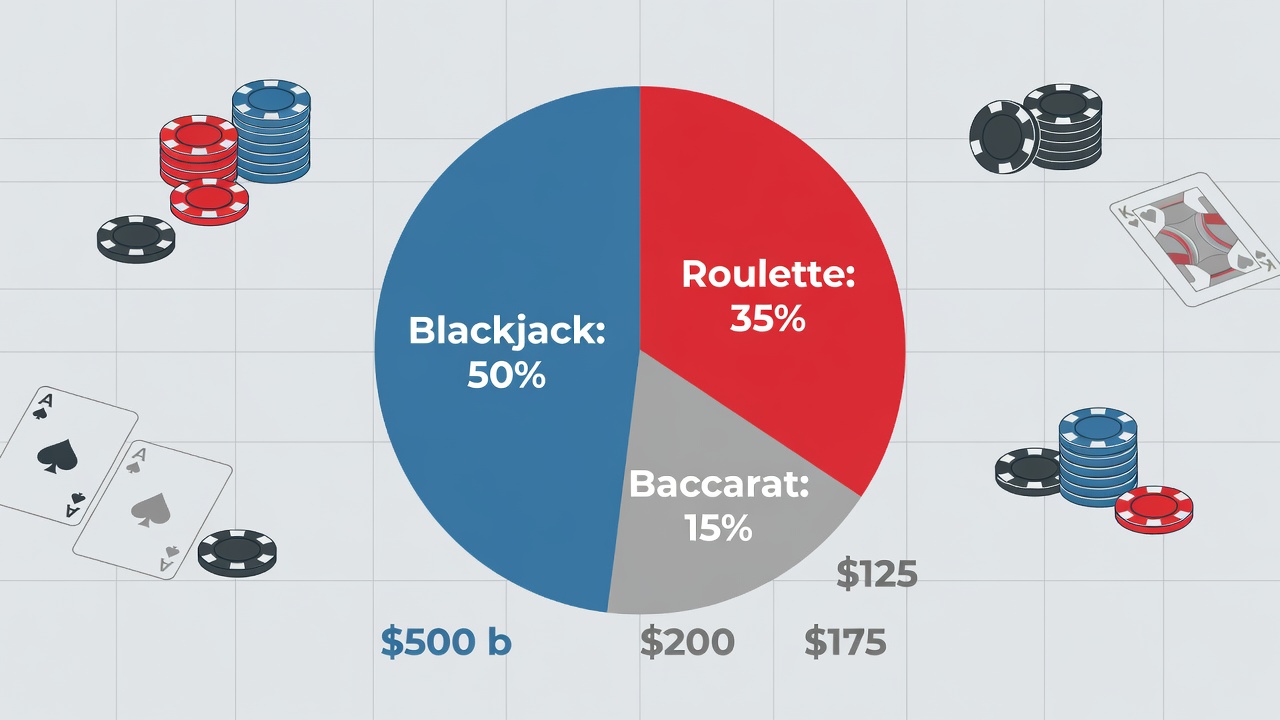
Divide your total session bankroll into three segments: 40% for blackjack, 35% for roulette, and 25% for baccarat. Adjust based on personal performance data collected over multiple sessions. For a $500 bankroll, this means $200 on blackjack, $175 on roulette, and $125 on baccarat. A more conservative player might use 50-30-20 to emphasize blackjack’s lower edge. Reassess weekly to maintain discipline and prevent overexposure to any single game. Record starting and ending amounts for each segment after every casino visit.
Odds Comparisons Across Games
Blackjack offers the lowest house edge with perfect play. Roulette European wheels sit near 2.7%, while baccarat banker bets average 1.06%. Hybrid players use these differences to balance aggressive and conservative phases within one visit. Comparing expected value across games helps determine rotation order. For example, starting with blackjack maximizes the portion of the session spent at the lowest house edge before moving to higher-variance roulette. Over 100 hands, the cumulative impact of even small edge differences becomes noticeable when tracked consistently.
Risk Management Tactics
Set loss limits at 25% of your daily bankroll and win goals at 50%. Use session timers to prevent fatigue. Incorporate mandatory breaks after every 45 minutes of play. Always prioritize responsible gambling resources when needed. Additional tactics include never increasing bet size after losses and maintaining a separate entertainment budget outside the allocated bankroll. Players who review their session logs weekly tend to identify risky patterns earlier and adjust allocations accordingly. Responsible play also means recognizing when external factors such as stress or tiredness begin to influence decisions.
Real-World Case Studies
One player combined 20 hands of blackjack with targeted roulette columns, then finished with baccarat ties. Over 10 sessions they reduced overall variance while maintaining engagement. Another tested a 50-30-20 split and documented steadier results after 15 hours of tracked play. A third case involved a player who used conditional triggers: after two consecutive blackjack losses, they moved immediately to baccarat for three banker bets before returning. This rotation helped limit drawdowns during a particularly volatile weekend. All three individuals emphasized that consistent record-keeping was the key factor in refining their hybrid approach.
Checklist for Testing Your Hybrid Strategy
- Define exact time and money allocations before entering the casino.
- Record every bet outcome in a simple spreadsheet.
- Review results after five sessions and adjust ratios.
- Include at least one full break per hour.
- Confirm all games use standard rules before committing funds.
- Compare actual outcomes against expected value calculations for each game segment.
- Ensure at least 20% of the bankroll remains untouched as a reserve.
Common Mistakes to Avoid
Many players abandon their planned rotation after an early loss in one game. Others fail to update their allocation percentages when performance data clearly indicates a change is needed. Overlooking table minimums can also disrupt the intended bankroll split. Finally, ignoring emotional state during play often leads to larger bets that fall outside the hybrid framework. Avoiding these pitfalls requires strict adherence to the written plan created before the session begins.
Frequently Asked Questions
What if one game performs poorly?
Immediately reduce its allocation and shift to stronger segments without chasing losses.
Are hybrid strategies legal?
Yes, they are simply personal money-management methods and do not involve illegal advantage play.
How often should I review my plan?
Conduct a full review every 10–15 sessions or monthly, whichever comes first.
Can I apply hybrids in online casinos?
Yes, most online platforms allow rapid game switching, making them ideal for testing hybrid rotations.
Should I adjust for different table limits?
Always verify minimum and maximum bets match your planned unit sizes before starting each segment.
Conclusion
Hybrid approaches combining blackjack, roulette, and baccarat provide intermediate players with structured variety in 2026. Success depends on disciplined bankroll splits, continuous tracking, and unwavering commitment to responsible play. Explore GamCare for additional support tools and always play within your means. Further guidance is available from national responsible gambling organizations.


No comments yet. Be the first!