 GambleLore
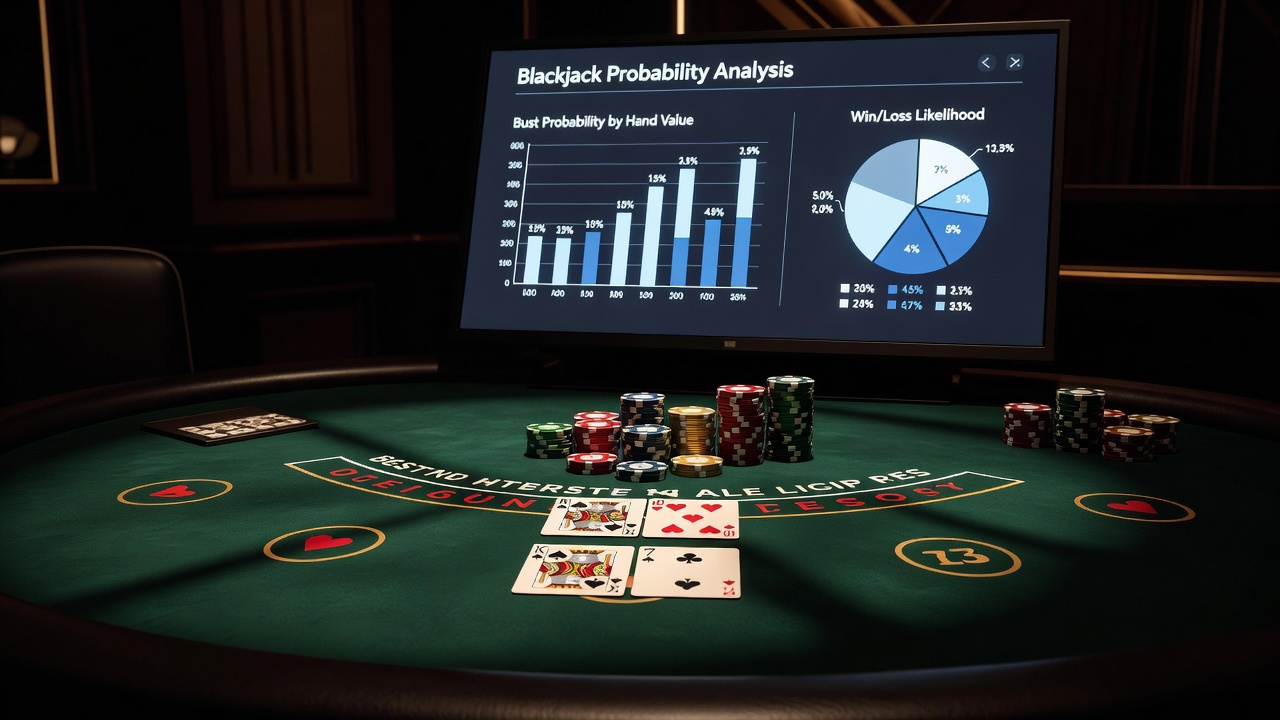
Introduction to Blackjack Odds and Probabilities
Blackjack stands out among casino games because players can reduce the house advantage through disciplined mathematical play. In 2026, the game continues to attract those who value data over luck, especially beginners searching for clear explanations of odds rather than vague advice. This comprehensive guide examines the mathematical foundations, including house edge formulas, probability distributions, and decision frameworks. It also incorporates supporting insights on roulette strategy and baccarat tips to provide context across table games. Readers will find step-by-step chart breakdowns, concrete hand examples, and tools for practice that emphasize responsible play in modern casino settings.
Calculating the House Edge in Blackjack
The house edge measures the casino’s built-in advantage expressed as a percentage of each wager. For blackjack played with perfect basic strategy, this edge ranges from 0.5 percent in favorable single-deck games to around 1 percent in eight-deck shoe games with common rules. The calculation begins with the probability of every possible outcome for a given hand. For instance, the expected value of standing on a hard 16 versus a dealer ten is negative because the dealer’s chance of finishing with 17 or higher exceeds 77 percent. Players lower the edge by choosing actions that maximize expected value on every combination. Rule variations such as blackjack payout ratios, dealer hitting or standing on soft 17, and restrictions on doubling after splits directly alter these probabilities and therefore the final house edge.
Basic Strategy Charts Explained Step-by-Step
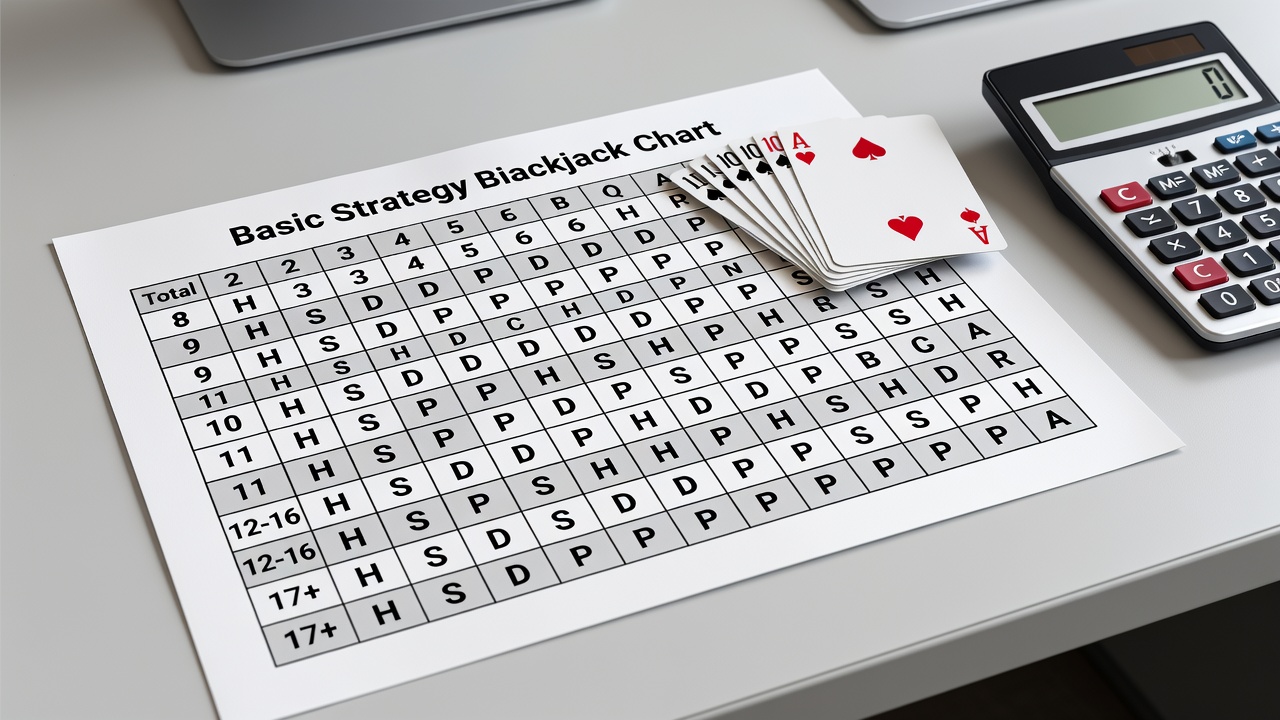
Basic strategy charts translate probability calculations into simple yes-or-no decisions for every player total and dealer upcard. Begin with hard totals: hit any hand of 8 or less, stand on 17 or higher, and double down on 9, 10, or 11 when the dealer shows a lower card. Splitting pairs follows similar logic; always split aces and eights, never split fives or tens. Soft hands require more aggressive play because the ace can be valued at one or eleven. Double soft 18 against a dealer 3 through 6, for example, because the probability of improving the hand outweighs the risk. Charts are organized in grids that players can memorize through daily drills or printed reference sheets. In 2026 casinos, many tables still provide basic strategy cards, but understanding the underlying logic prevents errors when rules change mid-session.
Real-Hand Probability Examples
Consider a player holding a hard 16 against a dealer’s ten. The probability of busting immediately on a hit is approximately 62 percent, while standing loses only when the dealer reaches 17 or better, which occurs roughly 77 percent of the time. Therefore the mathematically correct play is to stand. Another common situation involves a pair of eights against a dealer six. Splitting creates two hands starting at eight each; the dealer’s bust rate rises above 42 percent on a six, giving the player positive expectation on both new hands. A third example: doubling a soft 17 against a dealer three yields an expected gain because the ace provides a safety net on subsequent draws. These concrete cases demonstrate how probability tables convert abstract numbers into repeatable decisions that reduce long-term losses.
Simple Card Counting Concepts
Card counting estimates the remaining composition of the deck by tracking high and low cards already played. The Hi-Lo system remains the most accessible method: assign +1 to cards 2 through 6, 0 to 7 through 9, and –1 to tens through aces. A running count converted to a true count (divided by remaining decks) above +2 signals an increased proportion of high cards favorable to the player. In practice, counters raise bets gradually during positive counts and revert to minimum wagers when the count drops. Multi-deck shoes dilute the effect, so effective spreads often require 1-to-12 bet ratios. While legal, casinos actively watch for bet variation patterns and may ask suspected counters to leave. Beginners should first master basic strategy before attempting any counting system.
How Odds Shift in Multi-Deck Games
Single-deck blackjack offers the lowest house edge, yet most 2026 venues use six or eight decks to limit counting profitability. Each additional deck slightly raises the house edge because removed cards exert less influence on future probabilities. Strategy adjustments include more conservative doubling decisions; for example, players should not double nine against a ten in multi-deck games where they would in single-deck. Penetration, or the percentage of the shoe dealt before shuffling, also affects outcomes. Deeper penetration improves counting opportunities but is rarely offered in modern automated shoes.
Comparison Table: Blackjack vs Roulette vs Baccarat
- Blackjack house edge with basic strategy: 0.5–1 percent
- European Roulette house edge on single-zero bets: 2.7 percent
- Baccarat banker bet house edge after commission: 1.06 percent
Blackjack uniquely rewards skill because decisions alter probabilities in real time. Roulette relies on fixed wheel probabilities with no player influence beyond bet selection. Baccarat offers even fewer choices, making it closer to a coin flip once the banker commission is applied. These differences explain why data-driven players often prefer blackjack over the other two games when seeking the best mathematical return.
Probability Worksheets and Practice Tips
Effective practice begins with blank worksheets listing every two-card total against each dealer upcard. Fill in the correct action from the basic strategy chart, then verify answers against published sources. Repeat the exercise until accuracy exceeds 95 percent. Online simulators allow thousands of hands per hour without financial risk. Track error patterns such as hesitation on soft totals or incorrect pair splits. Over several weeks, these drills convert conscious calculation into automatic responses suitable for live casino pace.
Common Mistakes to Avoid
Many beginners stand on 12 against a dealer two or three, ignoring the dealer’s high bust rate on those upcards. Others chase losses by increasing bets without regard to count or strategy. Misunderstanding insurance bets, which carry a house edge above 7 percent, also erodes bankrolls quickly. Avoiding these errors requires consistent review of probability tables and honest session logging.
Responsible Gambling Practices
Set firm time and money limits before each session and treat blackjack as entertainment rather than income. Authoritative guidance is available from World Health Organization and Centers for Disease Control and Prevention, which outline signs of problem gambling and resources for support. Players should never gamble with funds needed for essentials and should take regular breaks to maintain clear decision-making.
Frequently Asked Questions
Does card counting work in online blackjack?
Most online platforms use continuous shuffling machines or random number generators that reset probabilities after every hand, eliminating any counting advantage.
Is basic strategy enough to beat the house?
Basic strategy minimizes the house edge to its lowest possible level but cannot overcome it over the long run without an additional edge such as card counting or promotional bonuses.
How do rule variations affect odds?
Games paying 3:2 on blackjack and requiring the dealer to stand on soft 17 produce noticeably lower house edges than 6:5 payouts or games where the dealer hits soft 17.
Should players take insurance?
Insurance is a separate side bet with a high house edge and should be declined unless the player is counting cards and the remaining deck is sufficiently rich in tens.
Conclusion
Mastering blackjack odds in 2026 demands thorough understanding of house edge calculations, basic strategy charts, and the subtle effects of deck number and rule variations. By combining repeated practice with probability examples, simple counting awareness, and strict responsible gambling limits, players can approach the tables with greater confidence and enjoyment.

No comments yet. Be the first!