 GambleLore
Build Your 2026 Gambling Strategies Checklist for Blackjack, Roulette & Baccarat
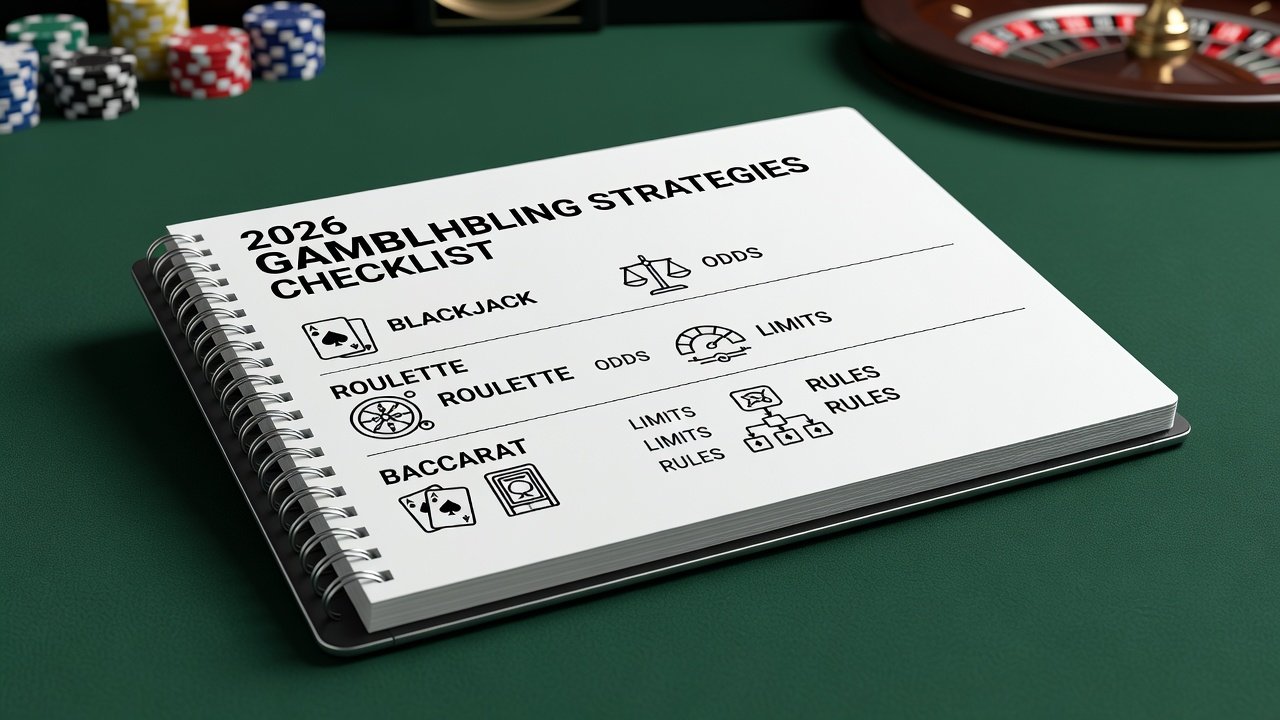
Developing a personalized gambling strategies checklist helps players approach casino games with structure and focus in 2026. This guide walks through building one specifically for blackjack strategy, roulette strategy, and baccarat tips, emphasizing customization for better session management rather than relying on generic tips. Players often struggle with inconsistent results because they lack a repeatable system that accounts for individual playing styles, game variations, and personal risk thresholds. A tailored checklist addresses these gaps by incorporating measurable criteria and regular review points.
The value of such a checklist lies in its ability to promote disciplined decision-making during live play. Instead of reacting impulsively to wins or losses, users follow predefined steps that have been tested in advance. This approach supports long-term consistency across multiple casino visits throughout the year.
Core Elements Every Checklist Needs
Start by identifying foundational components that apply across games. These include odds evaluation, session limits, bankroll allocation, and game-specific rules. Odds evaluation means reviewing house edges and payout structures before play, which helps players select tables with favorable conditions. Session limits cover time and money caps to prevent overextension, ensuring that entertainment remains the primary focus even during extended visits.
Game rules detail variations like blackjack payout ratios or roulette wheel types, allowing for precise adjustments. Additional elements cover bet sizing methods, win/loss triggers for stopping, and review periods after sessions. These create a repeatable framework that adapts to individual risk tolerance. For instance, a player might include entries for tracking emotional state before each session or noting environmental factors such as table speed.
Step-by-Step Process to Create Your Checklist
Follow this sequence to assemble a functional checklist. First, define your overall goals such as entertainment focus or modest profit targets. Second, research each game's core mechanics using reliable sources. Third, list mandatory rules like maximum bets or minimum hands per session. Fourth, incorporate tracking tools such as a simple spreadsheet for results. Fifth, test the draft in low-stakes environments and refine based on outcomes. 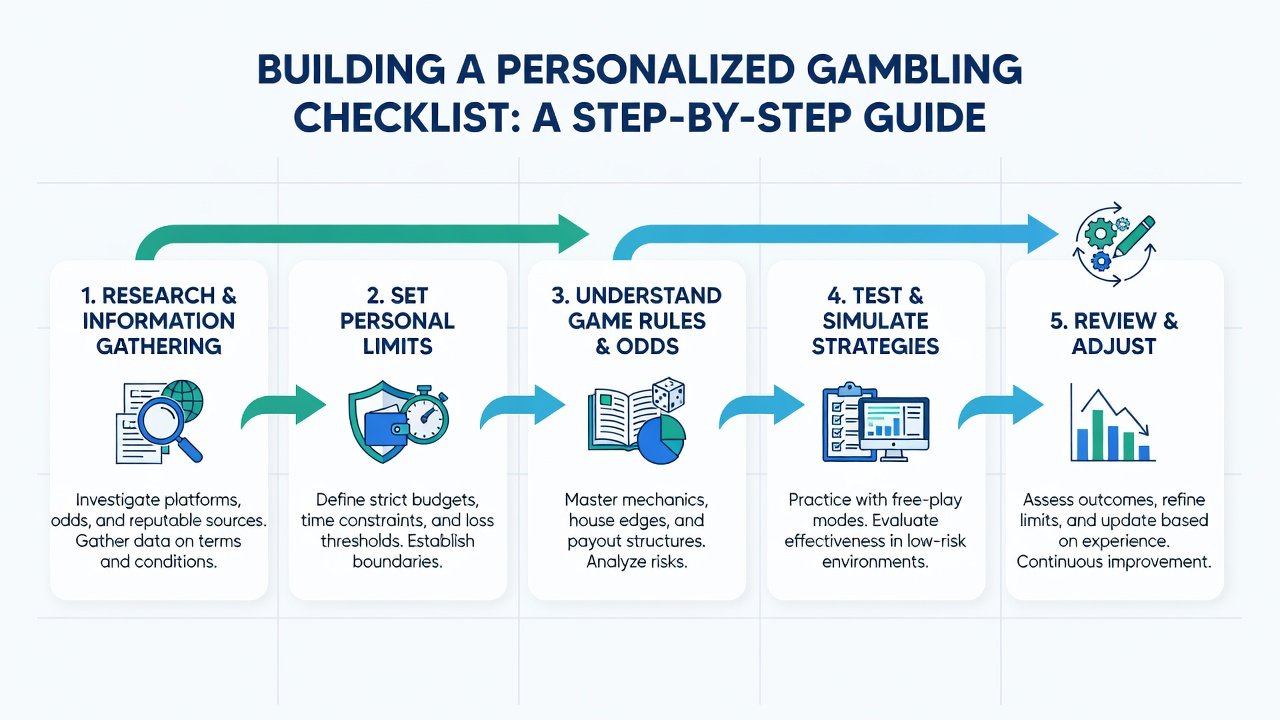
Blackjack Strategy Checklist Example
For blackjack, prioritize basic strategy charts that account for specific table rules. Include entries for doubling down thresholds, splitting pairs, and insurance avoidance. Add a section for counting systems if advanced play is desired, with reminders to practice away from tables first. Session limits might specify no more than 100 hands or two hours. Bankroll rules could allocate 2% per hand maximum. Review past sessions for deviation patterns, such as increasing bets after losses, which often leads to larger drawdowns.
In a real-world example, a player creates a checklist entry requiring verification of the blackjack payout (3:2 versus 6:5) before sitting down. Another entry mandates a 15-minute break after every 25 hands to reassess strategy adherence. These details help maintain focus during peak casino hours when distractions are high.
Roulette Strategy Checklist Example
Roulette checklists focus on wheel selection between European and American variants due to differing house edges. List bet types with probability notes and progression systems if used. Set strict loss limits per color or number group. Include a rule to switch tables after a set number of spins. Track hot and cold numbers only as observation, not prediction. Cap total session spins at 50 to maintain discipline. Players might also add a note to avoid betting systems that require doubling after losses, as these can quickly exceed table maximums.
Consider a scenario where a roulette player notes in the checklist to confirm single-zero wheels only, reducing the house edge by nearly half compared to double-zero options. This single rule has prevented unnecessary losses in multiple documented sessions.
Baccarat Tips Checklist Example
Baccarat emphasizes banker and player bet choices with tie avoidance. Checklist items cover commission rates on banker wins and shoe composition tracking. Limit bets to 1-2% of total bankroll per hand. Include pattern recognition notes without over-reliance, plus a mandatory break after every 20 hands. Set win goals at 20% above starting amount before cashing out. Advanced users add entries for side bet avoidance, since these carry significantly higher house edges than main bets.
One practical application involves a baccarat checklist requiring confirmation of the number of decks in play before committing to a shoe. This allows better anticipation of streak lengths and supports more informed bet sizing decisions.
Comparing Checklist Adaptations Across Games
Blackjack checklists lean heavily on decision matrices due to skill elements. Roulette versions stress probability awareness and wheel bias checks. Baccarat adaptations highlight bet selection simplicity and streak management. All three share bankroll and time controls but differ in bet frequency recommendations. Blackjack allows more aggressive adjustments based on count, while roulette and baccarat remain more static. Cross-game comparisons reveal that blackjack requires longer practice phases before live use, often 20-30 hours of simulation training.
Another comparison point is flexibility: blackjack checklists evolve quickly with new rule sets at different casinos, whereas roulette and baccarat versions stay relatively stable once core probabilities are documented.
Integrating Risk Controls
Embed responsible gambling measures throughout. Reference guidelines from World Health Organization on behavioral limits. Add self-exclusion triggers and cooling-off periods. Use National Council on Problem Gambling resources for support contacts. Include daily loss caps at 5% of monthly bankroll and mandatory 24-hour breaks after reaching limits. These controls protect long-term play sustainability and help players recognize early signs of fatigue or tilt.
Practical Templates and Real-World Scenarios
Use a template with columns for element, description, example value, and review date. For a blackjack scenario, a player might list: odds evaluation (basic strategy chart), session limit (90 minutes), and risk control (stop at 3 losses). Apply similar rows for roulette and baccarat during multi-game evenings. In one scenario, a player adapts the checklist mid-trip after hitting loss limits on roulette, shifting focus to baccarat with adjusted bet sizes. Another example shows weekly reviews revealing over-betting patterns corrected through checklist updates. A third scenario involves traveling players who add location-specific entries, such as noting local casino minimums and adjusting bankroll percentages accordingly.
Common Mistakes to Avoid When Customizing
Many players make the error of creating overly complex checklists that become difficult to follow during actual play. Keep entries concise and actionable. Another frequent issue is neglecting to update the checklist after rule changes at favorite venues. Finally, some users ignore emotional triggers; adding a simple self-assessment question at the top of each session can prevent this oversight.
FAQ: Common Customization Challenges
- How often should I update my checklist? Review every 30 days or after major rule changes at your preferred casino.
- Can one checklist cover multiple games? Yes, with separate sections for each game plus shared risk rules.
- What if odds change mid-year? Re-evaluate evaluation entries immediately using current table information.
- How do I handle emotional decisions? Add mandatory pause rules and journaling prompts to the checklist.
- Should beginners start with simplified versions? Yes, begin with five core items and expand gradually as comfort increases.
- How do I incorporate new games later? Add dedicated subsections without disrupting existing entries for blackjack, roulette, and baccarat.
These answers help refine the tool for ongoing 2026 use.
Conclusion
A well-crafted 2026 gambling strategies checklist provides structure across blackjack, roulette, and baccarat. By focusing on core elements, following the creation steps, and integrating strong risk controls, players gain a practical tool for more consistent casino experiences. Regular refinement ensures the checklist remains relevant as personal goals and casino conditions evolve.


No comments yet. Be the first!