 GambleLore
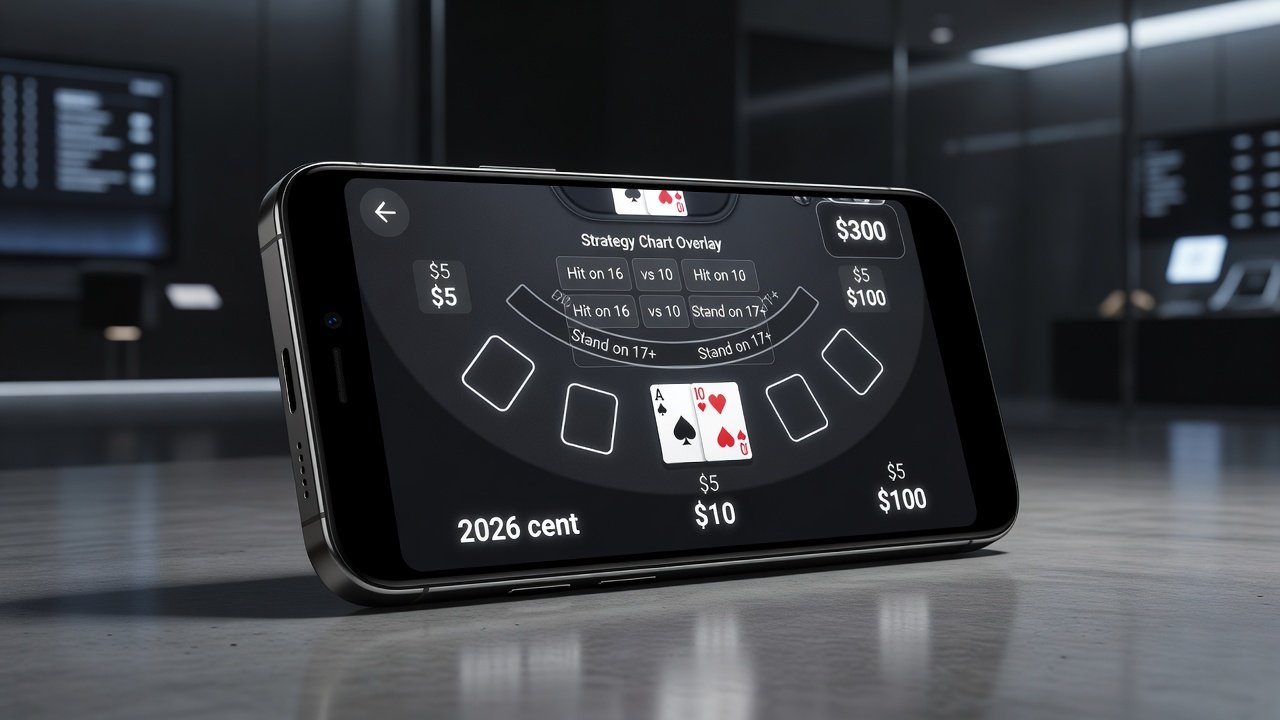
Introduction to Mobile Blackjack in 2026
Blackjack remains a favorite among mobile casino enthusiasts, but 2026 brings refined apps and devices that demand specific strategy adaptations. Unlike desktop play, mobile interfaces introduce touch controls, smaller screens, and variable performance that can increase decision errors and slow reaction times. This guide focuses exclusively on mobile-specific optimizations to help players maintain consistency without relying on general or desktop-focused advice. Players using smartphones or tablets in 2026 face unique challenges such as lag during live dealer sessions and bonus wagering requirements that differ across apps. By understanding these elements, you can refine your approach for better long-term results. The search intent here centers on practical, device-tailored tactics that address real-world mobile constraints like battery drain and notification interruptions during critical hands.
In 2026, mobile blackjack apps have evolved with better graphics processors and AI-assisted prompts, yet these advancements require players to recalibrate their habits. For instance, what works on a 27-inch monitor fails on a 6-inch screen where every pixel matters for quick reads. This article dives deep into those adaptations with concrete examples and step-by-step processes.
Key Differences Between Desktop and Mobile Blackjack Play
Desktop setups offer larger displays and precise mouse controls, allowing faster chart references and fewer misclicks. Mobile play, however, relies on touch gestures that can lead to accidental hits or stands, especially under time pressure in digital tables. Studies on interface design show that smaller screens raise error rates by forcing players to scroll or zoom frequently. Decision speed also suffers on mobile due to potential network latency or device heating during extended sessions. To counter this, 2026 players should prioritize apps with customizable interfaces that minimize on-screen clutter.
Consider a typical scenario: on desktop, you can keep a full strategy chart open in a second window while playing multiple tables. On mobile, switching apps or resizing views often causes delays that lead to default decisions. Touch fatigue sets in after 30 minutes, increasing the likelihood of choosing the wrong action on borderline hands like soft 18 against a dealer 10. Battery optimization modes on modern phones can further throttle performance, introducing micro-lags that disrupt rhythm. Understanding these differences forms the foundation for effective mobile strategy optimization.
Step-by-Step Adjustments to Basic Strategy Charts for Touch Screens
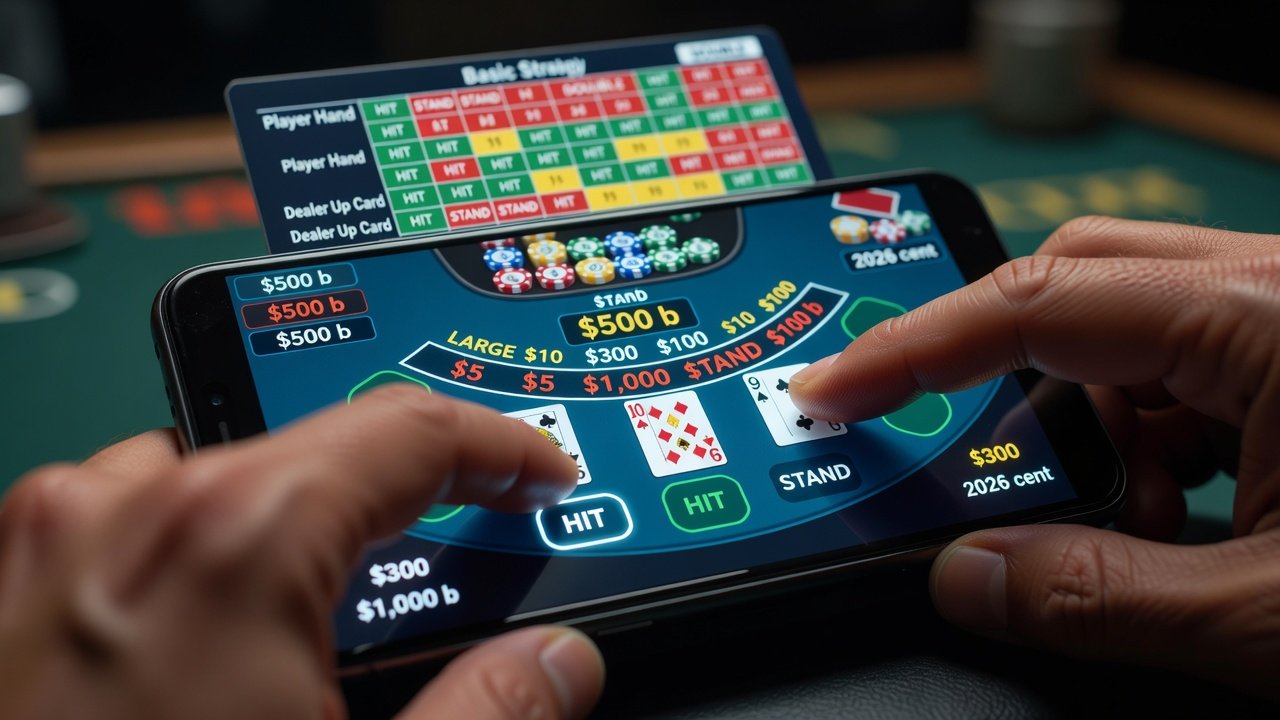
Adapting standard basic strategy for touch devices starts with simplifying charts into mobile-friendly formats. Follow these adjustments: First, convert full charts into single-screen summaries using high-contrast colors for quick glances. Second, practice gesture-based decisions by simulating taps in offline mode to build muscle memory. Third, adjust for split and double-down prompts by positioning fingers ergonomically to avoid slips. Fourth, account for auto-correct features in some apps that might override intended moves. Fifth, incorporate vibration feedback if available to confirm selections before they register. Sixth, test charts at different brightness levels to ensure readability in outdoor or low-light environments common during commute play sessions.
These steps reduce errors during fast-paced rounds common in 2026 mobile variants. For example, when facing a pair of 8s against a dealer 6, the optimal move is to split, but on a touch screen you might accidentally hit if your thumb lands off-center. Pre-loading a simplified chart as a widget or screenshot on your home screen allows instant reference without leaving the app. Over repeated sessions, this builds intuitive play that compensates for the lack of physical cards or chips.
Bankroll Allocation Examples Tailored for Smaller Screens
Smaller displays make it harder to track multiple metrics simultaneously, so simplify bankroll management. Allocate no more than 1-2% of your total bankroll per hand, and use app tools to display running totals prominently. For example, with a $500 bankroll, limit individual bets to $5-$10 while monitoring session limits via built-in alerts. This approach prevents overextension during mobile sessions where visual fatigue sets in faster. Another scenario involves a $1,000 bankroll where you divide it into three $300 session pots plus a $100 reserve, using the phone's split-screen feature to keep a simple spreadsheet visible alongside the game.
Review your allocation after every 20 hands to maintain discipline on compact interfaces. Track wins and losses in a notes app rather than relying solely on the casino's history tab, which can be slow to load. If you hit a losing streak of five hands, pause and reassess rather than increasing bets to chase recovery, a common mobile pitfall due to the ease of one-tap betting.
Comparisons of Popular 2026 Mobile Blackjack Variants
2026 mobile apps feature variants like Multi-Hand Blackjack and Live Dealer Blackjack with enhanced graphics. Multi-hand versions allow simultaneous plays but require stronger touch precision to manage multiple decisions. Live dealer options integrate real-time video, demanding stable connections to avoid lag that disrupts strategy flow. Another popular option is Infinite Blackjack, where multiple players share the same dealer hand, speeding up rounds but increasing the need for rapid touch responses. European Blackjack variants on mobile often remove the dealer hole card, altering basic strategy slightly for surrender and insurance decisions that must be executed via quick taps.
Compare payout structures across apps: standard variants often return 99.5% RTP, while live versions may dip slightly due to added features. Choose based on your device's performance capabilities. Multi-hand play suits larger phones with better processors, whereas single-hand live tables work better on older models prone to overheating. Always verify the specific rules within each app, as 2026 updates frequently tweak deck penetration and side bet availability.
Practical Screenshot Descriptions for Mobile Strategy Application
Imagine a screenshot of a 2026 app interface showing a simplified strategy overlay in the corner with color-coded recommendations that update based on the current hand. Another depicts the bankroll meter updating in real time after a split decision, including a running win-rate percentage calculated over the last 50 hands. A third example highlights the settings menu where players enable haptic confirmation and reduce animation speeds to minimize distractions. These visuals highlight how clean layouts support faster, more accurate plays compared to cluttered alternatives.
Beginner Checklist for App Selection
- Verify app ratings above 4.5 stars on major stores with recent 2026 updates that include bug fixes for touch responsiveness.
- Confirm support for basic strategy trainers and customizable controls that allow repositioning of action buttons to suit left or right-handed users.
- Check for responsible gambling tools like deposit limits and session timers that send push notifications before limits are reached.
- Test for low-lag performance on your specific device model by running a 30-minute demo session during peak network hours.
- Ensure compatibility with popular payment methods and clear bonus terms that specify wagering contributions from blackjack play.
- Review privacy policies for data handling, especially regarding location tracking used in some geo-restricted apps.
Common Mistakes to Avoid in Mobile Blackjack
Many players overlook orientation lock, leading to accidental screen rotations mid-hand that disrupt focus. Another frequent error is ignoring device notifications that pop up during key decisions. Failing to update apps regularly can leave you with outdated strategy aids or security vulnerabilities. Over-reliance on auto-play features removes the thoughtful decision-making essential to long-term success. Finally, playing while multitasking on the same device often results in missed optimal plays.
Short FAQ on Mobile Blackjack Pitfalls
How can I avoid lag affecting my decisions?
Close background apps and connect to stable Wi-Fi before starting sessions. Many 2026 apps include connection indicators to warn of potential issues.
What about bonus wagering on mobile?
Track progress via in-app dashboards, as mobile bonuses often have 30x wagering that requires careful hand selection to meet efficiently.
Is touch accuracy a common problem?
Yes, but enabling haptic feedback and practicing in demo modes helps minimize mis-taps.
How do I handle interruptions like calls or messages?
Enable do-not-disturb mode and use apps that pause games automatically when focus is lost.
Conclusion
Optimizing blackjack strategy for mobile in 2026 centers on interface awareness, simplified tracking, and proactive app choices. By implementing these targeted adjustments, players can enhance consistency across devices. For further responsible play resources, visit Begambleaware and Gamblers Anonymous.


No comments yet. Be the first!