 GambleLore

Introduction to Caribbean Stud Poker in 2026
Caribbean Stud Poker continues to attract online gamblers in 2026 who appreciate its straightforward poker mechanics combined with casino-style betting. This comprehensive tutorial delivers step-by-step guidance on mastering the rules, evaluating hands accurately, implementing optimal strategies, and managing bankrolls effectively. Readers will find concrete examples, decision frameworks, and practice-oriented advice that supports immediate application at online tables throughout the year.
Core Rules and Game Flow Explained in Detail
The game starts when each participant places an ante wager before any cards are dealt. The dealer then distributes five cards to every player and five to themselves, with the dealer’s final card revealed face up. Players review their private hands and must choose either to fold, forfeiting the ante, or to raise by placing a bet worth twice the ante amount. Once all decisions are made, the dealer reveals the remaining cards. Qualification requires the dealer to hold at least an ace-king combination; failure to qualify results in the ante paying even money while the raise is returned unchanged. When the dealer qualifies, hands are compared using standard poker rankings to determine winners and payouts.
Step-by-Step Hand Rankings with Examples
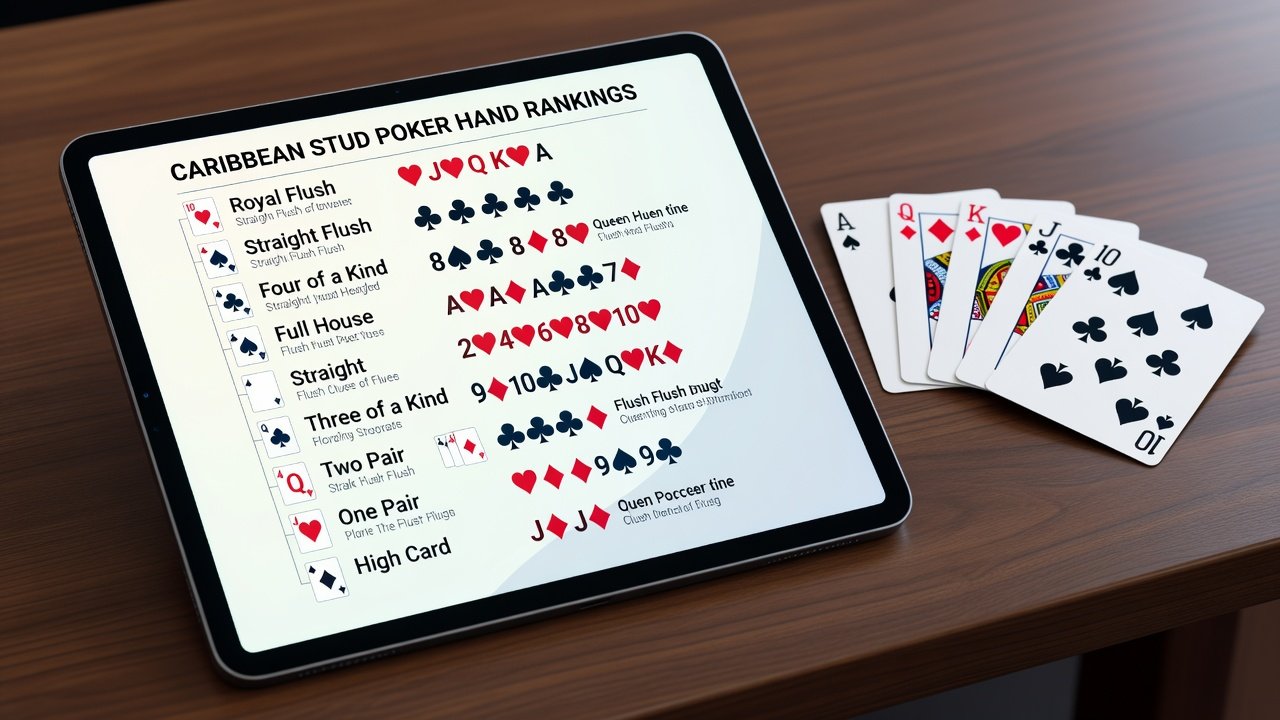
Understanding rankings forms the foundation of successful play. The hierarchy begins with high card, followed by one pair, two pair, three of a kind, straight, flush, full house, four of a kind, straight flush, and royal flush at the top. For instance, a hand containing ace, king, queen, jack, and ten of mixed suits ranks as a high card ace. Adding a pair of sevens elevates it to one pair. A straight example might include five through nine in sequence, while a flush requires all cards of the same suit regardless of order. These rankings directly influence raise decisions and expected returns during each round.
Ante, Raise Mechanics, and Multiple House Edge Examples
Ante amounts at regulated platforms commonly range from modest minimums to higher limits depending on the site. Raising doubles the initial stake and unlocks potential payouts that scale with hand strength. The base house edge approximates 5.22 percent under optimal conditions. Consider a $25 ante scenario: folding early loses only the ante, while raising with a qualifying pair yields 1:1 on the ante and 2:1 on the raise for a total return of $75 before any dealer comparison. Another example involves a $50 ante with a three-of-a-kind holding that beats the dealer’s qualified hand, producing a net gain of $150 across both bets. Such calculations help players quantify risk across varied session lengths.
Basic Strategy Chart and Decision Guidelines Expanded
Optimal play relies on a clear raise-or-fold matrix. Always raise when holding any pair or stronger combination because the positive expected value outweighs the risk. With ace-king, raise only if the dealer’s exposed card ranks below your highest kicker card. Fold all weaker holdings such as ace-queen or lower to preserve bankroll. Intermediate players can refine this further by tracking exact suit distributions and potential straight or flush draws, although the core chart remains sufficient for most sessions. Printable versions of these guidelines assist in rapid reference during live online rounds.
When to Fold or Raise: Practical Scenarios and Probabilities
- Fold ace-high hands unless the dealer shows a low card and your kickers provide measurable improvement potential.
- Raise immediately on any pair because statistical models show favorable long-term returns exceeding 1.5 times the risked amount.
- Raise with ace-king suited when the dealer’s upcard is a queen or lower to capitalize on dealer qualification failures.
- Never raise on unpaired hands below ace-king, as the probability of winning drops below 40 percent against a qualified dealer.
Common Mistakes to Avoid with Real-World Illustrations
Over-raising with marginal ace-high combinations represents the most frequent error, inflating the house edge by several percentage points over time. Another pitfall involves ignoring the dealer qualification rule and assuming every showdown offers equal opportunity. Players sometimes chase side-bet jackpots without first securing basic game proficiency, leading to unnecessary variance. Reviewing session logs helps identify and correct these patterns before they compound.
Bankroll Management Tips Tailored for Online Play
Effective bankroll control begins with setting session limits at no more than two percent of total available funds. Track outcomes across minimum 100-hand samples to distinguish skill from short-term variance. Many 2026 platforms include built-in history tools that display win rates and average bet sizes, enabling data-driven adjustments. Dividing bankrolls into separate online and practice accounts further supports disciplined habits.
Comparison to Standard Poker Variants
Caribbean Stud differs markedly from Texas Hold’em through its fixed dealer hand and absence of community cards or betting rounds. Bluffing opportunities disappear entirely, replaced by mechanical qualification checks. Relative to Three Card Poker, the five-card format demands greater attention to hand strength and reduces the frequency of high-payout outcomes. Additional details appear on Wikipedia for readers seeking broader poker context.
Online Variations, Platform Selection, and 2026 Trends
Contemporary sites incorporate progressive jackpot meters alongside optional side bets on flush or better outcomes. Selection criteria should emphasize licensing, payout speed, and software fairness certifications. Mobile compatibility and live dealer options have grown prominent, allowing seamless transitions between devices. Always review terms regarding maximum bet limits and withdrawal processing times before depositing.
Responsible Gambling Integration
Setting time and deposit limits protects against extended sessions. Resources such as BeGambleAware provide free tools and guidance for maintaining healthy play habits. Recognizing early signs of fatigue or emotional decision-making allows players to pause and return refreshed.
Frequently Asked Questions
What are the standard payouts for Caribbean Stud?
Typical structures award even money on the ante, double on the raise for one pair, and escalate to 100:1 for royal flushes on the raise portion in progressive variants.
Can I practice Caribbean Stud without real money?
Most licensed platforms supply free demo modes that replicate full rules and interface for unlimited practice rounds.
How do side bets affect overall house edge?
Side bets generally carry house edges exceeding ten percent, making them less attractive than focusing on the primary ante and raise decisions.
Are there regional rule differences in 2026?
Some jurisdictions adjust maximum payouts or add unique bonus features, so confirming local regulations remains essential before play.
What software providers dominate Caribbean Stud offerings?
Leading developers deliver certified random number generators and consistent payout tables across desktop and mobile formats.
Conclusion and Action Plan
Combining precise rule knowledge, hand-ranking proficiency, and the outlined strategy chart prepares players for confident participation in 2026 online Caribbean Stud Poker sessions. Regular review of examples, adherence to bankroll guidelines, and use of responsible play resources create a sustainable approach that maximizes enjoyment while minimizing unnecessary losses. Begin with low-stakes practice tables to internalize decisions before progressing to higher limits.

No comments yet. Be the first!