 GambleLore
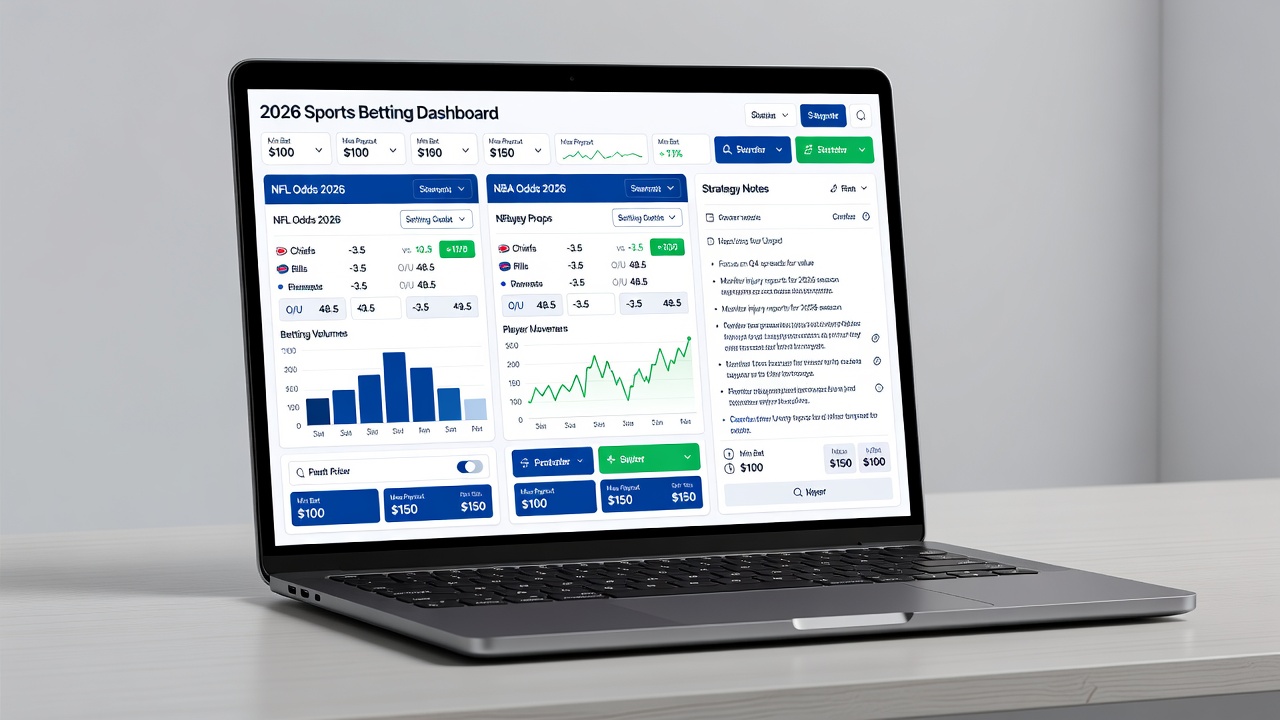
Introduction to Winning Sports Betting Strategies in 2026
Online sports betting continues to evolve rapidly, offering bettors sophisticated tools and markets across major leagues like the NFL, NBA, Premier League, and MLB. This guide delivers practical tutorials focused on proven strategies rather than basic account setup, helping both beginners and intermediate bettors build profitable approaches. Success in 2026 demands more than luck; it requires disciplined analysis, precise bankroll control, and adaptive tactics that respond to real-time developments. Whether you are new to sports wagering or seeking to refine advanced methods, the principles outlined here emphasize value identification, risk mitigation, and consistent execution across seasons.
Understanding the core elements of betting—such as odds interpretation, diverse bet types, disciplined bankroll allocation, and live in-play tactics—forms the foundation for long-term success. We include step-by-step examples, comparisons of leading sportsbooks, and case studies drawn from real-world scenarios. By the end of this tutorial, readers will possess actionable frameworks to evaluate opportunities and avoid common pitfalls that erode profits.
Interpreting Odds for Informed Decisions
Odds represent the probability of an outcome and determine potential payouts. American odds are common in the US, showing positive numbers for underdogs and negative for favorites. For instance, +150 means a $100 stake wins $150 profit, while -150 requires $150 to win $100. Decimal and fractional formats appear on international platforms, where 2.50 decimal equals +150 American. Bettors must convert between formats mentally or with tools to compare value across books. Always shop lines to find the best price before committing, as even small differences compound over hundreds of wagers.
Implied probability is calculated by dividing 100 by the absolute value of the odds plus 100 for favorites, or 100 divided by the odds plus 100 for underdogs. This calculation reveals whether a bet offers positive expected value when your estimated probability exceeds the implied figure. In 2026, many platforms provide built-in probability tools, yet manual verification remains essential for edge detection.
Key Bet Types: Spreads, Parlays, and More
Point spreads level the playing field by adding or subtracting points. A -6.5 spread on a team requires them to win by 7 or more points. Moneyline bets simply pick the winner, ideal for beginners exploring new leagues. Totals (over/under) focus on combined scoring, often influenced by pace, weather, or injuries. Prop bets on player performances add granularity, while futures lock in long-term outcomes like season champions.
Parlays combine multiple selections for higher payouts but increase risk—losing one leg voids the ticket. Teasers adjust spreads for better odds but lower payouts. Use parlays sparingly, targeting 2-3 legs maximum with correlated events. Round robins and same-game parlays offer alternatives for controlled risk. Here are practical guidelines for selecting bet types:
- Start with single bets to build confidence and track performance metrics.
- Compare spreads across sportsbooks for the sharpest lines available at any moment.
- Avoid heavy favorites in parlays unless the combined value exceeds standard single-bet expectations.
- Incorporate player props only after reviewing recent statistical trends and matchup data.
Bankroll Allocation and Risk Management
Effective bankroll management separates professionals from amateurs. Allocate no more than 1-5% of your total bankroll per bet, adjusting based on confidence level and perceived edge. Flat betting maintains consistency across all wagers, while proportional betting scales stakes with estimated probability. The Kelly Criterion provides a mathematical formula for optimal sizing, though conservative bettors often use half-Kelly to reduce volatility.
Track every wager in a spreadsheet including odds, stake, result, and closing line value. Set win and loss limits for each session to prevent chasing losses or overextending during hot streaks. Diversify across sports and bet types to smooth variance. Reassess your bankroll monthly and adjust unit sizes accordingly to maintain discipline throughout the 2026 season.
Research Methods and Data Analysis
Winning strategies begin with thorough research. Analyze team statistics, injury reports, weather impacts, and historical trends specific to the league. Advanced metrics such as expected goals in soccer or pace-adjusted efficiency in basketball provide deeper insights than basic box scores. Subscribe to reputable data sources and cross-reference multiple outlets before finalizing selections.
Develop a pre-game checklist covering recent form, head-to-head records, and motivational factors like playoff implications. Avoid betting on every game; instead, wait for high-confidence spots where your analysis diverges from public perception and line movement.
Live Betting Tactics and Step-by-Step Examples
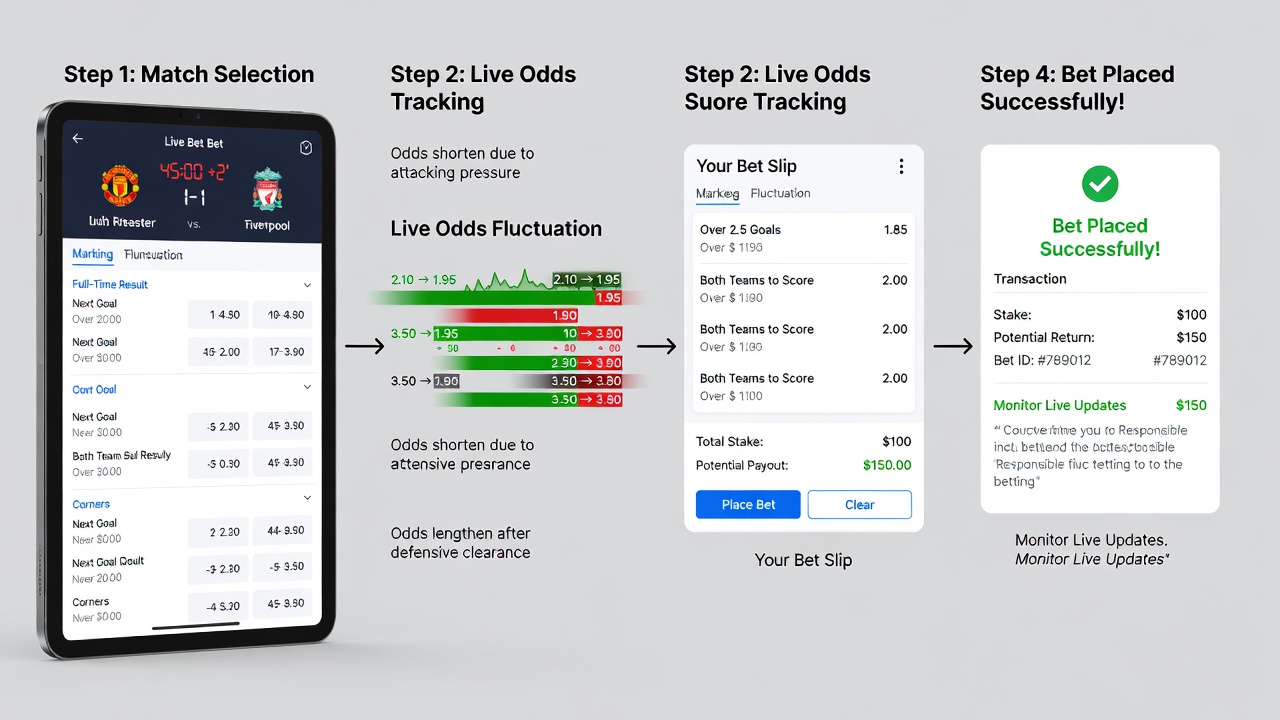
Live betting capitalizes on momentum shifts during games. Monitor stats like possession, shooting percentages, or injuries in real time through integrated feeds. For an NFL example: After the first quarter, if a favored team trails by 10 but shows strong offensive drives and favorable matchups, bet the live spread or moneyline at improved odds.
Step-by-step on a major league NBA game: 1) Log into your sportsbook and locate the live section. 2) Navigate to the selected NBA matchup. 3) Select the live total after checking current pace and shooting stats. 4) Confirm stake remains under 2% of bankroll. 5) Review any in-game promotions and place the wager. Repeat similar processes for Premier League soccer by focusing on corner counts or player substitutions that alter expected goal totals.
Comparing Popular Sportsbooks
Leading platforms differ in odds quality, promotional structures, market depth, and payout speed. One excels in live betting depth with extensive in-play options across multiple sports, while another offers superior NFL player props and faster withdrawals. Evaluate based on your preferred leagues, preferred bet types, and overall user experience. Test several sites with small initial deposits to determine which interface and features align best with your workflow.
Real-World Case Studies of Profitable Approaches
Case study 1: A bettor focused on value betting underdogs in MLB, targeting lines of +120 or better where their probability models indicated positive expected value. Over a full season, strict adherence to this method produced an 8% return on investment through disciplined avoidance of low-value favorites. Case study 2: Live parlay hedging in Premier League matches allowed a bettor to turn a potential losing ticket into a modest profit by reacting quickly to halftime score changes and adjusting subsequent legs. Case study 3: An NBA specialist used bankroll scaling combined with injury news monitoring, achieving consistent monthly gains by increasing unit size only after confirmed edges exceeded 5%.
Mistakes to Avoid for Sustained Success
Common errors include overbetting parlays, failing to shop lines, and emotional chasing after losses. Bettors also frequently overlook closing line value and neglect proper record keeping. Maintain a long-term perspective and treat each wager as part of a larger sample rather than an isolated event.
FAQ: Common Pitfalls, Legal Considerations, and Responsible Practices
What are common mistakes? Overbetting parlays and ignoring line shopping lead to most losses. Always verify odds on multiple sites before placing any wager. Legal considerations vary by location—check local regulations before betting. Resources like National Council on Problem Gambling provide guidance on safe participation.
Responsible practices include setting deposit limits and taking regular breaks. For league schedules and stats, visit ESPN. Additional authoritative references include Gamblers Anonymous and official state regulatory sites for compliance details.


No comments yet. Be the first!