 GambleLore

Introduction to Exploiting Player Types in Modern Tournaments
Texas Hold'em tournaments in 2026 demand more than solid fundamentals. Intermediate and advanced players gain a decisive edge by systematically reading opponents and adjusting strategies based on their tendencies. This guide explores identifying archetypes such as loose-aggressives and tight-passives, leveraging online tracking tools alongside live physical tells, and implementing exploitative adjustments both preflop and postflop. Understanding these concepts helps you move beyond basic GTO play into targeted exploitation that maximizes profit against real-world opponents who deviate from optimal lines. Tournament fields today feature a mix of recreational players and seasoned regulars, making archetype recognition a core skill for consistent results.
Recognizing Common Player Archetypes
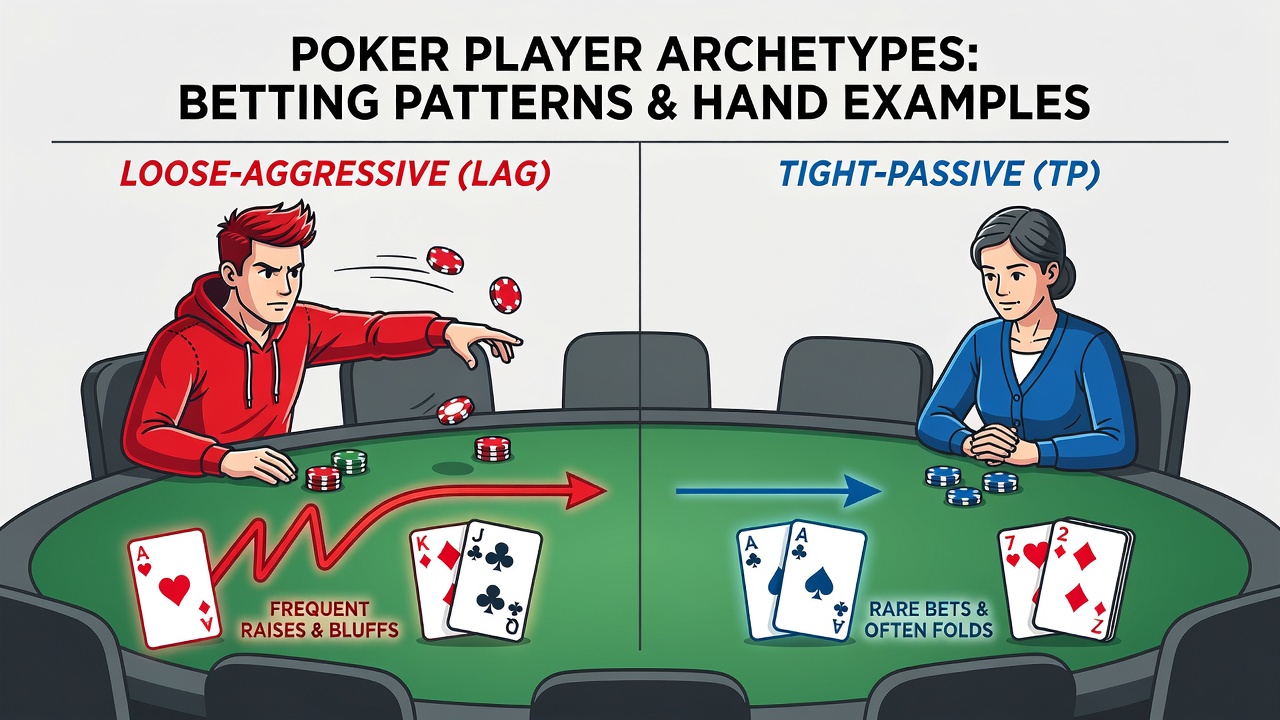
Successful exploitation begins with accurate categorization. The primary archetypes in tournament poker include loose-aggressive (LAG), tight-passive (nit), loose-passive (calling station), and tight-aggressive (TAG) players. Each exhibits predictable patterns that can be exploited with specific counter-strategies. Loose-aggressive players frequently raise preflop with wide ranges and apply postflop pressure through large bets and bluffs. Tight-passive players enter few pots and fold excessively to continuation bets unless holding premium holdings. Loose-passive opponents call multiple streets with marginal hands but rarely initiate aggression themselves. Tight-aggressive players maintain balanced ranges yet remain vulnerable in specific dynamic spots such as multi-way pots or short-stack scenarios. Additional subtypes include the "maniac" who over-bluffs every street and the "rock" who only plays top-tier hands. Recognizing these distinctions allows precise counter-adjustments rather than generic responses.
- Loose-Aggressive (LAG): Frequent preflop raises and three-bets with wide ranges. They apply pressure postflop but often over-bluff on dry boards.
- Tight-Passive (Nit): Extremely selective preflop and rarely bluff postflop. They fold too often to aggression outside of premium hands.
- Loose-Passive: Call stations who enter many pots but rarely raise. They pay off strong hands too often and over-call rivers.
- Tight-Aggressive (TAG): Solid players who balance ranges well but can still be exploited in specific spots like blind-vs-blind battles.
Online poker data from HUDs and tracking software reveals these tendencies through VPIP, PFR, and aggression factor stats. In live settings, physical tells such as timing, chip handling, and posture provide additional confirmation. Over a large sample, these markers become reliable predictors of future actions.
Leveraging Data and Tells for Identification
Combine digital and observational tools for reliable reads. Online platforms offer detailed statistics that instantly flag player types through metrics like fold-to-three-bet percentage and river aggression frequency. Live tournaments require heightened awareness of betting speed, verbal patterns, and body language. Step-by-step identification framework: first observe at least 30-40 hands before assigning an archetype. Cross-reference stats with observed actions such as voluntary put-ins and showdowns. Adjust your read as new information arrives rather than locking in early assumptions. In hybrid events common in 2026, many players transition between formats, so maintain separate note categories for online and live tendencies.
Dynamic Preflop Range Adjustments
Once you categorize an opponent, modify your opening ranges accordingly. Against nits, widen your stealing range from late position because they fold excessively to raises from the cutoff or button. Versus LAGs, tighten your calling ranges preflop and three-bet more selectively for value while reducing bluff three-bets. Against calling stations, increase raise sizes preflop to build larger pots with strong hands. Real tournament example one: On the button with A-9 suited facing a nit in the cutoff, raise 100 percent of the time when stacks are 25 big blinds or deeper. Example two: The same hand against a known LAG requires a fold or flat-call depending on stack depth and position to avoid difficult postflop spots. Example three: In the small blind versus a loose-passive big blind, complete wider than standard because they rarely raise and pay off frequently postflop.
Postflop Betting Patterns and Hand Examples
Postflop exploitation focuses on bet sizing, frequency, and board texture interaction. LAGs often continuation-bet too frequently on dry boards; counter by check-raising with medium-strength hands and trapping value. Nits rarely bluff rivers, so you can make hero folds more confidently when they show sudden aggression on later streets. Consider this hand one: You hold K-Q on a K-7-2 rainbow flop. The LAG opponent bets into you. Their high aggression factor suggests a wide range, so raise for value and protection rather than calling. Hand two: On a coordinated 8-9-10 flop you hold two pair. Against a tight-passive player who leads, proceed cautiously and consider pot control because their range is heavily weighted toward made hands. Hand three: Facing a loose-passive caller on a monotone board, increase your value betting frequency because they continue with many draws and weak pairs. Track results over multiple sessions to validate the adjustment and refine sizing based on stack-to-pot ratios.
Exploitative Play Versus GTO Approaches
GTO provides a balanced baseline that works against unknown players, yet exploitative adjustments outperform when you possess reliable reads. In 2026 tournament meta, the best players blend both: start near GTO then deviate based on observed tendencies. PokerNews regularly covers how top pros integrate these concepts during major events. Practical comparison one: In a final table spot, GTO might dictate a mixed strategy with certain bluffs. Against a confirmed calling station, remove bluffs entirely and over-value bet thin holdings. Comparison two: When facing a LAG who three-bets wide, GTO suggests four-bet jamming at a balanced frequency, but exploitation calls for tightening your four-bet range to premium value only. Card Player offers additional strategy resources that illustrate these shifts in real tournament settings.
Step-by-Step Exploitation Framework
- Gather initial data through stats or observation over a meaningful sample size.
- Assign a provisional archetype with confidence level and note key leaks such as over-folding or over-calling.
- Implement one or two targeted adjustments per orbit while maintaining overall table awareness.
- Review hands after each session to refine reads and update notes for future encounters.
- Scale aggression up or down based on stack sizes, payout structure, and remaining players.
- Incorporate ICM pressure when approaching pay jumps or final table bubbles.
ICM Considerations and Tournament-Specific Adjustments
Independent Chip Model (ICM) amplifies the value of exploitation near pay jumps. Against a nit near the bubble, increase open-shove ranges from late position because their folding frequency rises under survival pressure. Against LAGs who remain aggressive regardless of ICM, tighten your defending ranges and prefer value-heavy lines. These adjustments become especially potent in 2026 online tournaments where fast structures compress decision windows.
Common Pitfalls and How to Avoid Over-Adjustments
Many players over-adjust after a single memorable hand or small sample. Limit major deviations to situations with high sample size or very clear tells. Small adjustments across many hands yield better long-term results than dramatic shifts based on limited data. Another frequent error is failing to update reads when opponents change tables or stack sizes dramatically. Always re-evaluate after significant events such as double-ups or bust-outs of key players.
Tracking Results in the 2026 Online Meta
Use established tracking software that exports hand histories and generates archetype-specific reports. Combine this with manual notes on live tells during hybrid online-live series. Review win-rate deltas when applying specific exploits to confirm positive expected value. The Hendon Mob database provides additional context on player histories that can supplement your own tracking.
FAQs on Avoiding Over-Adjustments and Tracking Results
How do I avoid over-adjusting to one player?
Limit major deviations to situations with high sample size or very clear tells. Small adjustments across many hands yield better long-term results than dramatic shifts based on limited data.
What tools help track results in the 2026 online meta?
Use established tracking software that exports hand histories and generates archetype-specific reports. Combine this with manual notes on live tells during hybrid online-live series.
When should I revert to GTO play?
Revert when reads are weak, such as at the start of a tournament or against unknown high-stakes regulars. Reliable information is the prerequisite for profitable exploitation.
How should I handle multi-way pots with mixed archetypes?
Prioritize the tightest player in the pot for your primary adjustment while keeping secondary awareness of aggressive opponents who may over-call or bluff into the field.
Mastering player-type exploitation transforms your tournament results by turning opponent mistakes into consistent profit opportunities across both online and live formats throughout 2026.


No comments yet. Be the first!