 GambleLore

Bet Sizing Mastery for Texas Holdem Tournaments 2026
Texas Holdem tournament poker continues to evolve rapidly in 2026, with online metas demanding precise bet sizing across stack depths and positions. This guide delivers actionable techniques for value betting, bluffing, and protection, backed by solver data and real-hand examples from recent online events. Players adapting to faster blind structures and tougher fields must refine their sizing decisions to maximize expected value while managing risk effectively throughout every stage of a tournament.
Core Principles of Modern Bet Sizing
Effective bet sizing balances range construction with opponent tendencies. In the current meta, solvers emphasize polarized sizing on earlier streets while using smaller, more frequent bets in position to maintain initiative. Players must adjust for ICM pressure late in tournaments, where preserving chips often outweighs maximizing value. Understanding how bet sizes influence opponent ranges allows you to construct balanced lines that remain difficult to exploit. The key is recognizing that no single size works universally; instead, players should develop a menu of sizes tailored to board texture, stack depth, and position.
Optimal Sizing for Value Bets
Value bets should extract maximum value without pricing out weaker hands. At 20-40 big blind stacks, 40-55% pot bets work best on the flop in position. Deeper stacks (60+ BB) allow for larger 65-80% pot sizings on later streets to build pots gradually. When holding strong hands like sets or two-pair, consider overbetting on dry boards to maximize fold equity from draws while still getting called by worse made hands. Always factor in how your value range interacts with the villain's calling range at each street.
Bluff Sizing Strategies
Bluffs require credible sizing that mirrors value ranges. Blockers-heavy bluffs often use smaller sizes (25-35% pot) to maintain fold equity without overcommitting. In 2026 solver outputs, mixed frequencies with 50% pot overbets appear more frequently on river textures that favor the aggressor. Successful bluff sizing also depends on your table image and the specific opponent profiles you face. Against recreational players, slightly larger bluffs can generate more folds, while against regulars, smaller sizes help avoid unnecessary losses when called.
Protection and Continuation Betting
Protection sizing prevents draws from realizing equity cheaply. Use 50-70% pot bets when holding vulnerable made hands like top pair on coordinated boards. This sizing denies odds while keeping weaker value hands in the calling range. Continuation betting frequency should also vary based on flop texture, with higher frequencies on dry boards where your range advantage is strongest. On wet boards, reduce c-bet frequency or use smaller sizes to control the pot and avoid difficult decisions on later streets.
Adjusting for Stack Depths and Position
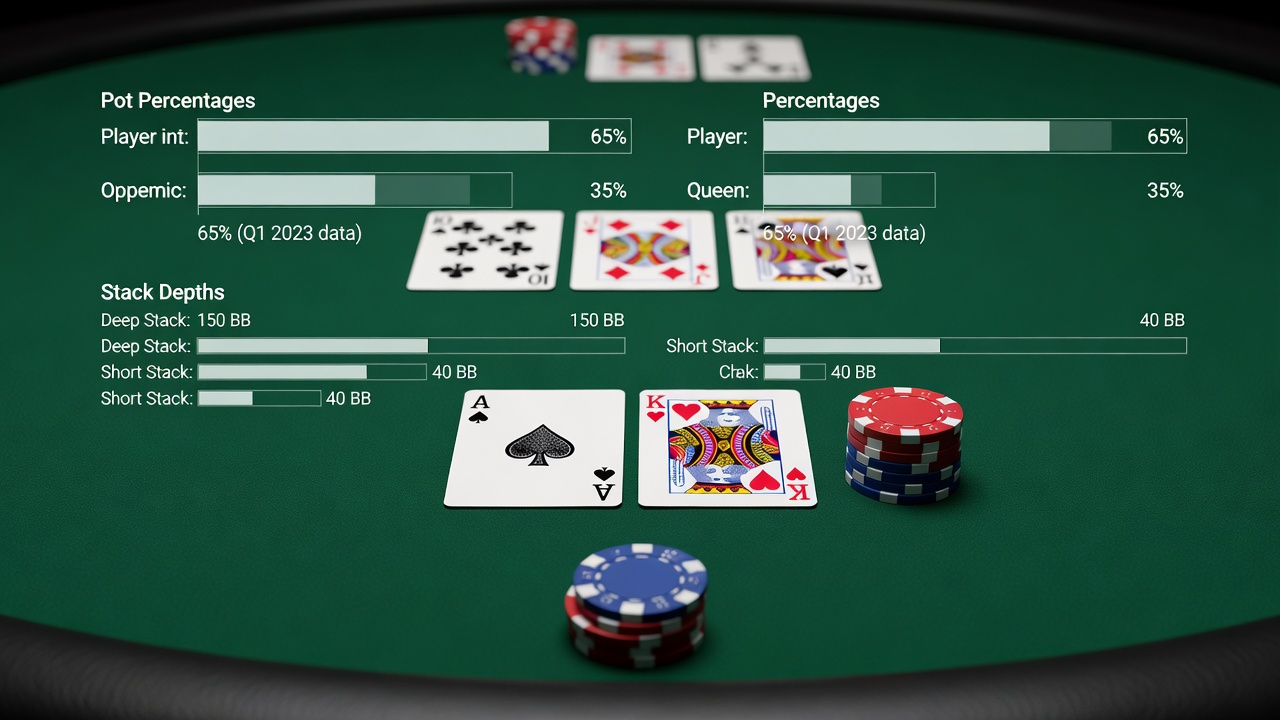
Short stacks (under 15 BB) favor all-in or near all-in sizing to maximize fold equity. Mid stacks require careful ICM-aware sizing, often 2.2-2.8x preflop opens from late position. Early position demands tighter sizing to avoid difficult postflop spots out of position. When deep-stacked, leverage position by using smaller bets to keep pots manageable and maintain control. Out of position, larger sizings help reduce multiway action and simplify your decision-making process on future streets.
Solver-Backed Calculations in 2026
Modern solvers like PioSolver and GTO+ recommend frequency-based sizing trees rather than fixed percentages. For example, on dry boards, solvers mix 25% and 75% pot bets at specific frequencies to balance protection and value extraction. These calculations incorporate equity realization, range advantage, and nut advantage to determine optimal sizings. Players should review solver outputs regularly to internalize these mixed strategies and apply them in real time during tournaments.
Opponent Adjustments and Table Dynamics
Adjusting bet sizes based on opponent tendencies is essential for exploitative play. Against tight players who overfold, smaller bluff sizes increase profitability. Versus loose callers, larger value bets extract more chips. Track how opponents react to different sizes over multiple hands and adapt accordingly. Table dynamics such as stack sizes relative to the table average and payout structure also influence optimal sizing decisions, especially near pay jumps.
Real Hand Examples from Online Tournaments
In a recent MTT final table with 35 BB effective stacks, a player held AK on a K72 rainbow flop. A 45% pot continuation bet induced calls from weaker kings and draws, leading to a profitable river jam. Another example from a mid-stage online event showed a successful 33% pot bluff on a monotone board using backdoor equity blockers. A third hand from a 2026 online series featured a 65% pot overbet on the river with a missed draw that forced a fold from top pair. These examples illustrate how precise sizing creates profitable spots across different board textures and stack depths.
GTO Versus Exploitative Approaches
GTO sizing provides a balanced baseline that works against strong opposition. Exploitative adjustments involve sizing up against calling stations or using smaller sizes versus tight players who fold too often. Hybrid strategies combine both by starting GTO and deviating based on observed leaks. Over time, players develop an intuitive sense of when to deviate from GTO lines and how much to exploit specific opponents without becoming predictable themselves.
Common Sizing Pitfalls and Corrections
- Overbetting too frequently without proper blockers – correct by mixing smaller sizes.
- Using the same size with merged ranges – correct by polarizing on wet boards.
- Ignoring ICM late in tournaments – correct by shrinking sizings to preserve fold equity without busting risk.
- Failing to adjust for position – correct by using larger sizings out of position to reduce multiway pots.
- Neglecting board texture in sizing decisions – correct by reviewing solver solutions for common flop types weekly.
- Over-relying on fixed percentages instead of mixed frequencies – correct by studying range construction and bet sizing trees in detail.
Practical Implementation Tips
Track your own sizing frequencies using poker tracking software. Review solver outputs for common board textures weekly. Practice in low-stakes tournaments before applying in high-pressure spots. Study PokerNews strategy sections and Card Player hand analyses for current meta trends. Always review WSOP coverage for live tournament sizing patterns. Implement a post-session review routine where you compare your actual sizings against solver recommendations to identify leaks quickly and improve decision-making over time.
Frequently Asked Questions
How do I adjust bet sizing for different tournament stages?
Early stages favor standard GTO sizing. Mid stages incorporate ICM adjustments. Late stages prioritize survival with smaller, more frequent bets.
What is the best preflop sizing in 2026 online metas?
2.2-2.5x opens from late position and 2.8-3x from early position remain effective, with 3-bet sizing around 8-10 BB when facing standard opens.
Should I use the same sizing for value and bluffs?
Yes in balanced GTO lines, but exploitative play allows differentiation when opponent tendencies are clear.
How important is position in bet sizing decisions?
Position is critical. In position, smaller sizings maintain control. Out of position, larger sizings reduce difficult decisions on later streets.
How can I practice bet sizing away from the table?
Use poker software to simulate hands and review solver outputs. Focus on one board texture per session to build pattern recognition and improve real-time application.
Conclusion
Mastering bet sizing in Texas Holdem tournaments requires ongoing study of solver outputs, real-time opponent adjustments, and disciplined execution across varying stack depths. Apply these techniques consistently to gain an edge in the 2026 meta and improve your overall tournament results.
Explore more advanced techniques in our Gambling Strategies section.


No comments yet. Be the first!