 GambleLore

Introduction to Responsible Gambling
Gambling can be an exciting pastime, but without precautions, it risks turning into a harmful habit. Responsible gambling means enjoying the thrill while protecting your finances, mental health, and relationships. This guide shares 10 actionable tips, blending timeless strategies with cutting-edge 2026 tech tools like AI self-monitors and blockchain trackers. We'll cover budgets, addiction signs, key risks, and prevention through real-life examples and helplines. Whether you're into slots, sports betting, or poker, these steps promote healthier habits.
In 2026, innovations like wearable biofeedback devices and VR reality checks make self-regulation easier. But tech alone isn't enough—commitment is key. Let's dive in.
1. Set a Strict Gambling Budget
Start with the foundation: decide how much you can afford to lose before playing. Treat it like entertainment spending, not an investment.
- Calculate disposable income: Subtract essentials (rent, bills, savings) from monthly earnings.
- Use apps like BudgetGuard 2026, an AI tool that links to your bank and auto-blocks excess transfers.
- Safe strategy: Deposit only budgeted amounts via prepaid cards.
Real-life example: Sarah limited herself to $50 weekly. When tempted, her app's haptic alert on her smartwatch stopped her—saving her $500 in a month.
2. Establish Time Limits
Time flies in casinos or online. Set session caps to prevent marathon plays.
- Start with 30-60 minutes per session.
- Employ TimerLock Pro, a 2026 browser extension with facial recognition pop-ups: "30 minutes up—take a break?"
- Strategy: Use phone alarms synced to gambling sites.
This curbs emotional strain from prolonged exposure.
3. Recognize Early Signs of Gambling Addiction
Spotting issues early is crucial. Key signs: chasing losses, lying about play, or betting more than planned.
- Self-assess weekly: Track wins/losses honestly.
- 2026 tool: NeuroTrack AI app analyzes play patterns and mood via voice logs for addiction flags.
- Strategy: Journal sessions to notice patterns like irritability post-loss.
Example: Mike ignored restlessness until his app flagged a 20% playtime spike—he paused and recovered.
4. Understand Key Gambling Risks
Financial loss is obvious, but emotional strain (anxiety, depression) and relationship damage lurk too. Odds favor the house—slots return ~90-95% RTP.
- Study house edges on sites like developer.mozilla.org for game math basics.
- Tech: RiskVisualizer 2026 simulates long-term losses via AR glasses.
- Strategy: Review risks before each bet.
Awareness prevents blind play.
Visual reminder of risks: 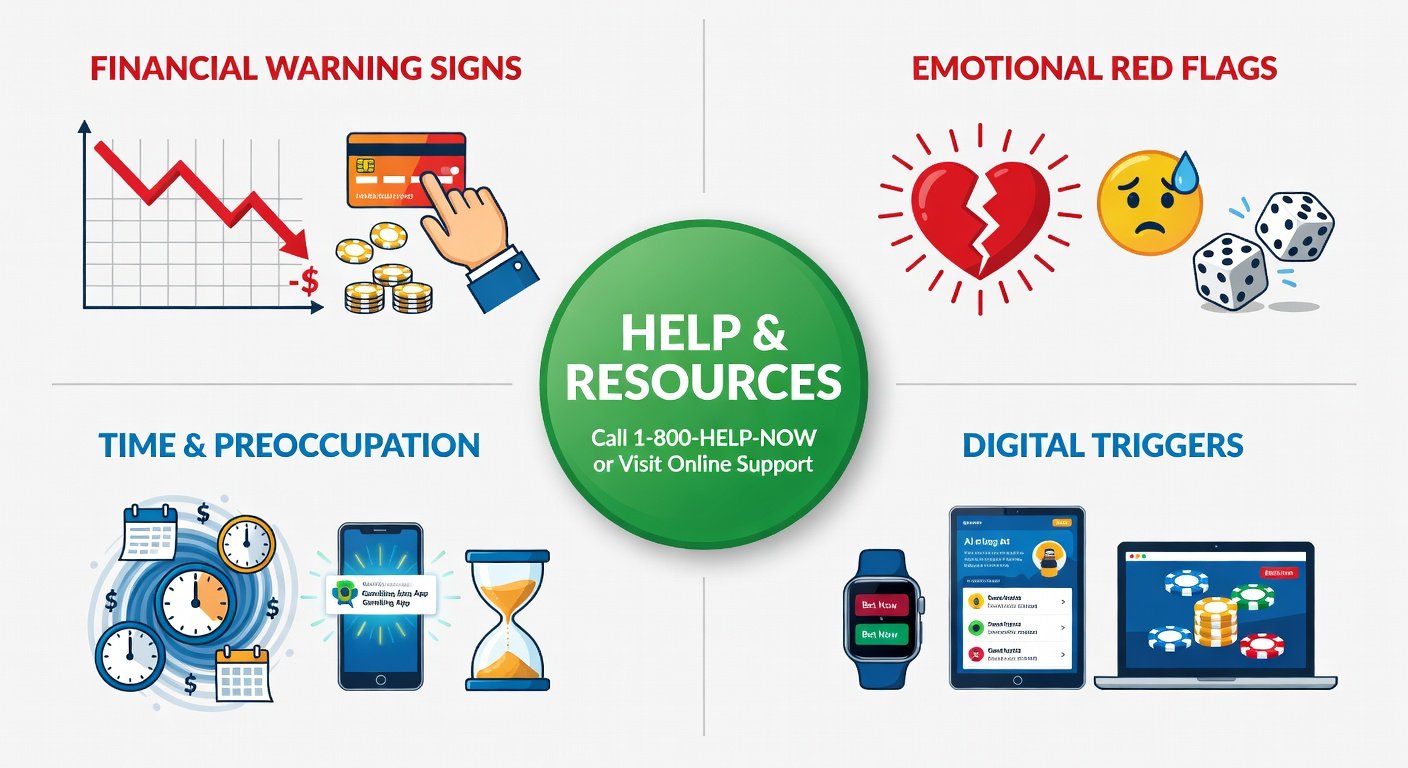
5. Never Chase Losses
The sunk-cost fallacy tempts doubling down. Stop immediately after losses.
- Rule: Walk away after three consecutive losses.
- 2026 tool: LossBlocker, a blockchain wallet that freezes funds post-loss streak.
- Strategy: Cash out winnings separately.
Example: Tom's chase cost $2,000; now his tool enforces breaks.
6. Take Regular Breaks and Self-Exclusion
Breaks reset your mindset. Self-exclude from sites for cooling periods.
- Schedule 24-hour weekly breaks.
- Use GamStop 2026, an AI-enhanced global exclusion registry.
- Strategy: Block apps during breaks.
7. Leverage Family and Friends for Accountability
Share your limits with trusted ones—they provide external checks.
- Buddy system: Weekly check-ins.
- Tech: ShareLink app sends play reports to a confidant.
- Strategy: Hand over wallet during sessions.
8. Educate Yourself on Odds and Game Mechanics
Knowledge empowers. Learn RTP, volatility, and strategies.
- Read guides on poker odds or sports stats.
- 2026: HoloOdds VR trainer simulates millions of hands.
- Strategy: Practice free demos first.
Link to experts: Visit the Gamblers Anonymous site for peer stories.
9. Use Tech Tools for Self-Monitoring
2026 brings game-changers:
- AI chatbots like GambleGuard predict binge risks.
- Wearables detect stress spikes via heart rate.
- Blockchain logs immutable play history.
Integrate for proactive alerts.
10. Know When to Seek Professional Help
If signs persist, act fast. Helplines offer free, confidential support.
- US: National Problem Gambling Helpline at 1-800-GAMBLER.
- UK: National Gambling Helpline 0808 8020 133.
- Global: Check NCPG resources.
Example: After maxing credit cards, Lisa called the helpline—therapy and exclusion rebuilt her life.
Conclusion: Build Lasting Healthy Habits
Responsible gambling thrives on discipline, awareness, and tools. Implement these 10 tips gradually—track progress monthly. Remember, the goal is fun, not fortune. If struggling, reach out; recovery is possible. Stay safe and gamble wisely in 2026 and beyond.

No comments yet. Be the first!