 GambleLore

Introduction to Live Streaming Gambling Risks
Live streaming platforms have transformed how people engage with gambling, creating new layers of risk through real-time peer pressure and impulsive decisions. In 2026, these platforms continue to evolve with advanced moderation tools, yet the core dangers remain significant for viewers exposed to constant betting cues. The rise of interactive features such as live chat, donation systems, and instant bet notifications has blurred the line between entertainment and active participation, making it easier than ever for casual viewers to slide into problematic betting habits. This article examines the amplification of gambling risks on streaming services, compares them to traditional environments, and provides actionable mitigation techniques grounded in responsible gambling principles. By understanding these dynamics, individuals can better protect themselves while still enjoying content in a controlled manner.
Platform-Specific Examples of Gambling Risks
Major platforms like Twitch and Kick host channels where streamers showcase live sports betting or casino games. Viewers often see immediate wins highlighted, encouraging copycat bets without full context. For instance, high-stakes poker streams can trigger FOMO, leading to rushed wagers on unrelated events. On Kick, some gambling-focused creators integrate affiliate links directly into their streams, allowing viewers to join betting sites with one click during high-energy moments. Similarly, sports betting streams on Twitch frequently display real-time odds updates that coincide with chat hype, pushing viewers toward quick decisions they might regret later. These examples illustrate how the visual and social elements of streaming lower the barrier to impulsive actions compared to solitary online betting.
Psychological Effects on Viewers
Real-time interaction heightens dopamine responses similar to actual gambling. Studies link this to increased addiction triggers via social proof and chat hype. The constant visibility of others' outcomes distorts risk perception, making losses seem less likely. Viewers may experience heightened anxiety when watching losing streaks followed by dramatic recoveries, which reinforces the belief that persistence pays off. This cycle can lead to emotional investment that mirrors the psychological patterns seen in active gamblers. Over time, repeated exposure may normalize high-risk behavior and reduce the perceived severity of financial losses. The World Health Organization resources highlight how digital environments exacerbate behavioral addictions through instant feedback loops, underscoring the need for awareness of these subtle influences on mental health.
Streaming vs Traditional Betting Environments
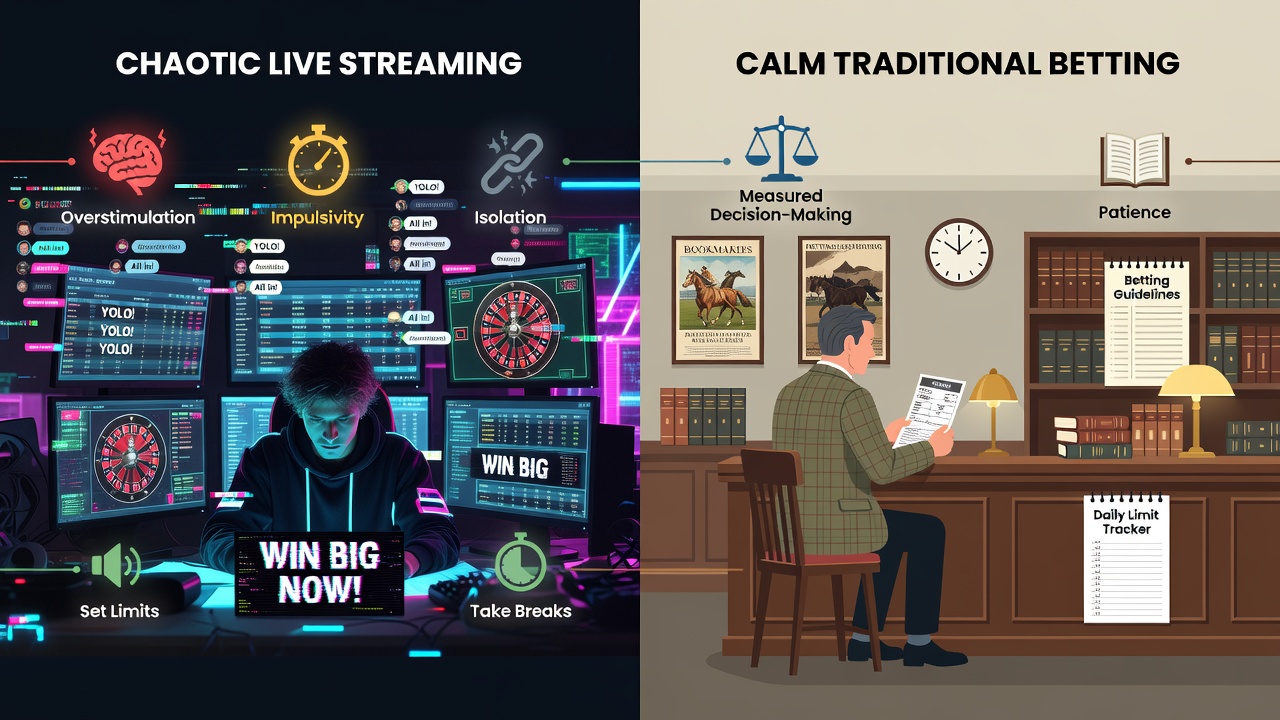
Traditional betting occurs in controlled settings with physical limits on session length. Live streaming removes these barriers, allowing 24/7 access from anywhere. Impulsive betting rises due to seamless integration with chat features and donation mechanics that mimic wagers. In traditional venues, social norms and physical presence of staff provide natural pauses, whereas streams encourage continuous engagement through notifications and community challenges. Accessibility becomes a double-edged sword: while convenient, it eliminates the reflective space that helps people reassess their choices. Social influence intensifies because comments appear instantly, creating a sense of shared excitement that overrides individual caution. Visibility of wins is often curated through edited highlights, further skewing expectations versus real odds.
- Accessibility: Streaming offers instant entry compared to regulated casino visits.
- Social influence: Peer comments in streams accelerate poor decisions.
- Visibility of wins: Edited highlights skew expectations versus real odds.
- Session control: Traditional settings enforce breaks; streams do not.
2026 Trends in Content Moderation
Platforms now deploy AI-driven detection for harmful gambling content, with updates focusing on age gates and warning overlays. However, enforcement varies, requiring users to stay vigilant. New algorithms can flag excessive win celebrations or direct betting solicitations in real time, yet gaps remain for smaller channels. Content creators are increasingly required to display responsible gambling messages at regular intervals, and some platforms have introduced viewer opt-out filters for gambling categories. These developments represent progress, but they do not replace personal responsibility in managing exposure.
Step-by-Step Mitigation Techniques
- Set strict time limits before opening any stream and use device timers to enforce them.
- Use platform tools to block gambling-related tags and mute keywords associated with betting promotions.
- Track all bets in a personal log to identify patterns and review weekly for signs of escalation.
- Engage support networks or apps for real-time accountability, such as sharing goals with trusted friends.
- Review odds independently rather than following streamer advice to maintain objective decision-making.
- Practice mindfulness exercises before and after viewing to counteract emotional triggers from live content.
Integrate these with evidence-based responsible gambling guides for sustained results. Additional steps include reviewing bank statements monthly and setting deposit limits on any linked betting accounts to create financial guardrails.
Practical Tools for Responsible Gambling
Apps with spending caps and self-exclusion features help counter impulsive triggers. Combine with education on cognitive biases to build long-term resilience against live streaming temptations. Popular tools include budget trackers that categorize entertainment spending separately from betting activity and browser extensions that hide live betting odds on streaming sites. Educational resources from recognized health organizations provide worksheets for recognizing early warning signs of problematic behavior. Users should also explore community forums moderated by professionals where experiences can be shared without judgment, fostering a supportive environment for maintaining healthy boundaries.
Frequently Asked Questions
How do live streams increase addiction risk?
Through continuous social validation and visible wins that encourage repeated betting without breaks, creating an environment where emotional decision-making overrides rational thought.
What 2026 moderation changes help?
Enhanced AI filters and mandatory disclaimers on high-risk content reduce exposure for vulnerable viewers, though these measures work best when paired with personal strategies.
Are there safe ways to watch gambling streams?
Yes, by treating them as entertainment only and never betting in real time based on content, while using all available blocking and limit-setting tools.
Who is most at risk from these platforms?
Young adults and those with prior gambling exposure tend to be more susceptible due to higher engagement with interactive features and social media integration.
Can moderation tools fully eliminate risks?
No single tool eliminates risks completely, but combining multiple layers such as time limits, financial caps, and support networks significantly reduces potential harm.
Conclusion
Awareness of live streaming gambling risks empowers better choices. By applying these strategies, individuals can enjoy content safely while prioritizing long-term well-being and avoiding the pitfalls of impulsive betting in 2026 and beyond.


No comments yet. Be the first!