 GambleLore

Introduction to Cluster Pays and Paylines in 2026 Slots
Online slots continue to evolve rapidly, and understanding the mechanics behind cluster pays versus traditional paylines is essential for players seeking an edge in 2026. These systems determine how wins are formed and directly influence RTP, volatility, and jackpot opportunities. Players often search for ways to optimize bets across different formats, making it vital to grasp how each mechanic affects long-term returns and session outcomes. This comprehensive guide breaks down the differences with real examples, step-by-step calculations, and practical strategies tailored for modern players.
Traditional Paylines Explained
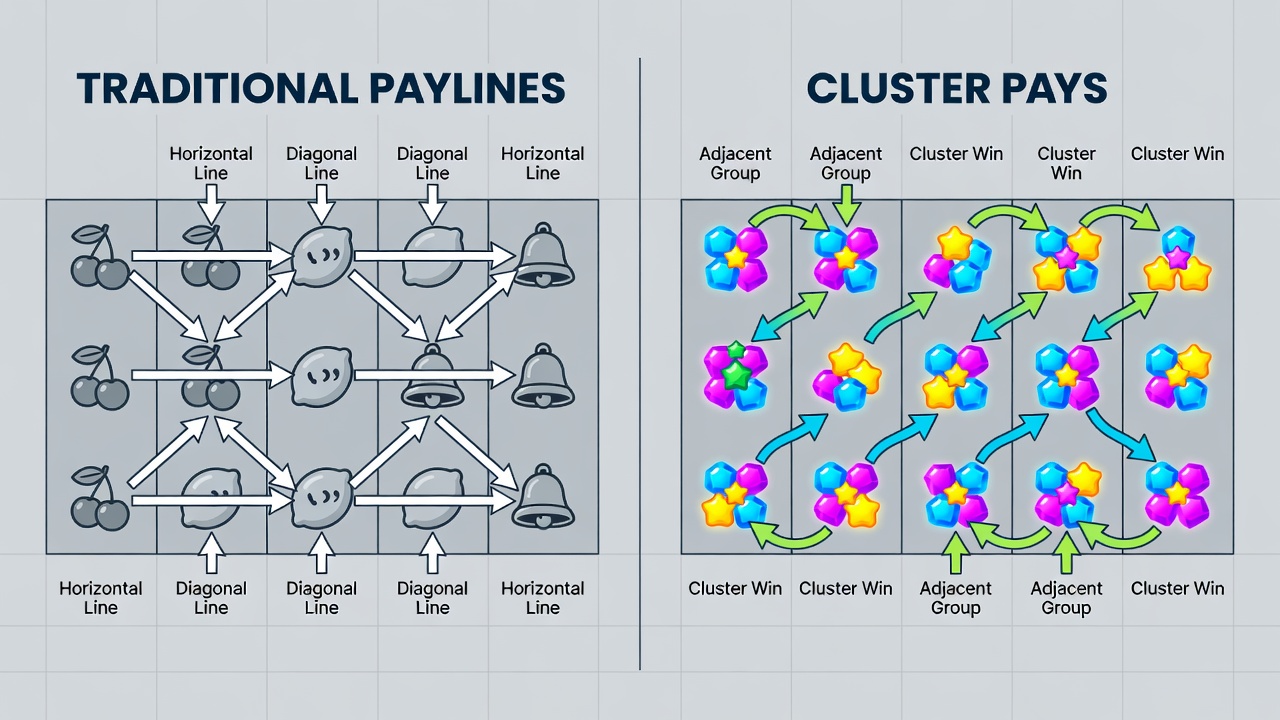
Paylines are fixed lines across the reels where matching symbols must land to create wins. Games typically feature between 10 and 100 paylines, though some allow players to activate fewer lines for adjusted volatility. Wins usually require symbols to align from left to right on consecutive reels, creating predictable patterns that many experienced players prefer. The structure rewards consistency, especially in medium-volatility titles where smaller wins occur more regularly to maintain engagement over extended sessions.
Cluster Pays Mechanics
Cluster pays slots eliminate fixed lines entirely. Instead, wins occur when groups of identical symbols form clusters of five or more adjacent symbols, often touching horizontally or vertically. This mechanic frequently appears in games with larger grids, such as 6x6 or 7x7 reels, allowing symbols to connect in creative ways without strict alignment rules. The absence of paylines introduces fresh dynamics, including cascading or tumbling features that can chain multiple wins from a single spin.
RTP and Volatility Comparison
Return to Player (RTP) percentages remain a core metric. Payline slots often range from 94% to 97%, while cluster pays titles can vary more widely due to their mechanics. Volatility tends to be higher in cluster pays because larger clusters are needed for substantial payouts, leading to longer dry spells followed by bigger wins. Understanding these trade-offs helps players match game selection to their risk tolerance and session goals, particularly when chasing progressive jackpots that may favor one format over the other.
Win Frequency and Jackpot Integration
Payline games generally deliver more frequent smaller wins, which supports longer playtime and steady bankroll management. Cluster pays shift toward less frequent but potentially larger payouts, creating higher excitement during bonus rounds. Many cluster pays titles integrate progressive jackpots effectively, as the mechanic supports massive symbol combinations that trigger life-changing rewards. Side-by-side analysis shows paylines excel in hit rate while cluster formats often boost maximum win potential through multipliers and expanding grids.
Real-World Examples from Popular Titles
NetEnt's Starburst uses classic paylines with expanding wilds for consistent action across its 10 fixed lines. In contrast, Pragmatic Play's Sweet Bonanza employs cluster pays with tumbling reels and multipliers on a 6x5 grid. Additional examples include Play'n GO's Reactoonz, which blends cluster mechanics with charged features, and Microgaming's Thunderstruck II, a payline classic with layered bonus rounds. These titles demonstrate how mechanics shape player experience and strategy across leading platforms in 2026.
Calculating Effective RTP on Cluster Pays Machines
To calculate effective RTP, track your total bets and returns over at least 500 spins. Divide total returns by total bets and multiply by 100. Adjust for bonus buy features common in cluster pays games by factoring in their cost versus expected value. This practical method helps 2026 players identify truly favorable machines. For instance, if 1000 spins cost 5000 credits and return 4700 credits, the effective RTP is 94%. Repeat across multiple sessions to account for variance and bonus triggers.
Step-by-Step RTP Calculation Process
- Record every spin's wager and outcome in a simple spreadsheet.
- Sum all wagers and all returns separately after the session.
- Apply the formula: (Total Returns / Total Wagers) x 100.
- Compare results across 10 or more sessions for statistical accuracy.
- Factor in any bonus buy costs and their separate return rates.
Actionable Strategies by Game Type
For payline slots, focus on activating all lines and managing bet size to stretch bankrolls during medium-volatility sessions. In cluster pays, increase bets during bonus rounds when multipliers are active and switch to lower stakes after consecutive losses. Always review the paytable before committing funds. Advanced players also monitor symbol frequency and adjust stake levels based on recent cluster formation patterns observed in demo modes.
Bankroll Allocation Tips
Allocate 60% of your session bankroll to payline games for steadier play and 40% to cluster pays for higher-reward potential. Set strict loss limits at 50% of the total bankroll and stop after reaching win targets of 30% above starting amount. This balanced approach minimizes risk while maximizing entertainment across both formats. Reassess allocation weekly based on performance data collected from tracked sessions.
Common Mistakes to Avoid
- Ignoring volatility differences when switching formats mid-session.
- Overlooking how cluster size requirements affect hit frequency.
- Failing to adjust bet sizes based on game mechanics and current RTP observations.
- Neglecting to test games in free play before real-money commitment.
How to Choose Between Formats
Evaluate your preferred session length and risk appetite first. Short sessions suit paylines for quicker results, while longer sessions benefit from cluster pays when pursuing big multipliers. Test both in demo versions to compare personal enjoyment and perceived fairness before depositing funds.
Future Trends in 2026 Slots
Developers are blending elements of both mechanics, creating hybrid games with optional paylines alongside cluster formations. Expect increased mobile optimization and AI-driven volatility adjustments that respond to individual player patterns, enhancing personalization while maintaining regulatory compliance across major markets.
FAQ
Which format offers better RTP in 2026?
Both can achieve competitive RTPs; always check the specific game information panel rather than assuming one format is superior.
How does volatility affect jackpot chances?
Higher volatility in cluster pays often pairs with larger jackpot potential, but payline progressives can still deliver substantial wins with lower variance.
Should beginners start with paylines or clusters?
Paylines provide a gentler learning curve due to more predictable win patterns, making them ideal for new players.
Can cluster pays support progressive jackpots effectively?
Yes, many top titles use cluster mechanics to enable massive symbol grids that trigger shared jackpots across networks.
How often should players review RTP data?
Review after every 500 spins or at the end of each session to maintain accurate tracking and informed decisions.
Responsible play remains crucial regardless of format. Visit the UK Gambling Commission for licensing details, BeGambleAware for support resources, and the National Council on Problem Gambling for additional guidance.


No comments yet. Be the first!