 GambleLore
Introduction: Why Fairness Matters in Online Slots
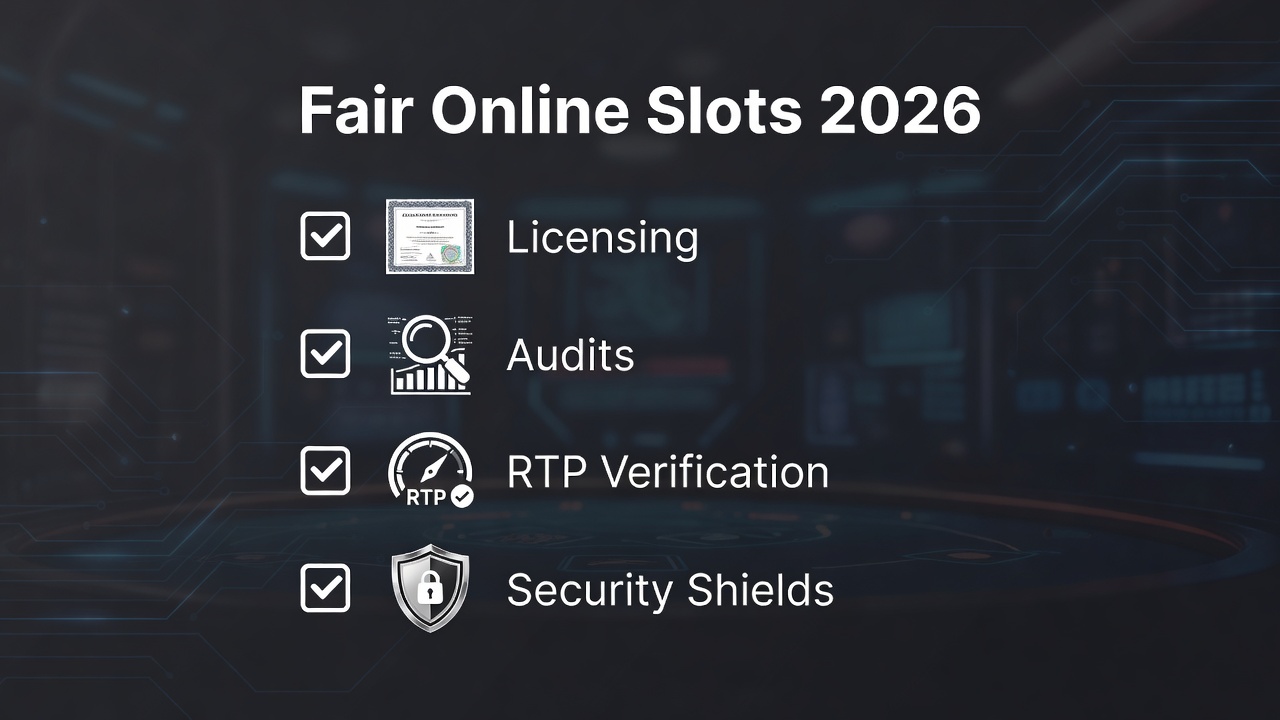
Online slots remain one of the most popular forms of digital entertainment worldwide, yet not every game operates with the same level of integrity. In 2026, players must actively verify fairness to protect their experience, time, and funds from unreliable operators. This comprehensive guide delivers a complete checklist covering licensing, audits, RTP transparency, provider credentials, and third-party certification tools. By following these practical steps you can confidently distinguish safe games from risky ones while enjoying slots responsibly.
Step 1: Verify Licensing and Regulation
Every reputable online slot must operate under a valid license from an established authority. Trusted regulators include the UK Gambling Commission, Malta Gaming Authority, Gibraltar Regulatory Authority, and the Alderney Gambling Control Commission. These bodies enforce strict rules on game fairness, random number generator integrity, and player fund protection. Always cross-check the displayed license number directly on the official regulator website before depositing or playing. For example, navigate to the casino footer, copy the license identifier, and search it on the regulator’s public database. The UK Gambling Commission maintains an up-to-date public register where you can instantly confirm an operator’s status and any enforcement actions. Similarly, the Malta Gaming Authority site allows verification of remote gaming licenses. Operators without visible or verifiable licenses should be avoided immediately because they lack independent oversight.
Step 2: Check Return to Player (RTP) Claims
Return to Player percentage indicates the theoretical portion of wagered money a slot returns to players over millions of spins. Reputable games publish RTP rates typically between 94 percent and 98 percent. Verify these figures inside the game’s information panel, paytable, or the provider’s official website rather than trusting marketing banners. Independent testing laboratories calculate RTP through extensive simulations and publish results. If a slot advertises an unusually high RTP without supporting documentation, treat it as a warning sign. Practical verification involves opening the game in demo mode, locating the RTP display, and cross-referencing it against the provider’s published data sheets. Many top studios now embed live RTP counters that update based on actual play, adding another layer of transparency.
Step 3: Review Third-Party Audits and Certifications
Third-party certification supplies the strongest evidence of fairness. Accredited auditors test random number generators, payout accuracy, and game mathematics on a monthly or quarterly basis. Current certificates should appear in the casino footer, help section, or dedicated compliance page. Look for seals from eCOGRA, iTech Labs, GLI, or BMM Testlabs. These organizations publish summaries of their findings on their own sites, allowing players to confirm authenticity. The eCOGRA and iTech Labs portals list active certifications for thousands of titles. When reviewing a certificate, check the issue date, scope of testing, and any noted exceptions. Certificates older than six months warrant further investigation or direct contact with the auditor.
Step 4: Evaluate Game Provider Credentials
Established providers such as NetEnt, Microgaming, Playtech, Pragmatic Play, and Evolution maintain rigorous internal standards and release audit summaries publicly. Lesser-known developers sometimes operate without multiple licenses or transparent testing. Research each studio through industry directories, review sites, and regulatory databases. Confirm the provider holds licenses in several regulated markets and partners only with licensed casinos. For instance, NetEnt games on UKGC-approved sites undergo continuous RNG testing and display verified RTP values in every jurisdiction. Cross-reference the provider name against the casino’s game library to ensure consistency.
Fair versus Risky Slots: Side-by-Side Comparison
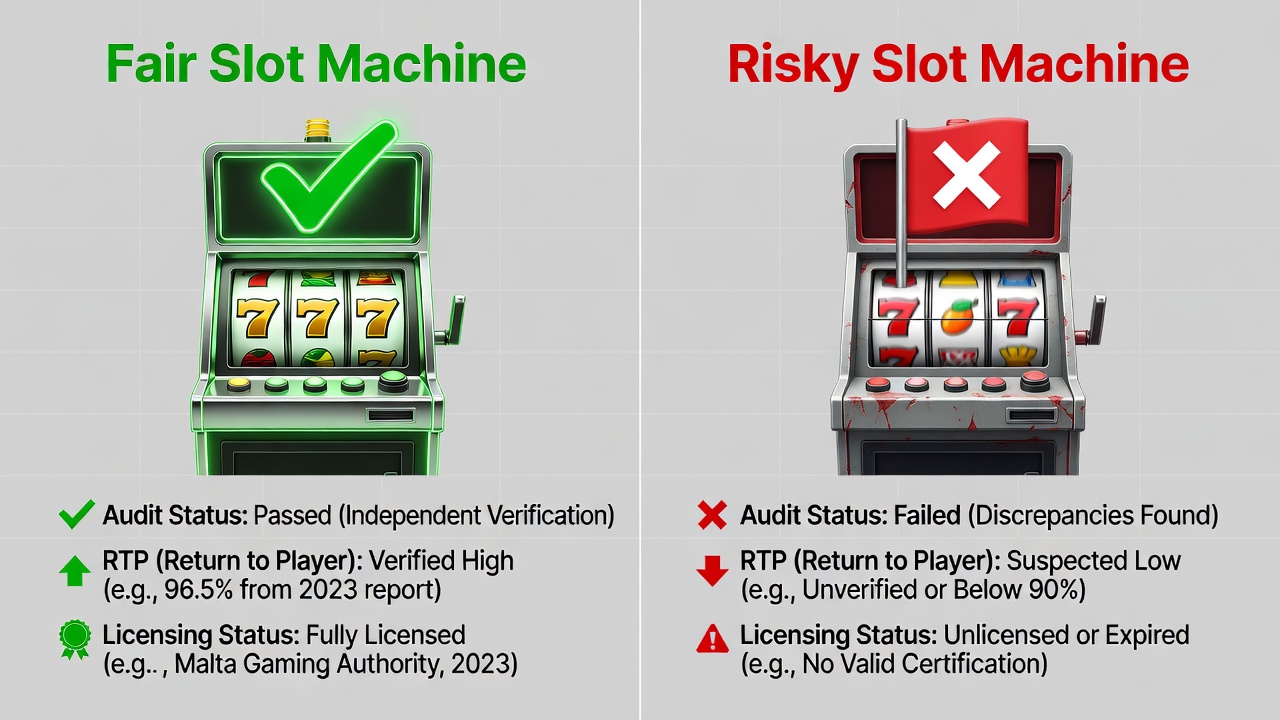
Understanding the differences helps players make quick decisions. Fair slots display current licenses, audited RTP figures, active RNG certificates, clear bonus terms, and responsive customer support. Risky slots hide licensing information, promote inflated RTP without proof, rely on unknown providers, lack third-party seals, and feature vague or missing payout data. Real-world examples from major licensed platforms consistently showcase audited titles from established studios with visible compliance seals, while unregulated sites often promote unverified games with misleading payout claims and no audit trail.
Practical Checklist for Verifying Fair Slots
- Confirm visible license seals and verify numbers on regulator sites.
- Locate and validate RTP inside the game or provider documentation.
- Check for recent third-party audit certificates from recognized labs.
- Research the game provider’s licensing and testing history.
- Read player reviews on independent forums for recurring complaints about payouts.
- Test customer support responsiveness before depositing funds.
- Review bonus terms for hidden wagering requirements that affect fairness perception.
Debunking Common Myths About Rigged Games
One persistent myth claims casinos can alter outcomes in real time. Licensed operators cannot modify certified RNG results after testing. Another misconception suggests high-volatility slots are rigged to withhold wins; volatility only influences payout frequency and size, not overall fairness. Some players believe progressive jackpots are manipulated, yet certified progressives use transparent contribution rates audited regularly. Relying on documented audits and regulatory oversight rather than anecdotal stories provides the most reliable protection against these myths.
Using Third-Party Certification Tools Effectively
Beyond checking seals on casino sites, players can use public tools from eCOGRA and similar organizations to search game titles directly. Enter the slot name into the auditor’s verification portal to retrieve the latest report. Combine this with mobile app checks where available, as some regulators now offer instant license lookup tools. Regular use of these resources builds confidence and helps identify any sudden changes in certification status.
FAQ: Red Flags to Watch For
What if a site refuses to show its license?
Avoid the platform immediately. Legitimate operators proudly display licensing information and welcome verification.
Can I trust RTP listed only in marketing materials?
No. Always confirm RTP inside the game interface or through independent audit reports.
How often should audits be updated?
Reputable labs issue reports at least quarterly. Certificates older than six months require further investigation.
Are all high RTP slots automatically fair?
Not necessarily. High RTP must be backed by current third-party verification and proper licensing.
What role does player feedback play?
Reviews on trusted forums can highlight patterns of delayed payouts or poor support, supplementing official checks.
Conclusion
Applying this detailed checklist enables players to identify fair online slots quickly and reliably throughout 2026. Prioritize verifiable licensing, demand transparent RTP data, insist on current third-party certifications, and research providers thoroughly. By integrating these steps into your routine you can enjoy slots with greater confidence while steering clear of risky operators and protecting your gaming experience.


No comments yet. Be the first!