 GambleLore

Introduction: Why Online Slots Myths Persist in 2026
Online slots continue to dominate digital casino entertainment, yet persistent myths influence how players approach the games. These misconceptions often stem from outdated land-based casino experiences or anecdotal stories shared across forums. This comprehensive guide separates fact from fiction by examining five widespread myths surrounding progressive jackpots, RNG fairness, and supposed winning patterns. By grounding explanations in game mechanics and real-world data examples, readers gain practical knowledge to make informed choices and avoid unnecessary losses. Modern slots rely on certified random number generators that ensure every spin operates independently, removing any possibility of predictable cycles or external manipulation in licensed environments. Throughout the article we compare player assumptions against actual technical realities and provide actionable steps for selecting trustworthy titles in the current landscape.
Myth 1: Progressive Jackpots Are Due to Hit Soon
A common belief holds that a progressive jackpot becomes more likely to trigger the longer it goes without a payout. In truth, each spin draws from the same fixed probability pool regardless of previous results or jackpot size. The growing prize pool attracts more players but does not alter the underlying trigger mechanism, which remains random and programmed at the development stage. Real data from audited progressive networks demonstrates jackpots can remain unclaimed for months before suddenly awarding to a player on an ordinary spin. For instance, several major networks have recorded gaps exceeding 200 days between wins, followed by immediate subsequent triggers. Players benefit more from reviewing the game's published return-to-player percentage and volatility rating than from monitoring payout history. This myth leads many to waste time switching games unnecessarily instead of focusing on entertainment value and bankroll management.
Myth 2: Casinos Rig RNG to Reduce Wins
Some players suspect operators secretly adjust random number generators to limit large payouts. Licensed platforms cannot modify RNG behavior because independent testing laboratories certify the software before launch and conduct ongoing audits. Regulatory bodies require these checks to verify statistical randomness and compliance with fairness standards. Reputable sites display current certification seals that link directly to laboratory reports. Always confirm licensing through official sources such as the UK Gambling Commission before depositing funds. This verification process confirms that outcomes remain unbiased and that any perceived patterns arise solely from normal statistical variance rather than interference.
Myth 3: Hot and Cold Streaks Follow Predictable Patterns
The notion that machines enter hot or cold phases encourages players to chase perceived trends by changing games after short losing sequences. Because RNG technology generates a fresh random result for every spin with no memory of prior outcomes, no machine can enter a predictable streak. Mathematical independence means the probability of any specific symbol combination stays constant across spins. To illustrate, consider a slot with a one-in-100 chance of a bonus trigger: after 99 non-triggering spins the next spin still carries exactly the same one-in-100 chance. Practical countermeasures include tracking personal session limits rather than machine history, setting strict loss thresholds in advance, and selecting titles with verified RTP values above 96 percent for improved long-term return characteristics.
Myth 4: Betting Max Always Improves Odds
Many assume that placing maximum bets unlocks superior payout percentages or hidden features. While certain progressive jackpots require maximum wagers for jackpot eligibility, standard video slots maintain identical RTP across all bet sizes. Increasing the stake simply scales both potential wins and losses proportionally without changing the underlying probability model. Reviewing paytables at various stake levels reveals that symbol values and bonus frequencies remain consistent. Lower bets therefore allow extended play sessions and greater enjoyment without sacrificing fairness. Players should compare volatility ratings to match personal risk tolerance rather than defaulting to maximum bets.
Myth 5: Timing Spins or Using Strategies Beats the System
Attempts to time button presses or apply betting sequences rest on the false premise that players can influence RNG output. Results generate the instant the spin command registers, rendering manual timing irrelevant. No betting system overcomes the fixed house edge embedded in the game's mathematical model. Instead, adopt evidence-based habits such as researching independent game reviews, confirming RTP data directly from provider documentation, and restricting activity to fully licensed operators. These steps reduce exposure to misleading promotions and support sustainable play.
How RNG Technology Actually Works
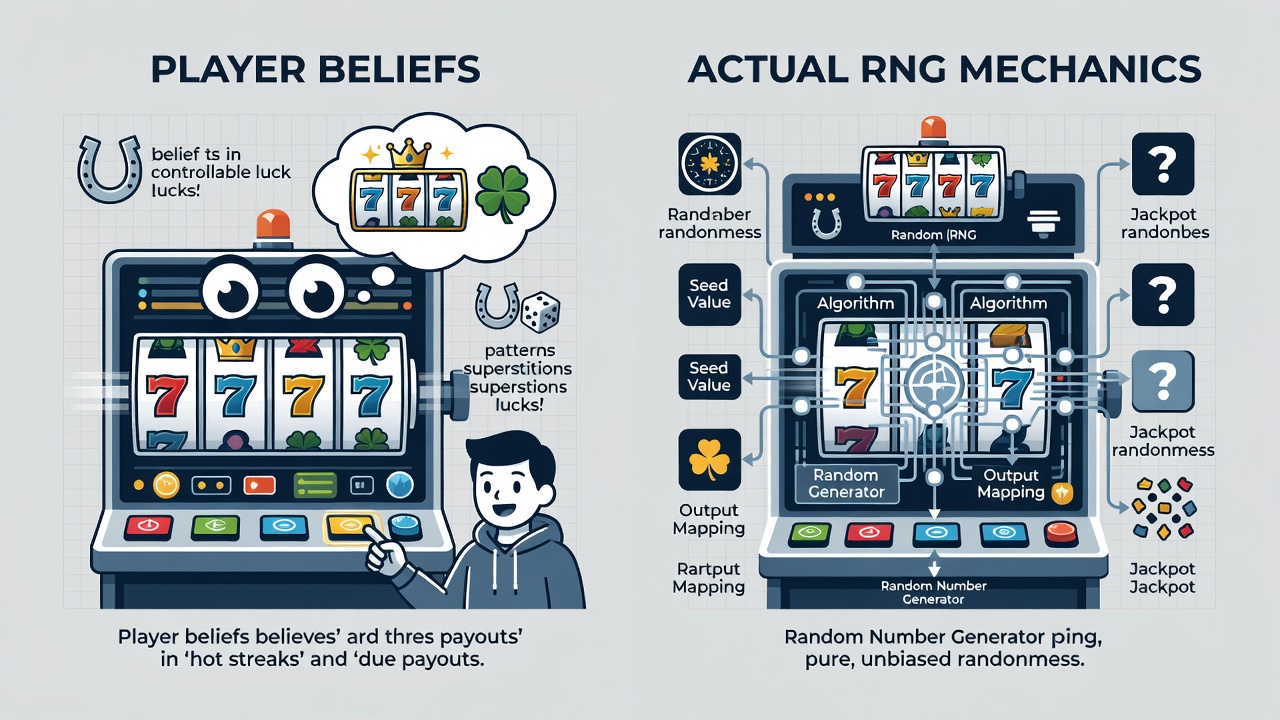
Understanding the technical foundation helps dispel remaining doubts. A certified RNG produces thousands of number sequences per second, each corresponding to a unique reel position. When a player initiates a spin, the system selects the most recent sequence at that millisecond. This process ensures true randomness and prevents any external timing or pattern recognition from providing an advantage. Third-party auditors regularly test output distributions to confirm uniformity across millions of simulated spins.
Practical Steps to Avoid Costly Errors
Follow this structured checklist before committing funds: first, verify the operator holds a current license from a recognized authority; second, examine the game's RTP and volatility figures published by the developer; third, test the title in demo mode to understand bonus mechanics; fourth, establish session budgets and time limits in advance; fifth, review terms of any welcome offers to avoid hidden wagering traps. Applying these steps consistently protects bankrolls and enhances enjoyment.
Expert Tips for Identifying the Best Slots in 2026
Seek providers with long-standing reputations for transparency and frequent independent audits. Compare volatility ratings to align game selection with your preferred win frequency. High-volatility titles deliver infrequent but substantial payouts, whereas low-volatility options provide steadier smaller returns. Monitor emerging 2026 developments including improved mobile interfaces, expanded buy-a-bonus mechanics, and enhanced graphical themes that maintain core randomness. These innovations enrich gameplay without modifying fairness fundamentals.
Short FAQ
Do online slots pay out more at night?
No. RNG functions continuously with identical probability at any hour of the day.
Can I increase my chances with casino bonuses?
Bonuses extend play duration but leave underlying odds unchanged. Always read wagering requirements carefully before accepting offers.
Are all slots the same?
No. Variations in RTP, volatility, and feature sets create distinctly different player experiences. Research each title individually.
Does game history influence future results?
Absolutely not. Every spin remains statistically independent of all previous outcomes.
Conclusion
Clear understanding of these mechanics empowers players to enjoy online slots responsibly. Prioritize certified fairness, maintain disciplined bankroll practices, and treat the activity as entertainment rather than a revenue source. For additional guidance visit BeGambleAware and the UK Gambling Commission resources. With accurate information, 2026 players can navigate the online slots environment confidently and sidestep common misconceptions that lead to poor decisions.


No comments yet. Be the first!