 GambleLore
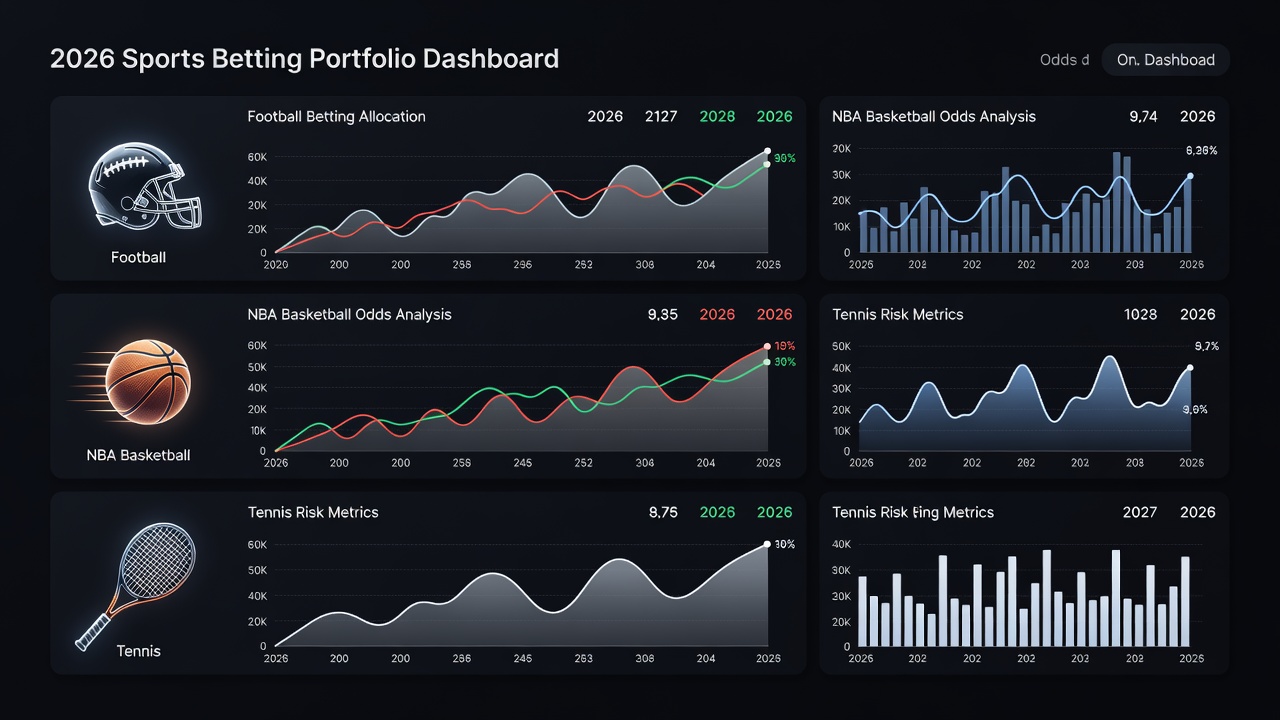
Introduction to a Portfolio Mindset in Sports Betting
In 2026, treating sports betting like a diversified investment portfolio offers bettors a structured way to manage volatility across football, NBA, and tennis markets. Instead of chasing single-sport wins, spreading exposure reduces the impact of any one league's unpredictable swings. This approach mirrors traditional portfolio theory by balancing high-volatility NBA games with steadier tennis sets and football's seasonal rhythms. Bettors who adopt this mindset focus on long-term expected value rather than short-term results, recognizing that no single sport dominates outcomes every week. By analyzing historical data from multiple leagues, they identify patterns where one market's downturn coincides with another's strength, creating natural hedges that protect overall bankroll stability throughout the year.
Benefits of Diversifying Across Football, NBA, and Tennis
Each sport exhibits distinct market behaviors that make diversification powerful. Football odds often move slowly due to lower scoring and defensive strategies, creating opportunities in draw markets or under totals during rainy European winter fixtures. NBA lines fluctuate rapidly with player injuries, rest decisions, and pace-of-play trends, allowing for quick adjustments in live betting. Tennis provides granular set-by-set and game-by-game markets that remain largely uncorrelated with team sports, especially on different surfaces like clay, grass, or hard courts. Diversification helps smooth returns over time by ensuring that a poor run in one sport does not derail the entire portfolio. For instance, when NBA playoff series produce heavy favorites and reduced value, football's Champions League knockout stages often present mispriced underdogs. Cross-sport exposure also limits exposure to league-specific issues such as referee strikes or unexpected weather disruptions that can skew odds in a single market.
Strategic Bankroll Allocation for 2026
Effective allocation starts with assessing personal risk tolerance and seasonal calendars. A common framework divides capital into three portions: 40% football for its global liquidity and year-round availability, 35% NBA for high-volume opportunities during the regular season and playoffs, and 25% tennis for niche value plays around Grand Slams and ATP events. Adjust these weights quarterly based on fixture congestion and injury reports. For example, increase football allocation during the English Premier League winter months when data models show higher draw percentages. Always maintain a separate emergency reserve outside the active betting bankroll equivalent to at least three months of average stakes. Within each sport bucket, further subdivide by bet type such as moneyline, totals, and props to avoid over-concentration in one outcome style. This layered approach prevents any single bad week from cascading across the portfolio.
Spotting Uncorrelated Value Opportunities in Betting Odds
Value emerges when odds misprice outcomes relative to true probabilities derived from statistical models. In football, look for underdogs in low-scoring leagues or matches between teams with contrasting styles, such as a high-pressing side versus a counter-attacking opponent. In the NBA, target player props during back-to-back games or when star players return from injury but face minutes restrictions. In tennis, exploit surface-specific trends on clay versus grass and monitor head-to-head records on specific court types. Cross-sport analysis reveals moments when, for example, an NBA star's absence creates tennis-like individual performance edges in related prop markets or when football fixture pile-ups coincide with tennis players peaking after a rest week. Use multiple bookmakers to compare lines and capitalize on discrepancies that arise from differing market focus across sports.
Step-by-Step Guide to Building Balanced Multi-Sport Positions
- Define overall portfolio goals and maximum drawdown limits based on your total bankroll and time horizon for the 2026 season.
- Research current odds across major bookmakers for each sport while noting line movements over the previous 48 hours.
- Identify 3-5 uncorrelated bets per week by screening for value using probability models and avoiding correlated outcomes within the same sport.
- Size stakes according to allocation percentages and Kelly criterion adjustments, capping any single bet at 3% of the sport-specific bucket.
- Record every position in a tracking spreadsheet with entry odds, stake, result, and notes on the reasoning behind the selection.
- Review weekly performance metrics and rebalance allocations if one sport exceeds its target weight by more than 10%.
Real-World Examples of Diversified Betting Slips
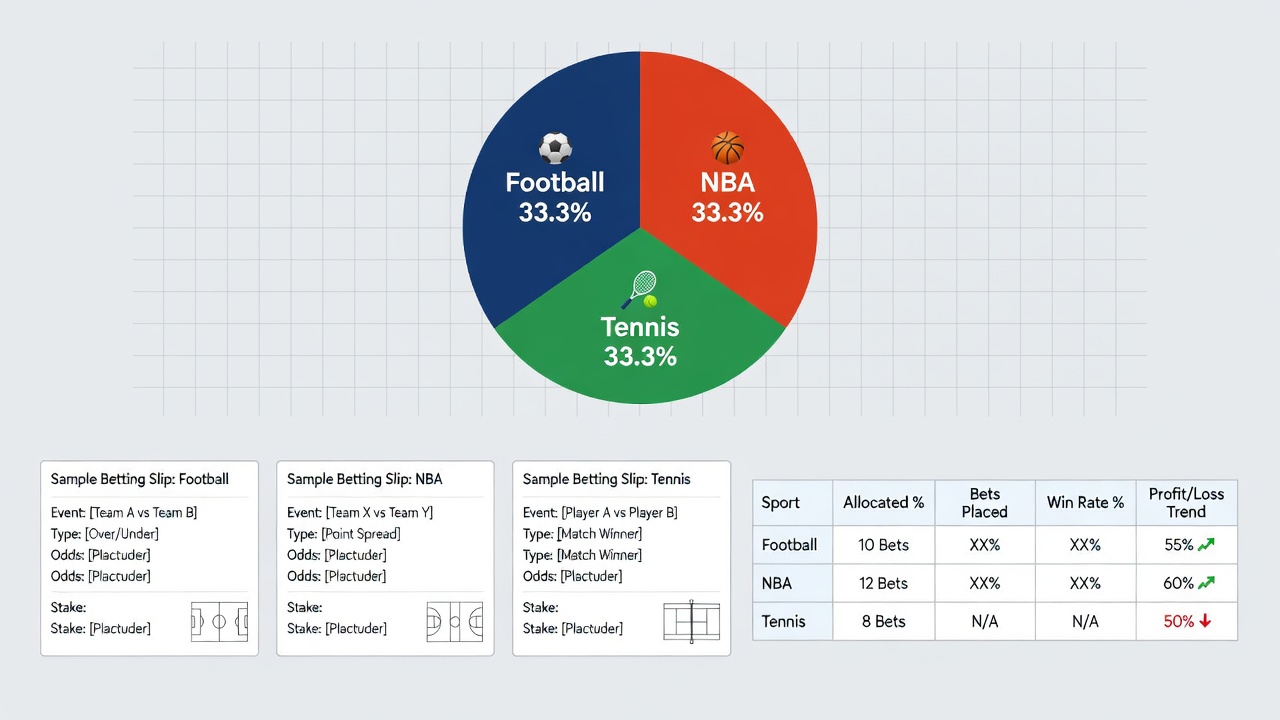
Consider a sample slip for a midweek slate in February 2026: a Premier League draw at +180 between two defensively solid mid-table sides, an NBA over on points for a high-pace matchup between two injury-depleted teams at -110, and a tennis set winner on an underdog clay-court specialist at +140. This combination spreads risk across different event durations and scoring dynamics, ensuring that a single upset does not wipe out the entire position. Another example during overlapping seasons might combine UEFA Champions League futures on a dark-horse team, NBA playoff series player props on emerging stars, and Wimbledon outrights on serve-dominant players. Analyzing these slips after settlement reveals which sports contributed most to variance and informs future allocation tweaks.
Performance Tracking Templates and Tools
Use a simple spreadsheet with columns for date, sport, stake, odds, result, profit/loss, and running ROI per sport bucket. Add summary tabs that calculate Sharpe ratios and maximum drawdowns across the full portfolio. Review weekly to rebalance allocations and monthly to update models with new data. Many bettors also integrate free public data from official league sites such as NBA.com and ATP Tour for deeper statistical context on pace, surface stats, and injury timelines. Exporting these datasets into custom dashboards allows quick identification of when one sport's volatility is spiking relative to the others.
Risk Assessment Techniques for Multi-Sport Portfolios
Calculate portfolio beta by measuring how each sport's results correlate with overall bankroll movement using at least 50 historical data points. Set stop-loss rules at 15% portfolio drawdown and conduct monthly stress tests using historical volatility data from past seasons. Monitor bookmaker limits and potential account restrictions when scaling positions across markets. Additional techniques include scenario analysis for simultaneous bad runs in two sports and correlation matrices that flag when tennis and NBA results begin moving together unexpectedly. These methods help maintain discipline during inevitable losing streaks.
Common Mistakes to Avoid When Building a 2026 Betting Portfolio
One frequent error is over-allocating to the most familiar sport, such as pouring 70% into football while neglecting tennis value. Another is failing to update allocation weights when seasons change, leaving the portfolio exposed during NBA off-season lulls. Bettors also sometimes ignore transaction costs from frequent line shopping or chase losses by increasing stakes beyond the predetermined framework. Maintaining strict rules around record-keeping and avoiding emotional overrides prevents these pitfalls from eroding long-term returns.
Conclusion
A disciplined 2026 portfolio approach across football, NBA, and tennis transforms betting from reactive gambling into a calculated strategy. Consistent execution, rigorous tracking, and ongoing education remain essential for long-term sustainability and enjoyment of the process.
FAQ
How often should I rebalance my betting portfolio?
Review allocations monthly or after major seasonal shifts such as the NBA All-Star break or tennis Grand Slams to keep weights aligned with current opportunities.
Can beginners apply this strategy?
Yes, but start with smaller stakes and focus on learning one sport deeply before expanding into multi-sport positions to build confidence in value identification.
What tools help track multi-sport performance?
Free spreadsheets combined with data from FIFA.com and official league APIs provide solid foundations for ongoing analysis and decision-making.
How do I handle bookmaker restrictions across different sports?
Spread activity across multiple reputable operators and keep individual stakes modest to reduce the likelihood of limits being applied to any single account.


No comments yet. Be the first!