 GambleLore

Introduction to Seasonal Betting Trends in 2026
Seasonal patterns significantly influence betting outcomes in both sports and horse racing throughout 2026. Bettors who analyze how weather shifts, fixture congestion, and calendar events affect performance gain a substantial edge over casual punters. This comprehensive guide delves into summer versus winter form differences, major sporting events, and adaptive strategies. It provides practical steps for tracking historical data, comparisons of peak and off-peak periods, and real-world examples from top competitions. Additionally, readers will learn how to adjust bankroll allocation and refine odds evaluation based on the time of year, ensuring more informed decisions across the calendar.
Summer Versus Winter Racing Form
In horse racing, summer conditions typically favor speed-focused horses on firm ground, leading to faster times and different winner profiles compared to winter. Winter racing on softer or heavy ground emphasizes stamina and jumping ability, often benefiting horses with proven mud form. Trainers with strong records in specific seasons, such as those excelling on all-weather tracks during colder months, become prime targets for selective betting. In team sports like football, summer pre-season matches and early league fixtures test fitness levels, while winter schedules bring challenges from cold temperatures and potential pitch issues. Historical patterns reveal that certain teams from warmer climates struggle in northern winter conditions, creating value in underdog bets. Bettors should review past results segmented by month to identify these recurring advantages.
Major Sporting Calendar Events in 2026
The 2026 calendar includes high-profile events that drive betting markets, such as FIFA World Cup qualifiers, Premier League winter blocks, and horse racing festivals including Royal Ascot in June and the Cheltenham Festival in March. These periods generate increased public interest, often inflating odds on favorites and creating opportunities in each-way or place markets. For instance, the Breeders' Cup in November highlights international contenders adapting to American tracks, while summer cricket or baseball seasons introduce different pace dynamics. Understanding fixture lists helps anticipate congestion around international breaks, where club teams may rest key players. Premier League official site offers detailed schedules for planning bets around these peaks.
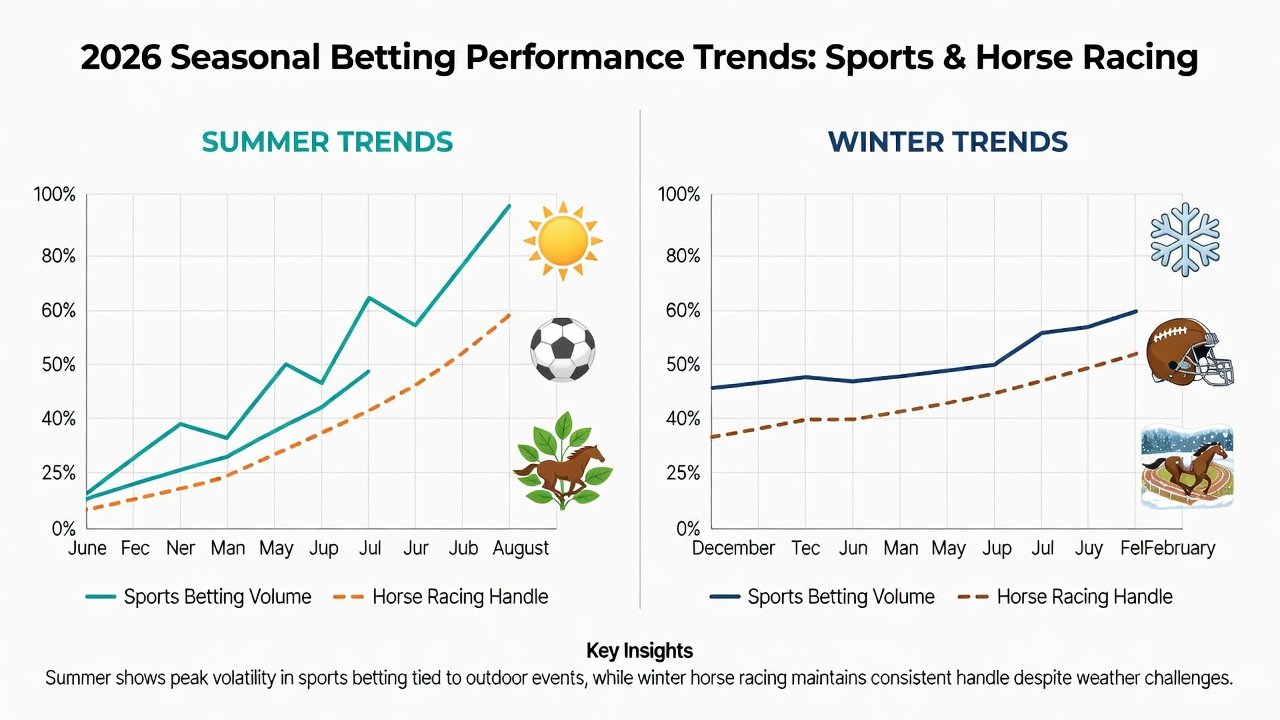
Adapting Strategies to Weather and Fixture Congestion
Weather plays a decisive role, with rain softening racecourses and altering football pitch conditions to favor defensive or physical styles. Fixture congestion during holiday periods or cup runs leads to player fatigue, increasing the likelihood of draws or upsets in sports betting. Practical adaptation involves cross-referencing long-range weather forecasts with team news and historical performance in similar conditions. For horse racing, focus on trainers who prepare horses specifically for winter campaigns. In sports, monitor rotation patterns during busy December schedules. This approach reduces risk by aligning bets with proven seasonal strengths rather than relying on overall season averages.
Practical Steps for Tracking Historical Seasonal Data
To build a robust seasonal strategy, follow these detailed steps: First, gather at least five seasons of results from official sources including race results and league statistics. Second, categorize data by surface type, temperature ranges, and time of year using spreadsheets for easy filtering. Third, calculate metrics such as strike rates, average odds, and profit margins for specific trainers, jockeys, or teams in summer versus winter. Fourth, integrate weather archives to confirm correlations between conditions and outcomes. Fifth, test strategies on a small sample of recent data before scaling up stakes. This methodical process reveals hidden edges, such as improved performance by certain stables on firm summer ground. Regular updates ensure strategies evolve with any rule changes in 2026.
Comparisons Between Peak and Off-Peak Periods
Peak periods around major festivals deliver high liquidity but tighter margins due to sharp bookmakers adjusting lines quickly. Off-peak racing or midweek sports events often feature softer odds and less informed public betting, allowing sharper value hunters to capitalize. Real-world examples include strong showings from Newmarket trainers at Royal Ascot contrasted with quieter summer all-weather meetings where outsiders frequently surprise. In football, post-Christmas congestion creates more draws compared to the open play of early season. Comparing these periods highlights the need for adjusted expectations; peak events suit conservative staking, while off-peak windows support higher-volume approaches with careful selection.
Tips on Adjusting Bankroll Allocation and Odds Evaluation
Effective bankroll management requires seasonal flexibility. During high-variance winter months, reduce individual bet sizes to 1-2% of total funds while increasing the number of smaller wagers to ride out variance. In stable summer periods, allocate slightly larger portions to high-confidence selections backed by strong historical data. For odds evaluation, compare current lines against seasonal benchmarks rather than generic averages, such as favoring longer prices in wet winter racing where upsets rise. Avoid common mistakes like over-betting during festivals due to excitement or ignoring fatigue factors in congested schedules. Consistent tracking of results by season refines these adjustments over time.
Real-World Examples from Top Events
Consider the Cheltenham Festival, where winter form horses with proven Cheltenham records dominate, unlike summer jumps meetings that reward different profiles. In the Premier League, teams like those in the north often outperform expectations in December due to weather adaptation. These cases demonstrate how seasonal awareness turns average bets into profitable ones when combined with data analysis.
Mistakes to Avoid in Seasonal Betting
- Ignoring surface changes and betting on speed horses in heavy winter ground.
- Overloading stakes during peak events without adjusting for public bias.
- Failing to account for international breaks and resulting team fatigue.
- Using year-round averages instead of month-specific statistics.
Conclusion
Mastering 2026 seasonal trends demands ongoing data review and adaptable tactics. By prioritizing weather impacts, fixture awareness, and historical segmentation, bettors enhance their edge in both sports and horse racing markets. British Horseracing Authority resources provide valuable supplementary data for ongoing refinement.
FAQ
When is the best time to bet on horse racing?
Off-peak summer meetings often provide value on speed horses, while winter festivals reward stamina specialists with established form.
How does weather affect sports betting outcomes?
Adverse conditions shift preferences toward physical teams or mud-loving runners, altering expected results from standard models.
Should bankroll allocation change with the seasons?
Yes, tighten stakes in volatile winter periods and expand selectively during stable summer windows for optimal risk control.
What tools help track seasonal data effectively?
Official league sites, racing databases, and weather services enable precise segmentation and pattern identification.


No comments yet. Be the first!