 GambleLore

Introduction to Psychological Tactics in Modern Casino Play
In 2026, casino strategies extend far beyond memorizing basic rules and calculating odds. Players who master psychological approaches gain a meaningful edge in blackjack, roulette, and baccarat by maintaining composure under pressure and making clearer decisions. These tactics directly address common pitfalls such as emotional reactions to losses, impulsive betting after near-misses, and loss of bankroll discipline. This comprehensive guide explores evidence-based mental techniques drawn from cognitive psychology, providing practical tools that strengthen decision-making and promote disciplined bankroll management across all three games. Whether you play in physical casinos or online platforms, understanding the mental side of gambling can transform results over time.
Recognizing Tilt Triggers in Casino Games
Tilt occurs when emotions override rational thought, leading to poor choices that compound losses. Common triggers include consecutive losses at the blackjack table, near-misses on the roulette wheel, or mounting pressure from rising table limits in baccarat. Identifying personal signs—such as increased heart rate, clenched fists, rushed decisions, or negative self-talk—allows early intervention before mistakes escalate. Experienced players often keep a simple post-session journal noting emotional states alongside bet outcomes. Over several sessions, patterns emerge that reveal individual tilt triggers. For instance, one player might tilt after losing three hands in a row, while another reacts strongly to a single bad beat in roulette. Recognizing these signals early creates space for corrective action.
Breathing Techniques for High-Stakes Moments
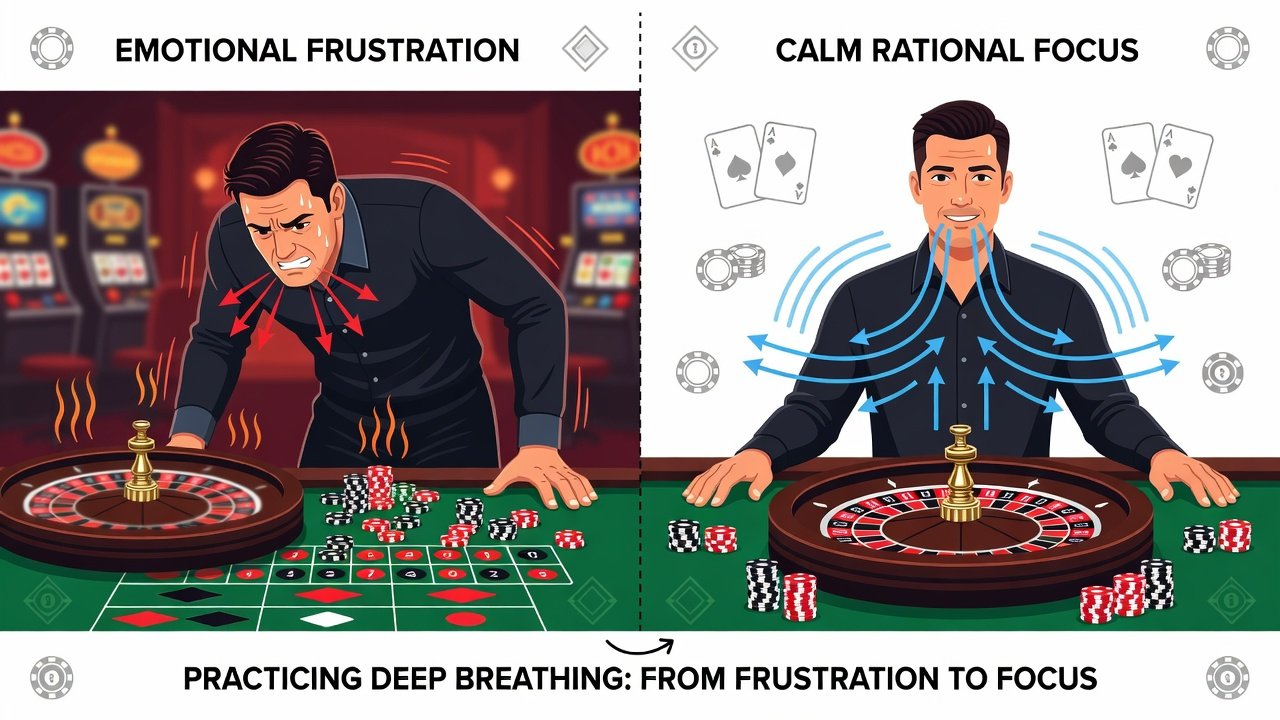
Controlled breathing calms the nervous system during intense play and interrupts the fight-or-flight response. The widely recommended 4-7-8 method involves inhaling quietly through the nose for four seconds, holding the breath for seven seconds, and exhaling completely through the mouth for eight seconds. Apply this technique between hands in blackjack or before placing bets in roulette and baccarat. Another effective variation is box breathing: inhale for four, hold for four, exhale for four, and hold again for four. Regular practice outside the casino environment builds automatic responses that reduce anxiety and prevent chase betting. In high-stakes moments, even two or three cycles can lower heart rate and restore clarity, allowing players to return to optimal strategy instead of deviating emotionally.
Visualization for Stronger Bankroll Discipline
Visualization trains the mind to prioritize long-term goals over short-term impulses. Picture your bankroll as a protected resource and mentally rehearse successfully walking away after reaching a pre-set win limit or loss threshold. Combine this with detailed mental rehearsals of sticking to session budgets, which helps counteract the urge to increase stakes after a win streak. Athletes and performers have long used visualization to enhance focus; the same principle applies to casino play. Spend five minutes daily imagining calm, disciplined behavior at the table. This mental preparation makes it easier to execute the plan when real emotions arise during live sessions.
Step-by-Step Mental Resets After Losses
After experiencing a loss, follow this structured sequence to interrupt emotional spirals. First, pause play for at least two full minutes and physically step away from the table if possible. Second, perform three cycles of deep breathing to lower physiological arousal. Third, review the hand or spin objectively, focusing only on facts without self-criticism. Fourth, reaffirm your pre-set session limits aloud or in writing. Fifth, make the next decision only after confirming it aligns with your original strategy. This reset process restores focus on data-driven choices rather than revenge plays. In practice, a blackjack player who loses a doubled-down hand can use the pause to remember that variance is normal and avoid immediately increasing the next bet size.
Emotional Play Versus Data-Driven Decisions
Emotional play typically features increased bet sizes after losses, deviation from basic strategy charts, and ignoring table limits. Data-driven approaches rely on pre-planned probabilities, session tracking, and adherence to proven strategies. Side-by-side comparisons show that emotional players experience higher variance, quicker bankroll depletion, and more frequent errors. In contrast, disciplined players extend playtime, reduce overall mistakes, and maintain consistent application of basic strategy even during downswings. The difference becomes especially clear in baccarat, where emotional players often chase streaks while data-driven players stick to flat betting or predetermined patterns.
Real-World Scenarios Demonstrating Reduced Errors
Consider a blackjack player facing three straight losses. Instead of doubling bets in frustration, they pause, breathe using the 4-7-8 technique, and return to optimal strategy, avoiding a common bust-out scenario. In roulette, a player who has just missed several numbers visualizes their bankroll limit before the next spin and exits after reaching it, sidestepping tilt-induced chasing. A baccarat participant who experiences a long losing shoe uses the mental reset sequence to leave the table rather than increasing wagers, preserving capital for future sessions. These examples illustrate how tactics minimize losses across game types and create sustainable habits.
Integrating Tactics with Game-Specific Strategies
In blackjack, combine breathing techniques with strict adherence to basic strategy charts during high-pressure decisions like splitting or doubling. For roulette, use visualization to reinforce the understanding that each spin is independent, reducing the temptation to bet on “due” numbers. In baccarat, mental resets help players ignore perceived patterns in the shoe and maintain consistent betting amounts. Practicing these integrations during low-stakes sessions builds confidence before moving to higher limits.
Practical Tips for 2026 Casino Environments
- Set strict time and money limits before entering any venue and write them down.
- Use session-tracking apps to maintain objective records of wins, losses, and emotional states.
- Practice all techniques during low-stakes online sessions first to build automatic responses.
- Review performance weekly to refine personal triggers and adjust response strategies.
- Take scheduled breaks every 45 minutes to prevent fatigue-related tilt.
- Surround yourself with supportive players or use solo focus cues when needed.
Common Mistakes to Avoid When Applying These Tactics
Many players attempt mental techniques only after tilt has already begun, which reduces effectiveness. Others skip daily visualization practice and find the methods less reliable under real pressure. Avoid treating these tactics as a replacement for sound game knowledge; they work best alongside proper strategy. Finally, do not ignore physical signs of fatigue, as exhaustion undermines even the best psychological preparation.
Conclusion
Integrating psychological tactics with traditional strategies creates a more resilient approach to casino games in 2026. Consistent application leads to fewer errors, better bankroll preservation, and improved overall outcomes through enhanced emotional control and clearer thinking.
Frequently Asked Questions
How long does it take to master these techniques?
Most players notice measurable improvements within two to four weeks of daily practice, though full integration varies by individual commitment and frequency of play.
Can these methods work in online casinos too?
Yes, breathing exercises and visualization apply equally to virtual tables and help maintain discipline during fast-paced online sessions where decisions occur rapidly.
Are there resources for further reading on gambling psychology?
Explore Psychology Today for articles on cognitive biases and decision-making. Additional insights on stress management are available at Mayo Clinic and evidence-based mental health resources at National Center for Biotechnology Information.


No comments yet. Be the first!