 GambleLore

Introduction to Texas Hold'em Online Tournaments
Texas Hold'em remains the most popular poker variant worldwide, and online tournaments in 2026 offer beginners an accessible way to test their skills against players from around the globe. This comprehensive guide provides foundational strategies tailored for new players entering the current meta, focusing on practical decisions that build long-term success and confidence. Whether you're playing on major platforms, understanding core concepts like starting hand selection, table position, and basic betting patterns will help you avoid early exits and maximize your enjoyment of the game. Online tournaments move faster than live events, so quick decision-making based on solid fundamentals is essential for survival.
Selecting Starting Hands with Preflop Charts
One of the most critical skills for beginners is knowing which hands to play preflop. A simple starting hand chart divides hands into categories based on position. In early position, stick to premium holdings like AA, KK, QQ, AK suited, and AQ suited. In middle position, expand to include JJ, TT, AJ suited, and KQ suited. Late position allows for more speculative hands such as suited connectors like 98s or small pairs like 22-55 when stacks are deep.
Here is an example preflop chart breakdown: From under the gun, raise only with the top 5% of hands including AA through JJ and AK. From the cutoff, you can widen to the top 12% adding suited aces and broadway combinations. From the button, raise with the top 18-22% including suited connectors and small pairs for set-mining potential. Always adjust based on table dynamics, stack sizes, and opponent tendencies. This disciplined approach prevents playing too many marginal hands that lead to difficult postflop situations. For instance, folding 76 suited from early position saves chips when the flop misses, while raising it on the button can steal blinds or build pots when you hit strong draws.
Understanding Table Position
Position is everything in poker. Acting last gives you more information about opponents' actions before you commit chips. Early positions require tighter play because you act first with less information and risk facing raises from later seats. Late positions, especially the button and cutoff, allow wider ranges since you can steal blinds more effectively and control the pot size postflop.
Practice tracking your position relative to the dealer button every hand. A common mistake is ignoring position and playing the same range regardless of seat. Consider this example: With AQ offsuit in the hijack, a standard raise is appropriate, but the same hand from under the gun might warrant a fold if the table is aggressive. Strong positional awareness improves decision-making throughout the tournament and reduces costly errors. 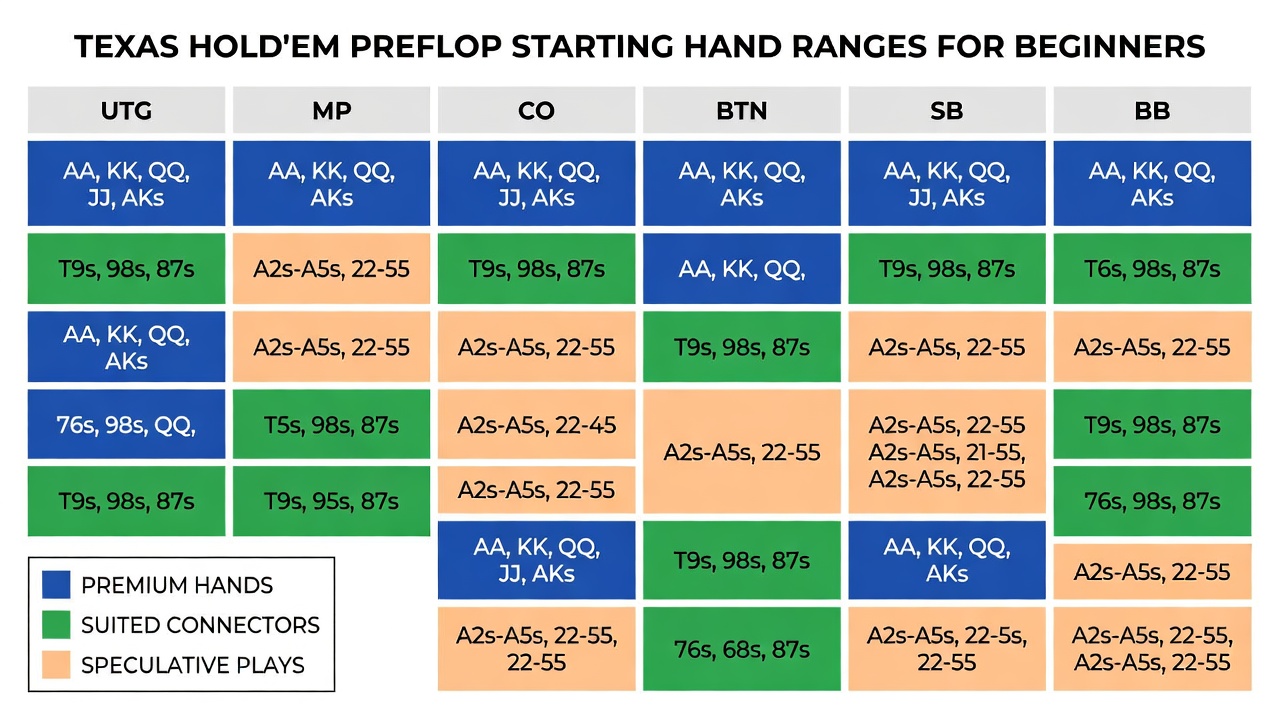
Basic Betting Patterns and Sizing
Betting patterns reveal hand strength and help you exploit opponents. Beginners should use consistent bet sizing, such as 2.5x the big blind preflop in most situations. Postflop, continuation bets on the flop are standard when you raised preflop and the board texture favors your range. Watch for patterns like frequent small bets indicating weakness or large overbets signaling strength or protection.
Adjust sizing based on stack depths and tournament stage. In early levels with deep stacks, smaller bets keep pots manageable, while late stages may call for larger bets to apply pressure. Avoid random bet sizes that confuse your own strategy and make you predictable. For example, always betting 60% pot on dry boards builds a consistent image that opponents struggle to read.
Loose vs Tight Play Styles Compared
Tight players fold most hands and wait for premium cards, which works well in early tournament stages with many players left. Loose players enter more pots with a wider range but risk larger variance and frequent difficult spots. Beginners benefit from starting tight and gradually loosening as they gain experience and learn to read the table better. A balanced mix prevents predictability and allows adaptation to different opponents. Tight play preserves chips for better opportunities, while selective looseness can accumulate chips when tables are passive.
Navigating Early vs Late Tournament Stages
In early stages, focus on survival and building a stack without unnecessary risks. Avoid marginal spots until antes come into play and blinds increase. Late stages require more aggression to accumulate chips for final table runs, including wider stealing ranges and three-bet bluffs against short stacks. Pay attention to payout structures and adjust aggression accordingly. Short stacks should prioritize push-fold charts in late stages to maximize fold equity. For example, with 12 big blinds in the middle stages, shoving over a raise with AJ suited can be profitable if the opener's range is wide.
Bankroll Preservation Tips
Proper bankroll management is essential for long-term play. Set aside a dedicated poker bankroll and only risk 1-2% per tournament to withstand variance. Track results over sessions to identify leaks such as overplaying weak hands or poor position decisions. This disciplined approach helps weather downswings common in tournament poker and keeps you in the game longer. Consider moving down in stakes if your bankroll drops below 50 buy-ins for your regular tournaments.
Common Pitfalls to Avoid
- Playing too many hands from early position without considering raises behind
- Chasing draws without proper pot odds or implied odds calculations
- Failing to adjust to aggressive opponents who frequently bluff
- Ignoring stack sizes when making decisions about calling or folding
- Overvaluing suited connectors in multiway pots without position
Frequently Asked Questions
When should I fold premium hands like AA?
Only fold AA in extremely rare situations, such as facing an all-in with multiple opponents in a massive pot where odds suggest a fold. Normally, AA is a raise-or-reraise hand that builds value throughout the hand.
How do I handle tilt after bad beats?
Take short breaks between tournaments, review hands objectively away from the table, and stick to your pre-session strategy plan. Tilt leads to poor decisions that erode bankrolls quickly and can turn winning sessions into losses.
Are online tournaments different from live ones in 2026?
Online play features faster pacing and more hands per hour, requiring quicker decisions and stronger focus. Many platforms now include advanced tracking tools for post-session analysis that help refine your game rapidly.
For further reading on poker fundamentals, visit PokerNews and Card Player. Additional resources are available at WSOP.
Conclusion
Mastering these beginner Texas Hold'em strategies will give you a solid foundation for online tournaments in 2026. Start with tight hand selection, respect position, maintain consistent betting, and manage your bankroll carefully. Consistent practice, hand review, and gradual adaptation to the meta will lead to improved results and greater confidence at the virtual tables over time.


No comments yet. Be the first!