 GambleLore

Introduction to Range Construction in Tournament Poker
Range construction stands as one of the most critical skills for success in Texas Hold'em tournaments. Unlike cash games, tournaments feature escalating blinds, antes, and the independent chip model that rewards survival alongside aggression. Intermediate players who develop strong range-building habits make better decisions across all streets, reducing costly mistakes and maximizing value from both strong and marginal holdings. This comprehensive guide breaks down the process into actionable components, offering step-by-step examples and comparisons that help you adapt to varying stack sizes, positions, and opponent profiles.
Understanding ranges begins with recognizing that every decision involves a spectrum of hands rather than single holdings. By constructing balanced ranges that include value bets, bluffs, and semi-bluffs, you become much harder to exploit. Throughout this article we explore preflop foundations, postflop refinements, positional awareness, and modern adjustments relevant to 2026 tournament environments.
Fundamentals of Building Effective Ranges
Effective ranges rest on three pillars: position, stack depth, and table dynamics. Position dictates how wide you can profitably play because later seats provide more information and stealing opportunities. Stack depth influences whether you favor speculative hands or premium holdings that perform well in all-in confrontations. Table dynamics include player tendencies such as tightness or looseness, which you must observe and counter.
Always start by defining your overall strategy for the tournament stage. Early levels allow wider speculative ranges since deep stacks reward implied odds. As the field shrinks and pay jumps approach, tighten up to protect your stack and leverage fold equity. These fundamentals create a framework that supports consistent profitability over hundreds of hands.
Preflop Opening Ranges and Position Adjustments
Preflop opening ranges form the bedrock of tournament strategy. From under the gun in a nine-handed game with 30 big blind stacks, a typical tight range includes pocket pairs 88 and higher, strong aces like AJ suited and offsuit, plus suited connectors such as 98s. Moving to the cutoff and button, expand dramatically to include suited aces down to A2s, broadway cards, and smaller pairs for stealing potential.
Here is a practical list of sample opening ranges by position at 25-35 big blind effective stacks:
- Under the Gun: 88+, AJs+, AQo, KQs
- Middle Position: 55+, ATs+, KJs+, suited connectors 76s+
- Cutoff: 22+, A2s+, K9s+, Q9s+, J9s+, suited connectors, plus some offsuit broadways
- Button: 22+, A2s+, K2s+, Q4s+, J6s+, T7s+, plus many offsuit hands for blind steals
Adjust these baselines for antes, which add dead money and justify wider stealing. Against tight blinds, increase raise frequency from late position. Against loose defenders, tighten slightly to avoid difficult postflop spots.
Postflop Range Narrowing and Continuation Strategies
After the flop, successful players narrow ranges methodically based on board texture and action. On dry boards such as K72 rainbow, your continuation range can include top pair or better plus selective bluffs that have backdoor equity. Coordinated boards like 986 with two hearts require more caution, incorporating flush draws, open-ended straight draws, and overcards with potential.
Bet sizing consistency helps maintain range balance. Smaller bets on dry flops keep weaker hands in while protecting your checking range. Larger sizes on wet boards extract maximum value from made hands and force draws to pay. Always consider how your range interacts with the villain's likely holdings to avoid over-bluffing or under-bluffing.
Adapting Ranges to Different Stack Sizes
Stack size adaptation separates average players from strong tournament competitors. Short stacks below 20 big blinds shift toward push-fold charts where you calculate exact shoving ranges from each position using equity software or memorized tables. Medium stacks of 25-40 big blinds allow flexible postflop play with merged ranges that combine value and bluffs.
Deep stacks exceeding 60 big blinds reward patience and speculative play. Hands like suited connectors gain value through implied odds when you can win large pots. In all cases, factor in ICM pressure near bubbles or final tables, where survival often outweighs chip accumulation. Review hand histories regularly to see how your ranges performed at varying depths.
Tight Versus Loose Approaches: Detailed Comparison
Tight ranges reduce variance and preserve chips for later stages but may miss profitable spots against loose tables. Loose-aggressive styles generate frequent folds and build large pots with initiative, yet they create tough postflop decisions when called. The optimal approach blends both: remain tight early against unknowns, then expand ranges as stacks shorten and antes increase.
Compare the two styles across key metrics. Tight play excels in multi-way pots and against passive opponents. Loose play dominates when tables fold frequently to raises. Track your results over multiple sessions to determine the right balance for your skill level and the current meta.
Using Range Charts and Digital Tools
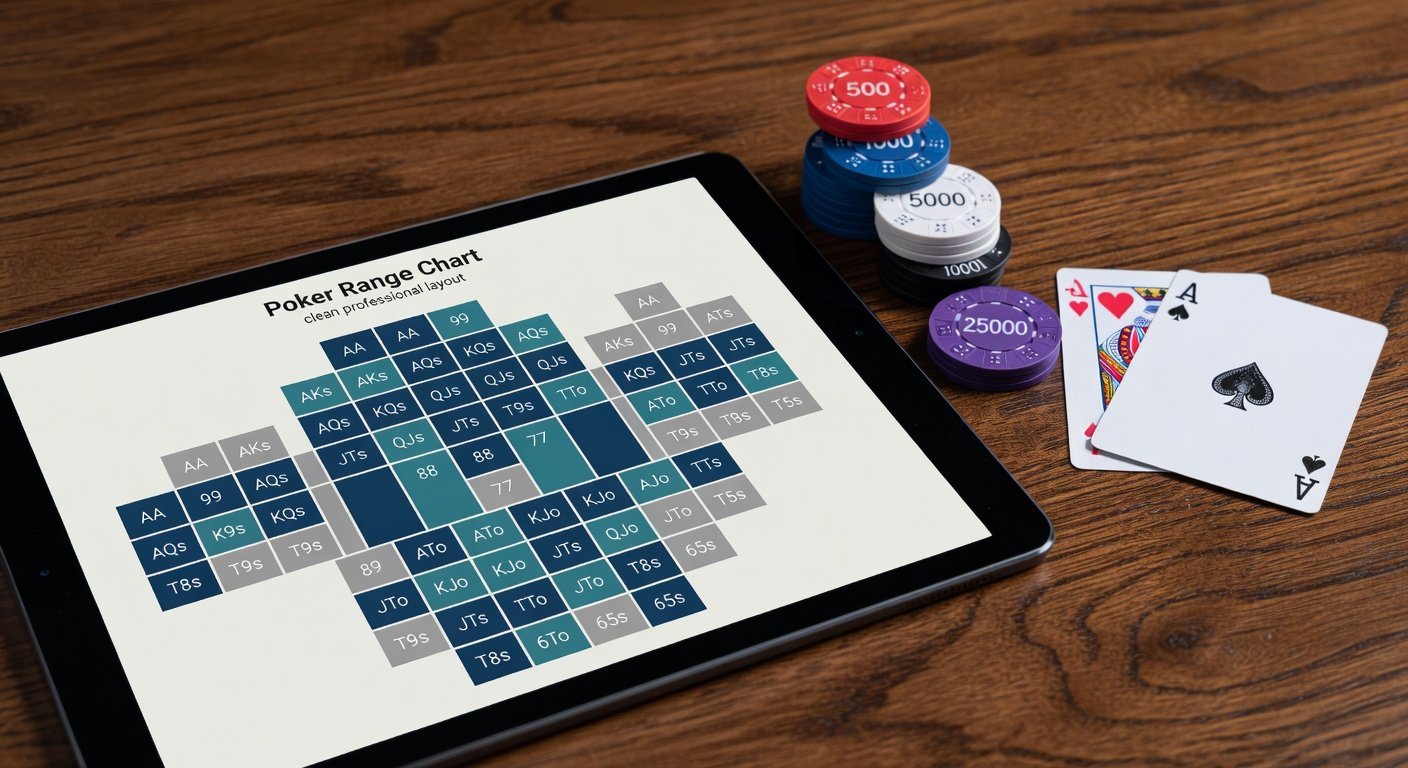
Range charts provide visual references that speed up decision-making during play. Digital solvers and training apps let you explore equity matchups, blocker effects, and range interactions in specific scenarios. Save common charts for quick reference before sessions and update them as metas evolve.
Combine chart study with personal hand analysis to identify leaks. Many professional players cross-reference their ranges against established resources from leading poker media outlets.
Step-by-Step Example: Range Construction in Action
Consider a 28 big blind stack at a final table with eight players remaining. You sit in the hijack facing a 2.5 big blind open from the cutoff. Your three-bet range might include JJ+, AK, AQs, and selected bluffs like A5s or K9s for balance. If the opponent calls, the flop arrives Ts 7d 3c. Your narrowed range continues with overpairs, top pair, strong draws, and some air that blocks value hands.
In a second example, you defend the big blind with 35 big blinds against a button steal. Your calling range includes suited connectors, small pairs, and suited aces. On a flop of Qs Js 4d you check-raise with strong made hands and combo draws while check-calling medium strength holdings. This disciplined narrowing maximizes long-term expected value.
Common Pitfalls and How to Avoid Them
Many players over-tighten early or fail to adjust opening ranges when antes enter play. Others neglect positional advantages and play the same range from every seat. Another frequent mistake involves ignoring stack depth when constructing postflop ranges, leading to poor bet sizing or missed value. Combat these issues by reviewing sessions with range tracking software and setting clear pre-session guidelines.
Adjusting Ranges for 2026 Tournament Metas and FAQs
Modern 2026 metas feature solver-balanced ranges with more frequent three-betting and delayed continuation bets. Incorporate additional suited hands and blocker-heavy bluffs from late position while remaining aware of population tendencies toward over-folding to aggression.
How do I adjust ranges near pay jumps?
Tighten up significantly to avoid busting before the money. Focus on premium hands and high fold equity spots rather than speculative play.
What is the biggest range construction mistake?
Failing to narrow ranges postflop based on action and board texture leads to over-calling and lost chips. Always reassess your range after each street.
Conclusion
Mastering range construction transforms your Texas Hold'em tournament results by providing a clear framework for every decision. Through careful preflop planning, postflop refinement, stack-aware adjustments, and ongoing study with charts and tools, you build a sustainable edge. Continue practicing these concepts in low-stakes events and review your play consistently to stay ahead of evolving tournament metas.
Learn more proven approaches in our Gambling Strategies guide.


No comments yet. Be the first!