 GambleLore

Introduction to Hand History Reviews in Modern Poker
Hand history reviews have become essential for intermediate and advanced Texas Hold'em players aiming to gain measurable edges in both live tournaments and online poker. Rather than relying on intuition, successful players use systematic data analysis to uncover leaks and align their play closer to optimal strategies. In 2026, this approach remains critical as competition intensifies across platforms and fields grow deeper in major events. Effective reviews focus on preflop ranges, postflop decisions, and river spots where small adjustments yield significant long-term gains. Players who commit to regular, structured analysis often see steady improvements in win rates and tournament cashes because they replace guesswork with evidence-based adjustments. This guide covers selecting tools, structuring sessions, benchmarking against GTO solvers, and applying real examples to build lasting habits.
Selecting the Right Tracking Software
Choosing reliable software is the foundation of productive reviews. Popular options include Hold'em Manager 3 and PokerTracker 4, which offer robust hand import, filtering, and reporting features. These programs allow players to categorize hands by position, stack depth, and street-specific actions, making it easier to spot recurring mistakes. Look for tools that integrate seamlessly with major sites and support custom HUDs for real-time insights during play. Additional considerations include database size limits, export options for solver work, and compatibility with multiple poker networks. Many advanced users combine multiple programs to cross-verify statistics and reduce blind spots in their analysis. When evaluating options, prioritize platforms with strong database management and export capabilities for deeper analysis. Cross-reference your sessions with solver outputs to quantify deviations from optimal lines and track progress over months rather than individual sessions.
Structuring Effective Review Sessions
Organize reviews around specific themes to avoid overwhelm and ensure comprehensive coverage. Begin with preflop range construction by filtering hands where you faced early position raises or defended blinds. Analyze frequency stats to ensure your opening ranges remain balanced across positions and stack sizes. This step often reveals over-folding in certain spots or overly wide defending ranges that leak chips over time. Next, examine river decisions. Filter for large bet sizes or all-in spots and review equity realizations against calling ranges. This targeted approach reveals whether you over-fold to aggression or miss value bets in polarized situations. Include at least one session per week dedicated to tournament-specific filters, such as ICM pressure in late stages when pay jumps affect optimal play. Break sessions into 45-minute focused blocks to maintain concentration and avoid fatigue that leads to superficial analysis.
Comparing Personal Play to GTO Benchmarks
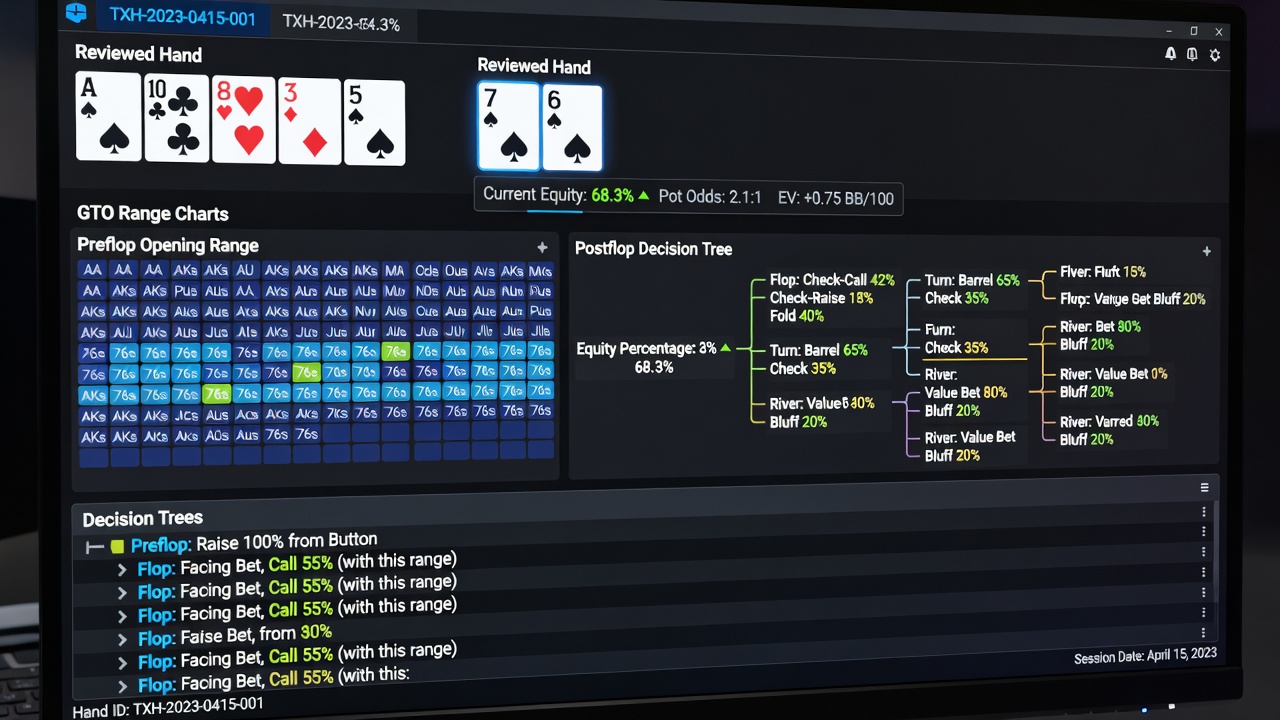
Game theory optimal (GTO) solvers provide objective benchmarks that help players understand theoretically sound lines. Import hand histories into tools like PioSolver or GTO Wizard and compare your actions to solver-recommended frequencies. Focus on mixed strategies in spots like continuation betting on dry boards or checking back with medium-strength hands. Identify patterns where your play deviates by more than 10-15% from solver outputs. These gaps often represent exploitable leaks that opponents can target in future sessions. Regular comparison builds intuition for when to deviate profitably based on opponent tendencies while maintaining a strong baseline strategy. Over time, this process reduces emotional decision-making and increases consistency across different game types.
Real Tournament Hand Examples
Consider a 2026 WSOP Circuit event hand: You hold A♠K♥ in the cutoff with 25bb effective stacks. The button opens, and you 3-bet. The flop comes Q♦7♣2♥. Solver analysis shows a 65% continuation bet frequency, yet your review reveals you checked 80% of the time in similar spots. Adjusting this frequency improves expected value over hundreds of occurrences. Another example involves a river decision in a multi-way pot where you held top pair on a coordinated board. Population data showed frequent over-folding, yet your personal stat indicated you called too wide. Refining this spot through repeated reviews led to clearer guidelines for future river calls. Documenting these hands with notes on board texture, stack depth, and opponent type creates a personal reference library that accelerates learning.
Step-by-Step Review Checklist
- Import all hands from the previous week and tag notable spots for quick retrieval.
- Filter preflop by position and stack depth to isolate range construction issues.
- Review river aggression frequencies against population stats and personal benchmarks.
- Run 50-100 key hands through a GTO solver to measure exact deviations.
- Document three specific adjustments for the next session and test them deliberately.
- Track progress metrics like VPIP, aggression factor, and win rate monthly to confirm improvement.
- Share select hands with study partners or coaches for additional perspectives.
Common Pitfalls and How to Avoid Them
Many players over-focus on results-oriented outcomes instead of process, leading to frustration during downswings. Avoid this by emphasizing decision quality regardless of immediate outcomes. Another frequent mistake is reviewing too many hands superficially; limit sessions to 100-200 hands with deep dives into critical spots. Ignoring live game notes or failing to account for table dynamics can also skew analysis. To counter this, always include contextual details when recreating hands. Finally, neglecting to update ranges as meta games evolve leaves players behind current trends.
Frequently Asked Questions
How often should I review hands?
Schedule at least two dedicated review sessions weekly to maintain momentum without burnout. Shorter daily reviews of 30 minutes can supplement longer weekly sessions for players with busy schedules.
Can hand reviews replace coaching?
Reviews complement coaching but work best when combined with solver study and peer discussion for accelerated growth. Many players find that self-review builds foundational skills that make coaching sessions more productive.
What if I play live poker without digital histories?
Take detailed notes during sessions and recreate hands in software afterward using memory aids such as board textures and bet sizes. Voice memos immediately after the session help capture nuances before they fade.
How do I stay motivated during long review periods?
Set small, measurable goals like improving one statistic per month and celebrate incremental progress to maintain engagement over time.
Building Long-Term Improvement Habits
Consistency matters more than intensity when developing review routines. Integrate short analysis periods into your weekly schedule and gradually increase depth as comfort grows. Combine reviews with deliberate practice at the tables by focusing on one leak at a time. This layered approach turns isolated study into measurable skill gains that compound across hundreds of sessions. Resources from established poker communities, such as those found at PokerNews and WSOP, provide additional context and current trends to enrich your analysis.
Conclusion
Consistent hand history reviews transform raw experience into refined skill. By focusing on data, GTO alignment, and structured checklists, players build sustainable edges that compound over time in Texas Hold'em tournaments and cash games. The discipline of regular, thoughtful review separates recreational participants from those who achieve lasting success.


No comments yet. Be the first!