 GambleLore

Introduction to Solver Training in Modern Poker
Texas Hold'em tournament players in 2026 face increasingly sophisticated competition, making solver integration essential for consistent edges. Solvers like PioSolver and GTO+ help refine strategies beyond basic tips by simulating optimal play. This guide outlines daily routines tailored for intermediate-to-advanced users, focusing on actionable workflows rather than theory alone. Effective training starts with disciplined study habits. Players should dedicate focused sessions to analyzing hands from recent online metas, emphasizing 2026 trends such as adjusted ICM pressures in final tables. By incorporating these tools systematically, tournament grinders can identify leaks in their game and develop exploitative adjustments that capitalize on common opponent mistakes in the current meta.
Modern solvers provide a framework for understanding game theory optimal (GTO) play, but the real value comes from adapting those insights to real-world scenarios. Tournament formats introduce unique variables like varying stack depths and payout structures that solvers can model accurately when configured properly. This article explores how to build sustainable routines that fit around busy schedules while delivering measurable improvements.
Selecting Key Spots for Analysis
Begin by filtering database hands for high-EV spots. Prioritize button vs big blind scenarios in 20-30bb stacks, as these appear frequently in 2026 MTTs. Use filters for positions where solver deviation from population tendencies exceeds 5%. Additional high-value spots include small blind defenses in late stages and river spots with polarized ranges. Focus on river decisions first, then work backward to preflop. Include multiway pots to capture modern solver nuances. Track 10-15 hands per session to avoid overload. Consider tournament stage as well: early levels reward different frequencies than final tables where ICM heavily influences decisions. Reviewing hands from similar stack sizes ensures relevance to your typical playing environment.
Building Custom Ranges
Custom ranges bridge GTO outputs with exploitative adjustments. Start with solver-generated ranges for a spot, then layer in opponent-specific data from HUDs. For example, widen calling ranges against loose 2026 online players who overfold to aggression. Always validate ranges against recent population stats before live application. A practical approach involves exporting solver ranges into spreadsheet format for quick reference during study. Adjust for player types by noting tendencies such as over-bluffing on certain boards or under-defending blinds. This process turns raw solver data into personalized strategies that exploit field weaknesses without abandoning sound fundamentals.
Step-by-Step Workflows for Daily Study
Follow this repeatable process: 1) Import hand history into your tracking software and tag relevant spots. 2) Input into solver with accurate stack and ICM settings, ensuring blind levels and payout structures match the tournament format. 3) Run simulations for 30-60 minutes per hand, experimenting with different bet sizes to see how outputs shift. 4) Note key frequencies like continuation bet sizes and fold-to-raise percentages. 5) Review against your actual play and identify where deviations occurred. 6) Create summary notes highlighting three actionable takeaways. This method builds intuition without over-reliance on memorized outputs. Repeat the workflow across different positions and stack depths to develop a comprehensive understanding of how ranges evolve throughout a tournament.
Interpreting Solver Outputs Without Over-Reliance on GTO
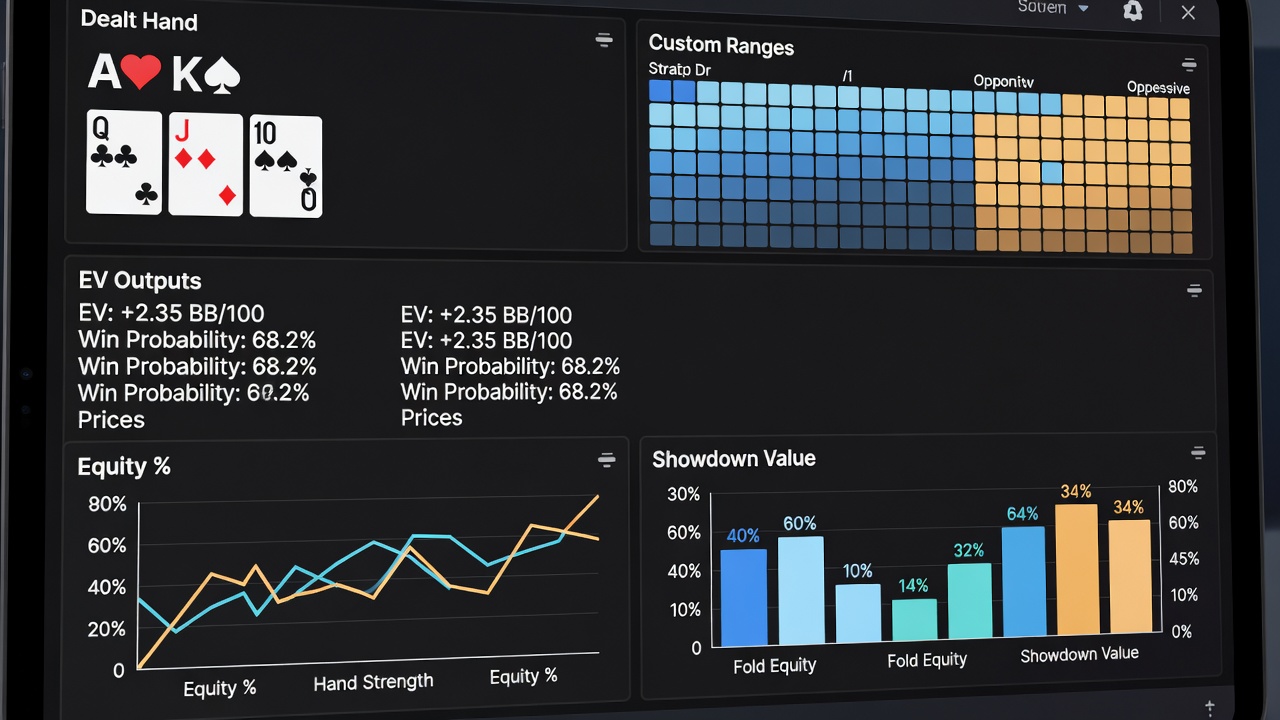
Solver results provide frequencies and EVs, but live play demands flexibility. Compare node outputs to your reads. If a solver suggests 40% betting frequency on a dry board, adjust based on opponent tendencies observed in 2026 streams. Pay attention to mixed strategies and understand why certain hands are included in betting ranges while others are checked. EV differences between lines often reveal where small adjustments yield the largest gains. Cross-reference multiple solver configurations to confirm robustness, especially when ICM factors are involved. This balanced interpretation prevents robotic play while still leveraging the mathematical precision solvers offer.
Common Pitfalls When Applying Solver Data Live
Many players misapply GTO by forcing perfect frequencies. Avoid this by simplifying to core ranges during high-pressure moments. Another pitfall is ignoring variance in small samples from recent metas. Always cross-reference with multiple simulations. Additional mistakes include neglecting to update ranges for changing meta trends and failing to account for opponent fatigue in long sessions. Players sometimes overstudy specific spots at the expense of broader concepts like range construction across streets. To mitigate these issues, maintain a study log that tracks both solver insights and live results, allowing periodic review of what translates effectively from study to the felt.
Free Versus Paid Tools Comparison
Free options like basic equity calculators offer entry-level insights, while paid solvers deliver deeper tree analysis. Choose based on study volume rather than cost alone for long-term improvement. Free tools suffice for equity calculations and simple range visualization, but advanced users benefit from paid software's ability to handle complex ICM scenarios and custom tree building. Many players start with free resources to learn fundamentals before investing in premium options that support faster iteration and more detailed reporting. Regardless of the tool, consistent use matters more than the specific platform chosen.
Real Hand Examples from 2026 Online Meta
Consider a 2026 final table hand where hero holds AKo on the button facing a 15bb shove. Solver output favors a mixed calling range with specific frequencies for calls, folds, and raises. Applying this in practice led to positive ROI adjustments in similar fields by recognizing when to deviate based on reads. Another example involves a multiway pot on a coordinated flop where solver-recommended small bet sizes outperformed larger ones against calling stations common in 2026 online tournaments. Reviewing these hands in detail helps players internalize how solver outputs adapt to real opponent behaviors and evolving metas. A third scenario from mid-stage play shows how adjusting preflop ranges based on solver data reduced unnecessary confrontations and preserved stack for later stages.
FAQ: Time Management for Working Players
How can full-time workers fit solver study into busy schedules? Dedicate 45 minutes on weekdays to spot review. Use weekends for full workflows. Break sessions into 15-minute blocks to maintain consistency. Is daily practice necessary? Three focused sessions weekly yield better retention than sporadic long ones. What if travel or family commitments disrupt routines? Maintain a portable study setup with cloud-synced hand databases and pre-loaded solver profiles for quick access during downtime. How do you track progress over months? Set monthly goals such as mastering specific board textures or improving final table ICM decisions, then review tracked results against those targets. Should study include group discussions? Occasional review with study partners helps identify blind spots and reinforces key concepts through teaching.
Conclusion
Integrating solvers into routines sharpens Texas Hold'em edges in 2026. Consistent application of these methods separates improving players from the field. Start with one workflow today for measurable progress. For further reading on poker fundamentals, visit PokerNews and explore resources at Card Player. Regular refinement of study habits ensures continued growth amid an evolving competitive landscape.

No comments yet. Be the first!