 GambleLore

Introduction to HUD Software in Modern Poker
Online Texas Hold'em has evolved significantly by 2026, with HUD software becoming essential for intermediate players seeking data-driven edges. These tools overlay real-time statistics on opponents, enabling precise adjustments in both tournaments and cash games. This guide explores selecting platforms, tracking key metrics, setup processes, and practical applications while emphasizing balanced strategy. HUDs transform raw hand data into actionable insights, helping players identify leaks and exploit patterns without relying solely on intuition. In an era of high-volume play, mastering these tools separates recreational participants from those consistently building bankrolls through informed decisions.
Players who integrate HUD software effectively often see improved decision-making across thousands of hands, leading to higher ROI in tournaments and better hourly rates in cash games. The 2026 landscape includes faster games and more sophisticated opponents, making data overlays indispensable for staying competitive.
Why HUD Tools Provide Critical Edges in 2026
In today's competitive meta, where players face thousands of hands per session, HUD software processes information faster than manual note-taking. They reveal tendencies like loose-aggressive styles or tight-passive play, allowing pre-flop and post-flop adjustments that boost win rates over time. By integrating with poker clients, these tools support long-term tracking across sites, fostering consistent improvement for serious players. Beyond basic stats, modern HUDs incorporate filters for specific game types, such as short-stack dynamics in tournaments or deep-stack cash play. This depth allows users to adapt strategies dynamically, for instance by tightening ranges against unknown players until sufficient data accumulates. The result is a systematic approach that reduces emotional decision-making and capitalizes on recurring opponent errors.
Selecting Reliable HUD Platforms
Focus on established options compatible with major poker networks. Prioritize tools with strong security features, regular updates for 2026 rule changes, and user-friendly interfaces. Cross-reference community feedback on forums and test trial versions to ensure seamless integration without performance issues. Key considerations include database management, customization options, and support for multi-tabling common in cash games. Some platforms offer advanced reporting that breaks down performance by position or stake level, while others emphasize real-time popups for quick reads. Evaluate based on your volume: high-stakes grinders benefit from robust export features for external analysis, whereas mid-stakes players may prefer simpler setups that avoid overwhelming interfaces.
Tracking Vital Stats: VPIP, PFR, and Aggression Factors
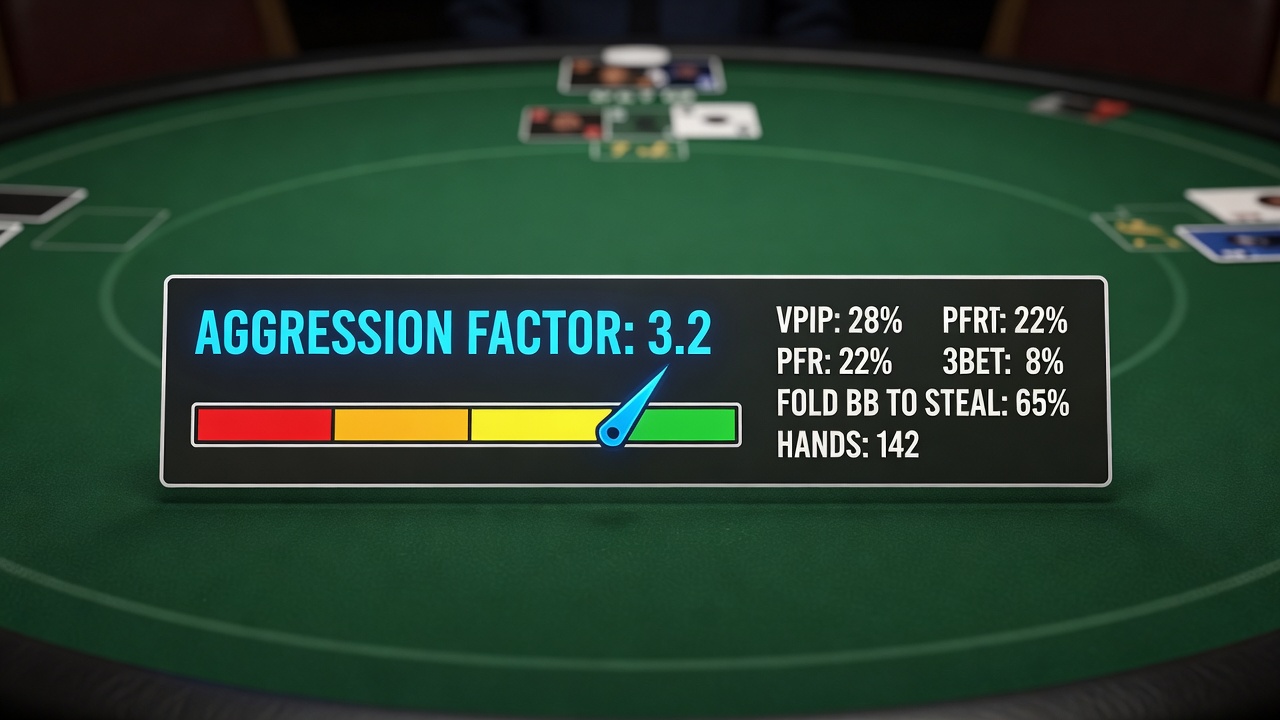
VPIP (Voluntarily Put Money In Pot) indicates how often a player enters hands pre-flop, with typical ranges from 15-25% for tight players. PFR (Pre-Flop Raise) shows aggression before the flop, ideally close to VPIP for balanced ranges. Aggression factor measures post-flop betting frequency, helping spot over-aggressive or passive opponents. Additional metrics worth tracking include three-bet percentage, fold to three-bet, and continuation bet frequency. These provide layers of insight; for example, a high three-bet stat combined with low VPIP signals a polarized range that can be exploited by four-betting wider. Combine these with positional data for deeper reads during tournaments, where stack sizes influence optimal play.
- High VPIP/low PFR: Calling stations to exploit with value bets.
- Low VPIP/high PFR: Tight-aggressive players to avoid bluffing against.
- Elevated aggression: Bluff-catch more often in position.
- Low continuation bet: Check-raise more frequently against their bets.
Monitor sample sizes carefully, as stats stabilize only after several hundred hands per opponent.
Step-by-Step Setup for HUD Integration
Begin by installing compatible software and importing hand histories from your poker client. Configure pop-up displays for quick access during play, then customize stat filters for your preferred game types. Test in low-stakes sessions to refine layouts before scaling to higher stakes. Ensure your system meets performance requirements for smooth multi-table operation. Advanced users often create custom stat groups for different formats, such as one set for hyper-turbo tournaments and another for standard cash games. Regularly update the software to maintain compatibility with site patches and new game variants introduced in 2026.
Backup your databases frequently to prevent data loss during extended sessions.
Real-Hand Examples of Exploiting Patterns
Consider a cash game scenario where an opponent shows 35% VPIP and 8% PFR over 200 hands. This profile suggests frequent limping; raise pre-flop with strong holdings to isolate and build pots. In another example from a tournament, an aggression factor above 4.0 post-flop indicates bluff-heavy play—call down lighter with medium strength hands. A third case involves a player with a 12% three-bet rate who folds 70% to four-bets; counter this by four-betting a wider value-bluff range in position. These adjustments, backed by sample sizes of at least 500 hands, lead to measurable edges. Track your own results before and after implementing HUD-based changes to quantify improvements.
Comparisons of Leading HUD Tools
Popular platforms differ in features: some excel at advanced filtering and custom stats, while others prioritize ease of use for beginners transitioning to intermediate levels. Evaluate based on database size support, mobile compatibility, and export options for personal analysis. Review official documentation from providers to match tools with your playing volume and style. One tool may integrate better with certain networks, offering seamless hand import, while another provides superior graphical displays for quick pattern recognition during multi-tabling. Test multiple options side-by-side in practice sessions to determine which aligns best with your workflow.
Practical Tips to Avoid Over-Reliance
While powerful, HUDs should complement—not replace—fundamental strategy. Rotate between HUD-assisted and HUD-free sessions to maintain intuitive skills. Regularly review your own stats to identify personal leaks, and avoid tilting when data contradicts gut feelings. Limit stat overload by focusing on 5-7 core metrics during active play. Another tip involves setting alerts for unusual deviations, such as sudden aggression spikes, which may indicate tilt or a change in playing style. Combine HUD insights with range construction exercises away from the table for well-rounded development.
Advanced Techniques for 2026 Meta Adaptations
As the meta evolves with increased solver usage and AI opponents, adapt HUD strategies by layering in equity calculations and range breakdowns. Use positional filters to adjust aggression based on table dynamics, and incorporate ICM considerations in late-stage tournaments. Players who blend HUD data with manual range work often outperform those relying on stats alone.
Ethics, Legality, and 2026 Meta Adaptations
Most sites permit HUD use when data comes from personal hand histories, but always verify platform terms. Ethical play involves avoiding shared databases that could breach rules. In the 2026 meta, expect increased AI-assisted opponents, so adapt by emphasizing range construction over pure stats. Resources like PokerNews provide ongoing updates on rule changes, while CardsChat offers community discussions on best practices.
Frequently Asked Questions
Is HUD software legal on all poker sites?
Legality varies; check each site's terms, as some restrict third-party tools. Personal tracking is generally accepted.
How many hands are needed for reliable stats?
Aim for 300-500 hands minimum per opponent for meaningful VPIP and PFR insights, with larger samples preferred for advanced metrics.
Can HUDs work in tournaments and cash games alike?
Yes, with proper configuration for stack sizes and blind levels in tournaments.
What are common pitfalls when first using HUDs?
Over-focusing on single stats without context and neglecting your own ranges are frequent errors to avoid.
Conclusion
Mastering HUD software elevates your Texas Hold'em game through informed decisions. Combine technical setup with disciplined application to achieve sustainable edges in 2026 and beyond. Continue studying and adapting to maintain your advantage.


No comments yet. Be the first!