 GambleLore
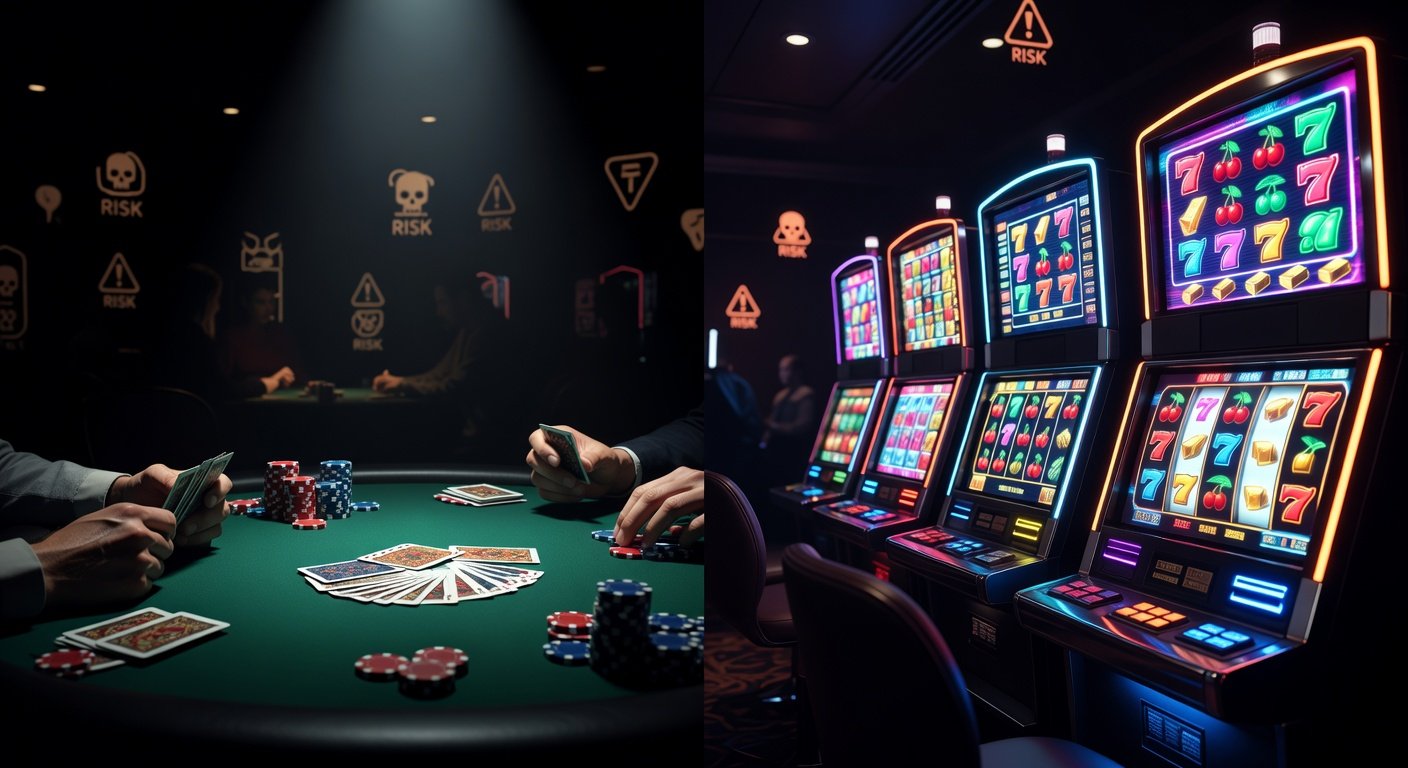
Understanding the Core Differences in Risk Profiles
Poker and slots represent two ends of the gambling spectrum: one driven by skill and psychology, the other by pure chance. Players seeking safer options in 2026 must understand how each game's mechanics influence addiction potential and long-term harm. This guide examines real risks, backed by current insights, and provides actionable strategies for responsible play.
The illusion of control in poker can mask mounting losses, while the rapid, random rewards of slots create powerful dopamine loops. Recognizing these hooks is the first step toward safer betting.
Psychological Hooks: Skill Illusion vs Random Thrills
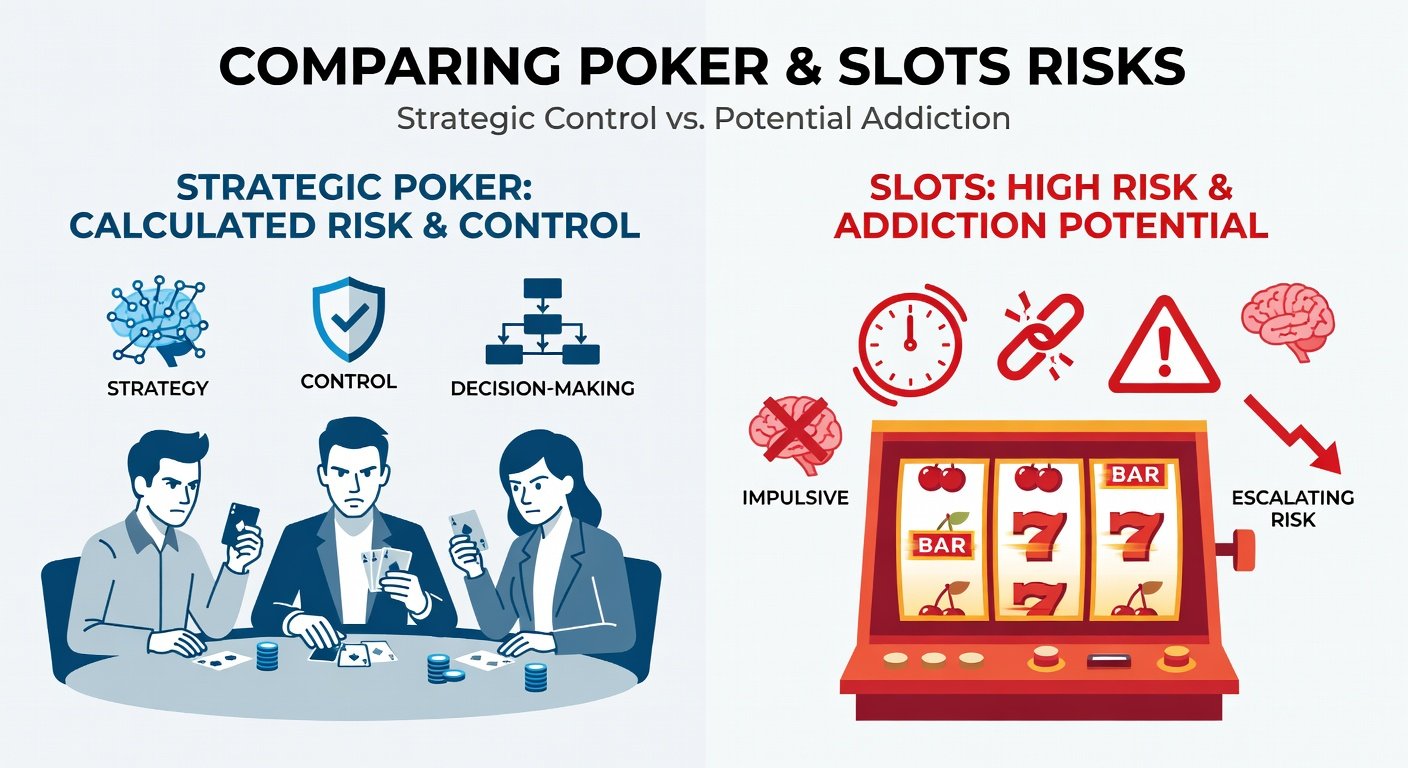
Poker appeals to analytical minds because outcomes partly depend on decisions like bluffing and reading opponents. This creates a false sense of mastery that encourages longer sessions and higher stakes. In contrast, slots deliver unpredictable wins through random number generators, triggering immediate excitement without requiring strategy. The near-miss effect in modern slots further heightens engagement, making it harder to walk away.
Studies show that skill-based games like poker can foster overconfidence, while chance-based games like slots exploit variable reinforcement schedules similar to those seen in behavioral addiction research.
2026 Addiction Rate Insights
Recent analyses as of early 2026 indicate that slot players exhibit higher rates of problem gambling behaviors compared to poker enthusiasts, largely due to faster play cycles and lack of skill barriers. Poker communities often self-regulate through social accountability, yet both formats carry risks when limits are ignored. Responsible gambling organizations emphasize that no game is risk-free.
National Council on Problem Gambling resources highlight the importance of recognizing early warning signs across all casino games.
Side-by-Side Comparison Table
| Factor | Poker | Slots |
|---|---|---|
| Addiction Potential | Moderate (skill illusion prolongs play) | High (rapid random rewards) |
| Session Length Control | Player-dependent | Difficult due to auto-play features |
| Bankroll Risk | Strategic management possible | High volatility swings |
| Psychological Hook | Control and competition | Thrill and near-misses |
Practical Safe Betting Strategies for Each Game
Implement game-specific rules to minimize harm. For poker, set strict buy-in limits per session and track results in a journal. For slots, use built-in loss limits and avoid chasing bonuses that extend playtime.
Always establish timers: 60-minute maximum sessions for slots and 90 minutes for poker tables. Combine these with loss caps at 2% of monthly entertainment budget. Real-world examples include professional players who treat gambling as entertainment only, never as income.
World Health Organization guidelines stress time and money boundaries as core elements of harm reduction.
Steps to Transition to Lower-Risk Playstyles
- Assess your current habits by logging every session for one week.
- Choose games with slower pacing, such as limit poker variants over high-speed slots.
- Join support communities or use casino responsible gambling tools.
- Review progress monthly and adjust limits downward if needed.
Frequently Asked Questions
Is poker safer than slots for avoiding addiction?
Poker generally carries lower addiction risk due to skill elements and slower pace, but individual susceptibility varies. Always apply strict bankroll rules regardless of game choice.
How do I set effective session limits?
Use device timers or casino tools to cap play at 45-90 minutes. Pre-decide loss thresholds and walk away immediately when reached.
Can I enjoy both games responsibly?
Yes, by alternating with strict separation of funds and never exceeding pre-set weekly entertainment allocations.
Ultimately, the safest approach combines self-awareness with consistent limit-setting. Resources like Gamblers Anonymous offer free support for anyone seeking to maintain control.


No comments yet. Be the first!