 GambleLore

Introduction to Personalized Slots Strategies
Advanced players in 2026 are moving beyond generic advice to build slots strategies that match their unique profiles. This approach uses personal session data to refine decisions on game selection, bet sizing, and machine adaptation for improved long-term engagement. Rather than following broad recommendations that ignore individual differences, successful customization starts with honest self-assessment and consistent record-keeping. By focusing on your own historical results, you can identify what truly works for your play style, whether that involves cautious incremental bets or calculated risks on high-reward machines. This method helps avoid the frustration of one-size-fits-all tactics and instead creates a living framework that evolves with your experiences over months of play.
Assessing Your Personal Risk Tolerance
Start by evaluating your comfort with variance through a structured self-audit. Low-risk players might favor steady small wins on standard machines, while high-risk profiles explore volatile options with longer dry spells. Example one: A player logging 50 sessions notes frequent small losses but occasional big hits, indicating medium tolerance suited to balanced volatility titles. Example two: Another player experiences anxiety during extended losing streaks and prefers machines that deliver frequent minor payouts, leading to a low-tolerance profile that prioritizes entertainment over jackpot chasing. To assess accurately, rate your emotional response after each session on a simple 1-10 scale and average the results across at least 15 sessions. This reveals patterns invisible in raw win/loss numbers alone.
Tracking Win and Loss Patterns Over Time
Maintain a simple spreadsheet or app to record session length, starting bankroll allocation, outcomes, and machine type. Over 20-30 sessions, patterns emerge, such as better results during shorter evening plays or on specific days of the week. Use this data to identify optimal times and durations without relying on external volatility metrics. Include columns for notes on mood, recent life stressors, and game features that stood out. For instance, one player discovered through tracking that sessions under 45 minutes yielded 22 percent higher net returns than longer ones, prompting a strict time limit rule. Review monthly summaries to spot trends like weekend underperformance or bonus round frequency correlations.
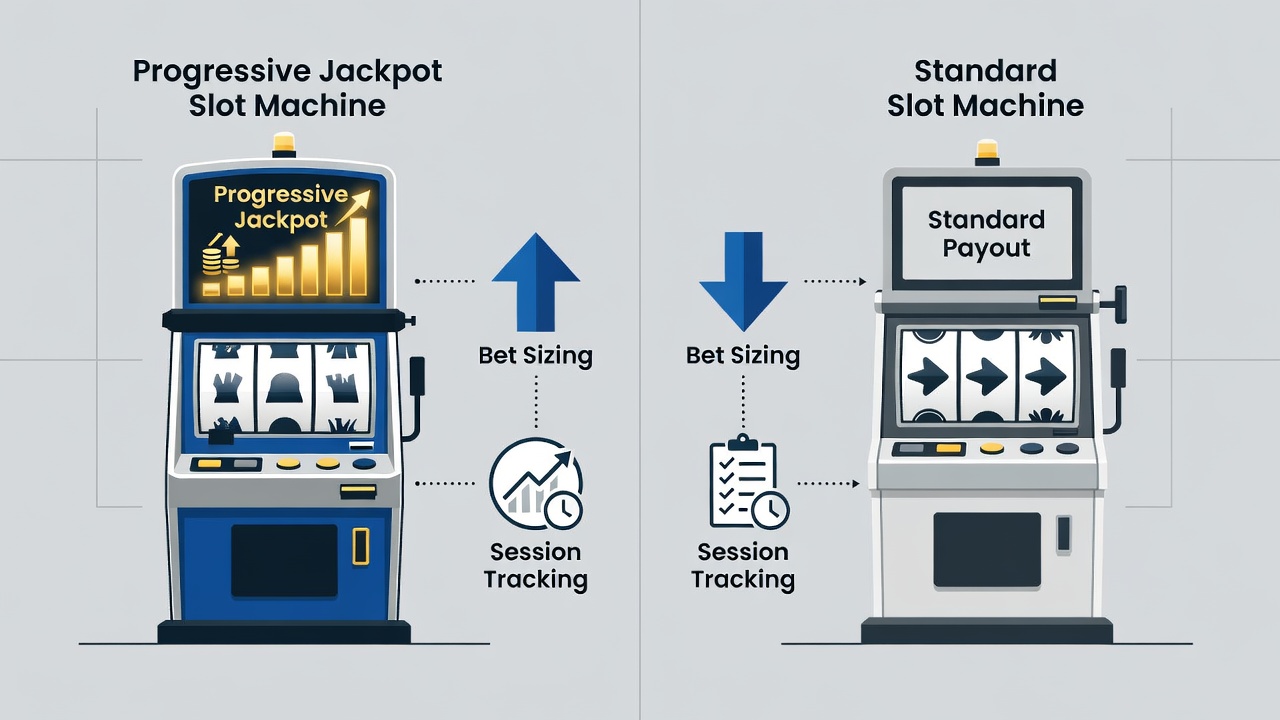
Adapting Tactics for Progressive Jackpots vs Standard Machines
Progressive jackpot slots require patience and selective play when the prize pool grows large, as seen in popular networks. Standard machines allow more frequent adjustments based on your tracked hit rates. Compare: A progressive strategy might involve waiting for a 10 percent or greater increase in the jackpot before committing larger portions of your session budget, whereas standard play focuses on consistent spin volume and quick exits when patterns deviate from your historical norms. Real-world example: A tracked player switched to progressive machines only after the linked jackpot exceeded a personal threshold derived from 12 months of data, resulting in two notable wins within six attempts compared to zero in prior random entries. Always cross-check your adaptation rules against at least 25 logged sessions to ensure statistical relevance.
Building Your Player Profile: Practical Steps
- Record baseline data from 10 sessions across different machines, noting every outcome and feature interaction.
- Rate each session on enjoyment and outcome satisfaction using a consistent scale.
- Identify top three preferred game features from your logs, such as free spin frequency or multiplier potential.
- Test one adjustment, such as session length or bet increment, and re-evaluate after five new sessions.
- Refine the profile quarterly by removing outdated entries and incorporating new preferences.
This iterative process ensures your profile remains accurate as your experience grows.
Sample Strategy Comparisons
Strategy A (Conservative Profile): Focus on standard machines with dynamic bet sizing that decreases after three consecutive losses. The player caps each session at 60 minutes and only increases bets after two winning sessions in a row. Strategy B (Aggressive Profile): Allocate a set portion to progressives only during peak jackpot periods, with quick exits on early losses and a rule to double down once after a moderate win. Strategy C (Balanced Profile): Rotate between three favorite standard machines and one progressive, using a 70/30 allocation split derived from personal data. Both Strategy A and B draw from the same player data but diverge in application for better alignment with individual risk ratings. Reviewing these side by side helps players select or blend approaches that match their tracked strengths.
Dynamic Bet Sizing Adjustments
Scale bets according to recent session trends rather than fixed rules. If your logs show stronger performance after wins, increase slightly on the next session start. Conversely, reduce by 20-30 percent following two losing sessions. Scenario one: After logging a 15 percent return over five sessions, a player raises the base bet from one unit to 1.5 units for the following week. Scenario two: A string of below-average results triggers an automatic reduction and a mandatory three-session review before any increase. Tie every change directly to your tracked patterns for relevance and document the outcome to validate the adjustment.
Best Slots Selection Criteria for Personalization
- Match reel configuration and payline count to your historical hit frequency data.
- Prioritize bonus trigger rates observed in your positive sessions.
- Consider theme engagement levels that correlate with longer, more enjoyable play.
- Exclude machines where your logged results consistently fall below personal averages.
- Shortlist five to seven titles that recur in winning or satisfying entries for focused testing.
Monitoring and Iterating Your Strategy
Schedule quarterly reviews of your full dataset to detect shifts in performance or preference. Introduce controlled experiments, such as trying a new machine category for 10 sessions while keeping all other rules constant. If results improve, integrate the change permanently. This monitoring prevents stagnation and keeps the strategy aligned with evolving play habits throughout 2026.
Common Customization Pitfalls: FAQ
How often should I update my player profile?
Review data monthly to capture evolving preferences while avoiding over-adjustment from short-term variance. Major updates should occur only after 30 or more new sessions.
Can I combine multiple profiles in one account?
Yes, segment sessions by mood or time of day to create hybrid approaches without diluting core insights, but maintain separate tracking sheets for clarity.
What if my data shows no clear patterns?
Extend tracking to 40 sessions and focus on qualitative notes like enjoyment levels for additional context before making changes.
Should I share my profile with other players?
Keep it private, as external advice can introduce bias that conflicts with your personal data.
How do I handle software updates that change game mechanics?
Restart tracking for affected machines after each update and rebuild relevant portions of the profile from fresh sessions.
Conclusion
Personalized slots strategies empower players to leverage their own data for more tailored experiences. By consistently assessing risk, tracking patterns, and adapting to machine types, you create a sustainable approach that evolves with your play in 2026 and beyond. Begin with responsible play resources from established organizations and refine your profile regularly for ongoing improvement. Additional guidance is available through specialist support networks dedicated to informed gambling practices.


No comments yet. Be the first!