 GambleLore
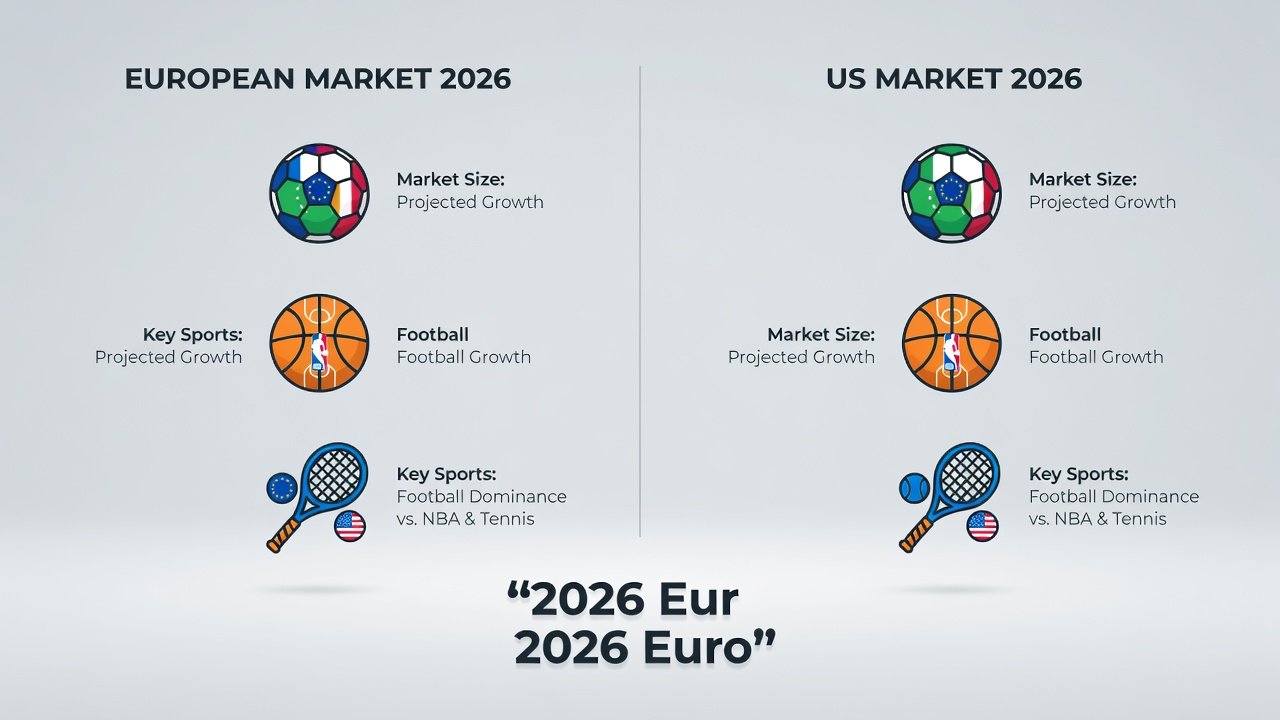
Introduction to European and US Betting Markets in 2026
The sports betting landscape in 2026 continues to evolve, with distinct approaches in Europe and the United States shaping opportunities for football, NBA, and tennis enthusiasts. European markets often emphasize decimal odds and stricter consumer protections, while US platforms favor American odds with varying state-level rules. Understanding these differences helps bettors identify value and avoid common mistakes when crossing regions. This comparison is essential because regulatory shifts, technological advancements in odds compilation, and increased global access have created more pronounced variations than ever before. Bettors who master these nuances can systematically improve their edge across the three major sports covered here.
This guide examines regulatory environments, odds formats, payout structures, and practical strategies for exploiting variations across major sportsbooks. Real-world 2026 examples illustrate how lines diverge, empowering informed decisions. We will also cover tools for monitoring, pitfalls to avoid, and a detailed FAQ addressing practical concerns for international participants.
Regulatory Environments Compared
European betting operates under unified frameworks in many countries, promoting transparency and responsible gambling. Nations like the United Kingdom and Germany enforce centralized licensing that prioritizes player safety and limits aggressive marketing. In contrast, the US features a patchwork of state regulations post-2018 legalization, leading to fragmented access where some states allow full online platforms while others restrict to retail only. Bettors must navigate licensing requirements that influence market liquidity and available promotions.
Key distinctions include deposit limits and advertising restrictions prevalent in Europe versus promotional flexibility in select US states. These factors directly impact odds competitiveness and overall user experience. For instance, European operators often cap bonuses to prevent overexposure, whereas certain US jurisdictions permit aggressive welcome offers that indirectly influence line sharpness. International bettors should always verify current licensing status before committing funds, as enforcement can change rapidly with political developments.
Odds Formats and Their Impact on Value
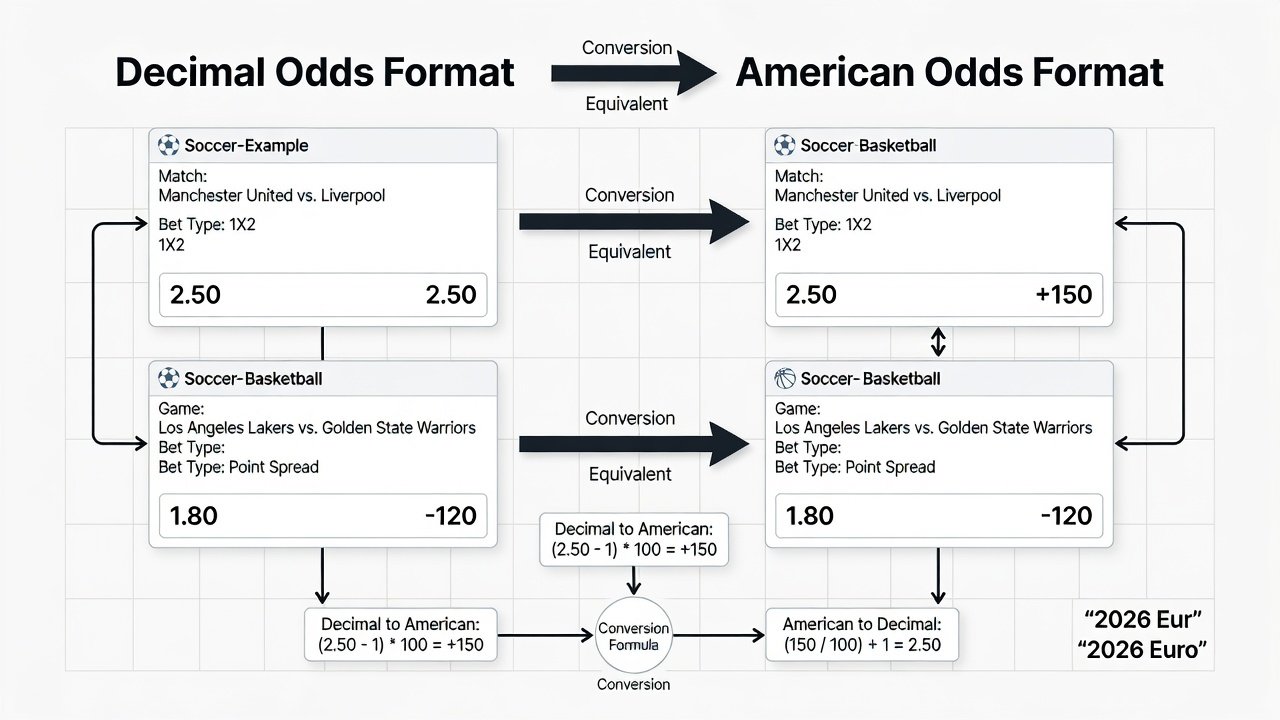
Decimal odds dominate European platforms, offering straightforward probability calculations that appeal to both novice and experienced users. American odds, common in the US, use positive and negative figures to denote underdogs and favorites, requiring quick mental conversions for accurate comparisons. Converting between formats reveals hidden value when comparing the same event across borders, especially when margins differ by sport or region.
For football matches, European decimal odds might present a team at 2.50 while US equivalents translate to +150, highlighting margin differences that affect potential returns. Similar variations appear in NBA spreads and tennis set betting. Understanding implied probability is crucial; decimal 2.50 implies a 40 percent chance, while +150 American odds also imply roughly 40 percent but with different payout mechanics that can favor one market over the other depending on the sportsbook's vigorish.
Football Odds Differences in 2026
Football, or soccer, showcases pronounced gaps between regions. European books often tighten margins on major leagues due to high volume, whereas US markets may offer softer lines on international fixtures. Bettors comparing UEFA events can spot discrepancies in over/under totals and Asian handicap lines that are less common in American offerings.
Example: A 2026 Champions League match might show decimal odds of 1.85 for a home win in Europe versus American odds of -120 in the US, creating arbitrage windows when combined with live betting adjustments. Additional examples include contrasting odds on goal scorers or half-time results, where European depth allows for more granular betting while US books focus on main outcomes. These variations arise because European operators have decades of data refinement on domestic leagues, leading to tighter but sometimes more accurate pricing compared to newer US entries.
NBA Betting Market Variations
The NBA benefits from widespread US popularity, resulting in sharp lines domestically that reflect real-time information from injury reports and betting syndicates. European markets sometimes lag on player props, presenting value on totals or moneylines during high-profile games. Cross-referencing reveals opportunities especially in playoff scenarios where line movement can be more pronounced in one region.
Step-by-step comparison involves checking opening lines, monitoring line movement, and factoring in time zone impacts on updates. Bettors should also consider how European books handle overtime rules differently in rare cases and how US platforms incorporate advanced analytics from sources like player tracking data. This depth makes NBA one of the richest sports for cross-market exploitation when executed carefully.
Tennis Odds and Cross-Market Opportunities
Tennis betting highlights regional preferences, with European focus on match winners and US emphasis on set handicaps. Surface-specific trends and player form create exploitable edges when lines differ, particularly during Grand Slam events where scheduling and fatigue play larger roles. European operators may price sets more accurately due to greater familiarity with lower-tier tournaments.
Linking to ATP Tour data aids in validating discrepancies. A 2026 Grand Slam match could display varying odds on individual sets, rewarding those who monitor multiple books. Additional value often appears in live tennis betting where momentum shifts are interpreted differently across time zones, allowing sharp bettors to capitalize on delayed updates in one market versus another.
Step-by-Step Guide to Comparing and Exploiting Differences
- Identify the event across both regions using reliable trackers and note opening odds immediately upon release.
- Convert odds formats to find the best implied probability, accounting for any included vig or margin.
- Account for currency exchange and withdrawal fees qualitatively by comparing historical payout reliability.
- Place bets on the higher-value side while hedging where possible through correlated markets.
- Track results over multiple events to refine the approach and identify consistent patterns by sport.
- Review historical line movement data to anticipate future discrepancies before major tournaments.
Practical Tools for Monitoring Cross-Market Lines
Specialized software and browser extensions aggregate lines from global sportsbooks. These resources alert users to significant movements in football, NBA, and tennis markets. Integration with NBA official stats enhances accuracy while similar resources exist for football governing bodies. Advanced users often combine multiple comparison sites with custom spreadsheets to log odds history and calculate value thresholds automatically.
Common Pitfalls When Switching Regions
- Ignoring local tax rules that erode profits over the long term.
- Overlooking account verification delays during international access attempts.
- Failing to adjust for time zone differences in live odds updates.
- Assuming uniform payout speeds across platforms without testing small withdrawals first.
- Neglecting to review terms on bonus wagering requirements that vary significantly by region.
- Using unauthorized access methods that risk account closure without recourse.
Payout Structures and Their Influence on Strategy
Payout speed and methods differ markedly, with many European platforms offering instant e-wallet options while some US state-regulated sites rely on ACH transfers. These structural differences affect bankroll management and the ability to quickly reinvest winnings into new opportunities. Bettors should prioritize platforms with proven track records rather than chasing the highest advertised odds alone.
Value Betting Opportunities Across Sports
By systematically comparing markets, value emerges in underpriced outcomes that one region overlooks. Football often yields value on draw outcomes, NBA on alternate totals, and tennis on underdog sets. Consistent application of the steps above, combined with disciplined bankroll allocation, turns these differences into sustainable advantages rather than one-off wins.
Conclusion
Mastering European versus US betting markets in 2026 unlocks superior value for football, NBA, and tennis wagers. By focusing on regulatory nuances, odds conversions, and disciplined monitoring, bettors position themselves for consistent advantages while staying compliant with evolving rules.
FAQ
What are the tax implications for international bettors?
Tax treatment varies by jurisdiction, with some European countries applying withholding at source and US states requiring reporting on winnings. Consult local authorities or resources such as IRS guidelines for personalized guidance.
How do I set up accounts across regions?
Most platforms require proof of identity and address. VPN usage may violate terms, so prioritize licensed operators accepting international users where legal and complete all verification steps promptly.
Are there legal considerations for cross-border betting?
Legality depends on residence and platform licensing. Always verify compliance with both home and operator country laws before engaging to avoid unintended violations.
What payment methods work best for international transfers?
E-wallets and certain cryptocurrencies often provide faster cross-border movement, though availability depends on the specific sportsbook's supported options and regional restrictions.
How can bettors stay updated on regulatory changes?
Following official licensing bodies and reputable industry news sources helps track shifts in both European and US markets that could affect available betting options.

No comments yet. Be the first!