 GambleLore
Introduction to Prop Bets in 2026 Sports Betting
Prop bets, or proposition bets, allow bettors to wager on specific events within a game rather than just the final outcome. In 2026, these markets have grown significantly across football, NBA, and tennis, offering diverse opportunities for informed bettors. This guide covers the differences between player props, team props, and game props while providing practical examples and strategies tailored to current trends. Prop betting has evolved with advanced analytics platforms that deliver real-time statistics, making it easier for enthusiasts to identify value in niche markets. Whether you are new to sports betting or looking to refine your approach, understanding how these bets function can transform your overall strategy and improve decision-making across multiple leagues.
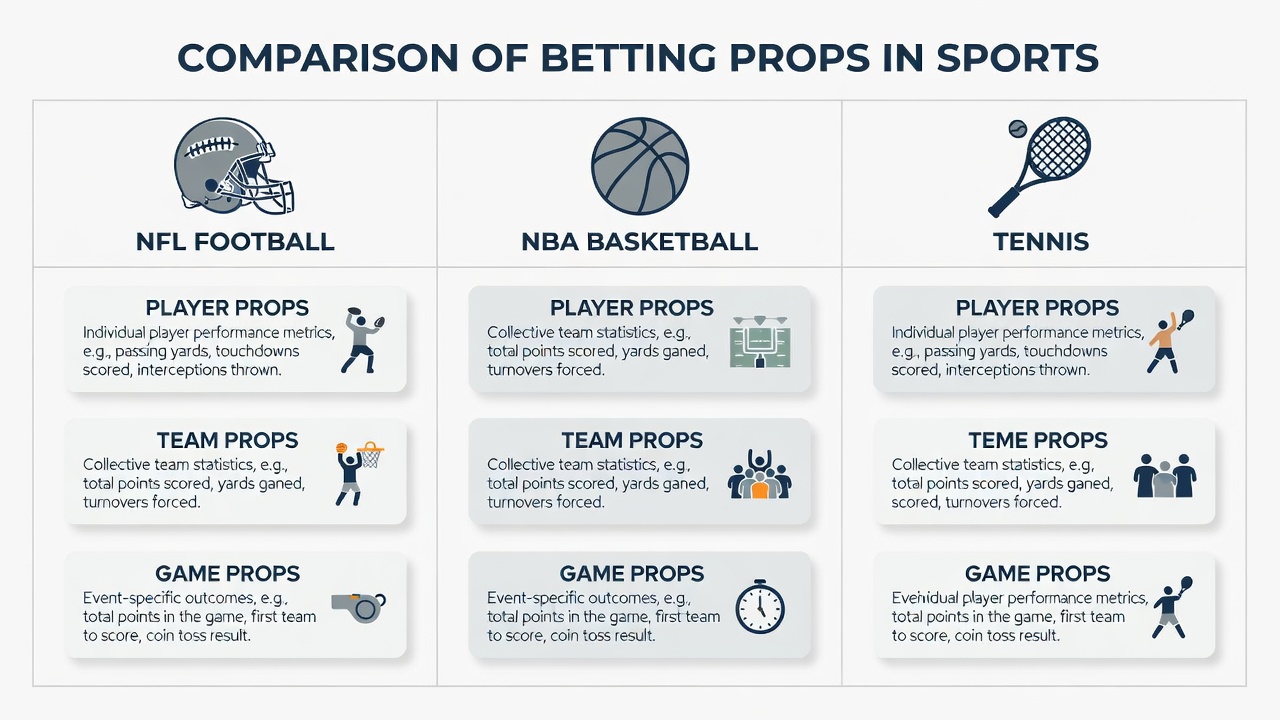
Understanding prop bets requires distinguishing their types. Player props focus on individual performances, team props on collective stats, and game props on broader match elements. As markets evolve, bettors benefit from data-driven approaches to maximize value. The rise of mobile betting apps has also increased accessibility, allowing users to place props during live games with updated odds reflecting in-game developments.
Key Differences: Player Props, Team Props, and Game Props
Player props target stats like points, yards, or aces from a single athlete. Team props involve group metrics such as total touchdowns or rebounds. Game props cover situational outcomes like first-half scoring or total sets won. Each category carries unique characteristics that influence risk and reward profiles. For example, player props often depend heavily on individual form and opponent matchups, while team props aggregate multiple performances and can be more stable in certain contexts.
- Player Props: Ideal for specialists in high-volume positions such as quarterbacks in football or point guards in the NBA.
- Team Props: Useful when analyzing overall team efficiency and defensive schemes.
- Game Props: Best for situational or environmental factors including weather and venue specifics.
Comparison tables help illustrate payout variations. For instance, a 2026 NFL player prop on passing yards might offer different odds structures compared to a team total points prop, reflecting different risk profiles. Bettors should examine historical data to see how often certain props hit their thresholds across recent seasons.
2026 Market Trends in Prop Betting
Prop betting markets in 2026 emphasize real-time data integration and micro-markets. Football sees increased focus on advanced metrics such as expected completion percentage and route running efficiency. NBA props highlight player efficiency ratings and usage rates, especially in back-to-back game scenarios. Tennis markets expand around set-specific outcomes and tiebreak performances, driven by the growing popularity of live betting during Grand Slam events. Bettors should monitor league rule changes that influence prop availability, including adjustments to overtime formats or roster limits that can shift statistical baselines.
Step-by-Step Selection Criteria for Prop Bets
Follow this process to select strong props and build a repeatable methodology:
- Review recent player or team performance data from the last five games, paying close attention to trends in home versus away splits.
- Analyze matchup history and opponent defensive rankings using publicly available advanced stats to identify exploitable weaknesses.
- Check for injuries or rest days affecting key participants, as even minor absences can dramatically alter expected outputs.
- Compare odds across multiple sportsbooks for value, noting any discrepancies that indicate mispriced lines.
- Assess variance and implied probability before placing the wager, ensuring the bet aligns with your overall bankroll strategy.
This methodical approach reduces impulsive decisions and improves long-term results. Seasoned bettors often combine these steps with custom spreadsheets to track historical hit rates for specific prop types.
Real-World Examples from Recent Matches
In a recent NFL matchup, a player prop on a quarterback completing over 25.5 passes succeeded due to high-volume passing schemes against a secondary that struggled with zone coverage. The bettor had cross-referenced the quarterback's previous four starts and noted consistent targets to his primary wide receivers. For NBA, a prop on a forward grabbing 8.5 rebounds aligned with matchup advantages against weaker frontcourts that allowed second-chance opportunities. The selection was reinforced by the forward's season-long rebounding rate on the road. Tennis examples include over 12.5 games in a set during Grand Slam play, driven by baseline rallies and extended service holds on slower surfaces. Another case involved a game prop on total aces exceeding 14.5, which hit after both players demonstrated strong serving percentages in prior rounds.
Risk Assessment Techniques
Evaluate variance by reviewing historical hit rates across similar game scripts and conditions. Use bankroll management allocating no more than 2-3% per prop to protect against downswings. Monitor line movement for sharp action indicators that may reveal professional betting patterns. Combine props with correlated bets only when data supports synergy, avoiding overexposure to related outcomes that could lead to larger losses. Additional techniques include setting stop-loss limits per session and diversifying across different sports to reduce correlation risk within a single slate.
Common Pitfalls to Avoid
Bettors often overlook weather impacts in football props or fatigue factors in tennis. Chasing losses on correlated props leads to amplified risk and emotional decision-making. Always verify prop availability and rules before committing funds, as some sportsbooks apply unique settlement criteria. Avoid props on low-sample players without sufficient data, particularly rookies or those returning from long injuries. Another frequent mistake is ignoring travel schedules in the NBA, which can affect energy levels and shooting percentages in back-to-back situations.
Integrating Props into Broader Strategies
Combine prop bets with moneyline or spread wagers for balanced portfolios that hedge against variance. Track results in a dedicated journal to refine future selections and identify personal biases. Resources like NFL.com and NBA.com provide essential stats. Tennis enthusiasts can reference ATP Tour for detailed match insights, while the ITF offers additional context on emerging players and surface-specific trends. Successful integration often involves creating weekly prop watchlists that align with your primary betting focus.
FAQ on Prop Bets
How do prop bets differ from traditional bets? Props focus on specific in-game events rather than overall winners, allowing for more granular analysis and potentially higher payouts.
Are prop bets available for all sports? Major leagues like football, NBA, and tennis offer extensive options, though availability varies by bookmaker and can change based on regulatory updates.
What is the best way for beginners to start? Begin with low-variance props supported by strong statistical backing and small stake sizes while keeping detailed records of outcomes.
Can prop bets be placed live during games? Yes, many platforms now offer in-game prop betting with continuously updated lines that reflect unfolding action.
How important is bankroll management with props? Extremely important, since props can carry higher variance than standard bets and require strict percentage-based allocation rules.
Conclusion
Mastering prop bets in 2026 requires blending data analysis with disciplined risk management. By applying the criteria and examples outlined, bettors can enhance their football, NBA, and tennis strategies effectively and build sustainable long-term approaches.

No comments yet. Be the first!