 GambleLore
Introduction to Line Movement Analysis
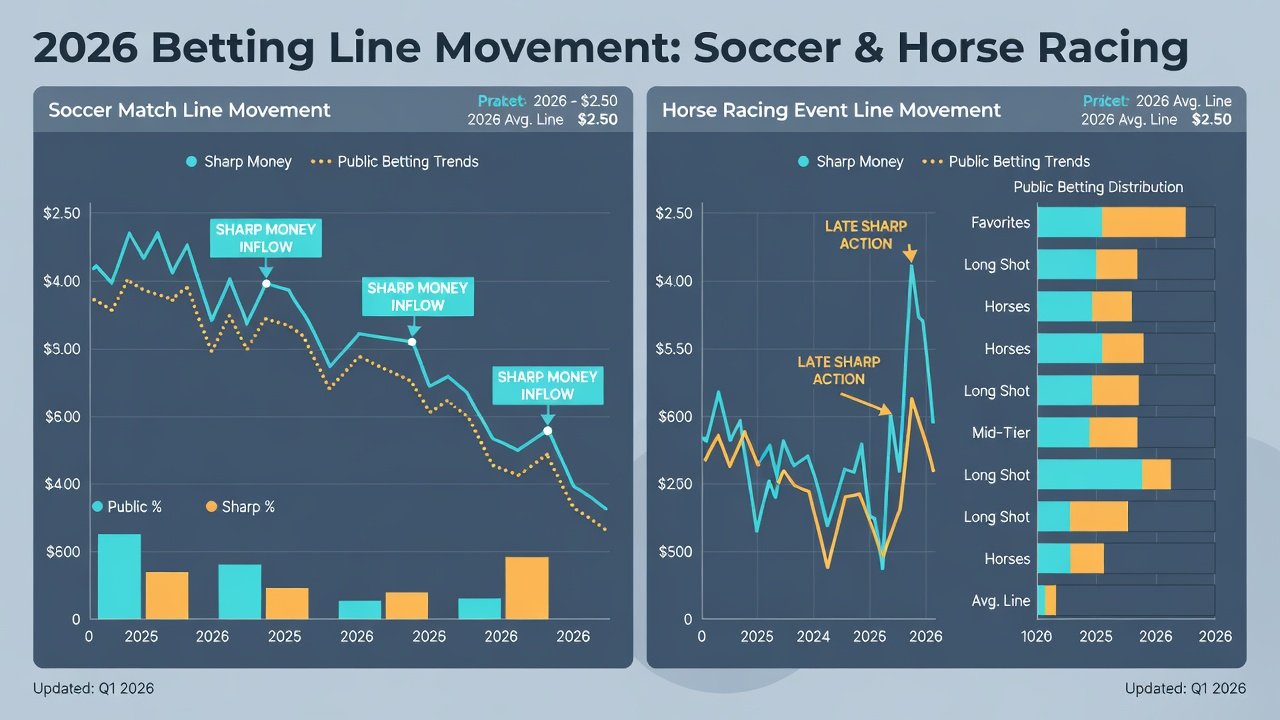
Line movement analysis is a powerful technique that allows bettors to interpret real-time shifts in odds across sports and horse racing. By understanding why lines move, you can distinguish between sharp professional money and recreational public betting, leading to more informed wagers in 2026. This approach turns raw data into actionable insights for sustainable gains. Bettors who master these concepts often find themselves ahead of the market rather than reacting to it, especially in fast-paced environments like live soccer matches or major horse racing events where odds can fluctuate dramatically within minutes.
The core idea revolves around recognizing that not all line changes carry the same weight. Some reflect informed betting from professionals, while others stem from casual fans chasing favorites. In 2026, with increased data availability and sophisticated betting platforms, this skill has become essential for anyone serious about long-term profitability. Whether you focus on football, basketball, or thoroughbred racing, line movement provides clues that traditional stats alone cannot reveal.
Understanding the Mechanics of Line Movements
Odds lines adjust based on betting volume, injury news, and market sentiment. Sharp money from professional syndicates often moves lines early and significantly, while public bets create smaller, delayed shifts. For example, in a Premier League soccer match between Manchester City and Liverpool, heavy sharp action on the underdog might push the spread from +1.5 to +2.0 within minutes. These adjustments occur because bookmakers aim to balance their books and minimize risk exposure. When large sums come in on one side, the line moves to attract action on the opposite side.
Additional factors include weather conditions in outdoor sports, last-minute roster changes, and even social media trends that influence public perception. In horse racing, a sudden change in track conditions due to rain can cause rapid line adjustments as bettors reassess each horse's chances. Understanding these mechanics requires observing patterns over multiple events rather than isolated incidents.
Distinguishing Sharp Money from Public Influence
Sharp bettors focus on value and use large stakes to exploit inefficiencies. Public money tends to follow popular teams or recent form. In horse racing, such as the 2026 Kentucky Derby, a late surge in public bets on a favorite can inflate odds on longshots, creating opportunities for contrarian plays. Concrete examples include the 2026 Champions League final where sharp money drove the total goals line down, signaling defensive expectations from both sides.
Key indicators of sharp action include reverse line movement, where the line moves opposite to the majority of bets placed. This often signals that professionals are betting against the public. In contrast, public-driven moves tend to align with popular narratives like a star player's return or a team's winning streak. Learning to read these signals accurately takes practice but pays dividends over a full season.
Essential Monitoring Tools for Real-Time Analysis
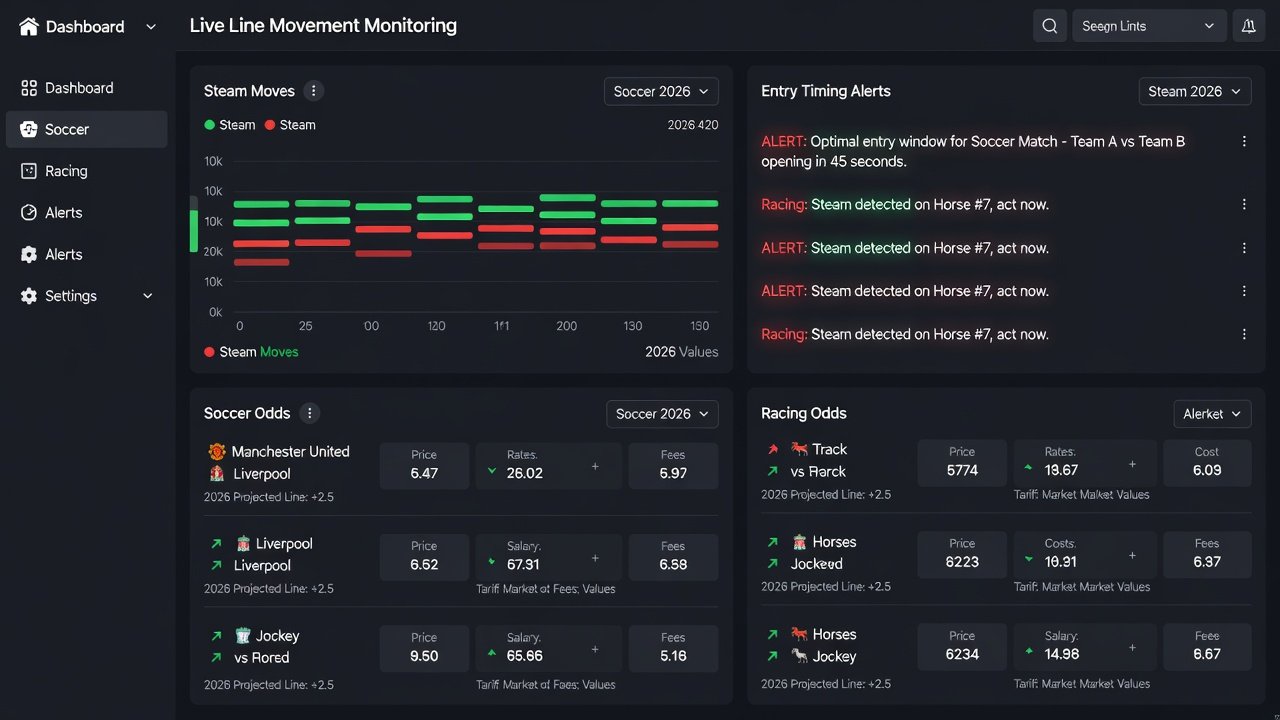
Effective monitoring requires platforms that track odds across books. Key tools include odds comparison sites and alert systems that flag rapid changes. Integrate these with historical data to spot patterns. ESPN provides reliable live updates for major sports. Additional resources involve dedicated betting software that aggregates lines from dozens of sportsbooks simultaneously, allowing users to spot discrepancies quickly. Many advanced bettors also maintain custom spreadsheets to log historical movements and correlate them with outcomes.
Setting up notifications for specific thresholds, such as a 0.5-point movement in spreads or a 10% shift in moneylines, helps filter noise. Combining these tools with video analysis of games or races adds another layer of confirmation before placing a wager.
Timing Your Entry Points Strategically
Enter bets when lines have moved due to sharp action but before public overreaction. Best practice involves waiting for 10-15% line shifts in your favor. Avoid jumping in immediately after news breaks. The optimal window often occurs 30 to 90 minutes before an event starts, once initial sharp money has been absorbed but before recreational bettors flood the market.
Patience is critical here. Many successful bettors set personal rules, such as only wagering after observing at least three consecutive line movements in the same direction from different books. This approach reduces the risk of acting on temporary fluctuations caused by a single large bet.
Avoiding Common Traps Like Steam Moves
Steam moves are sudden, large shifts often caused by syndicates but can be traps if followed blindly. Always verify with multiple sources and cross-reference with injury reports or track conditions in racing. Another frequent pitfall is chasing lines after they have already moved significantly, which often results in reduced value. Bettors should also watch for false signals created by promotional offers or limited-time betting markets that temporarily distort odds.
Step-by-Step Workflow for Line Movement Analysis
- Scan opening lines across major sportsbooks at least 24 hours before events.
- Track percentage of bets versus actual money wagered using available data feeds.
- Identify sharp indicators such as reverse line movement or early heavy action on underdogs.
- Confirm with secondary factors like weather, team news, or historical performance in similar conditions.
- Place bets only after a 12% or greater confirmed shift and after cross-checking at least two independent sources.
- Document each wager with notes on the observed movement for later review and strategy refinement.
2026 Case Studies: Soccer and Horse Racing
In the 2026 FIFA World Cup qualifier between Brazil and Argentina, sharp money moved the moneyline from -180 to -220, correctly predicting a comfortable win. In the 2026 Breeders' Cup, public betting on a popular filly created value on the second favorite at 7-1 odds. Another notable example came during the 2026 English Premier League season when a mid-table clash saw the total goals line drop rapidly after sharp bets on the under, leading to a low-scoring draw that rewarded patient bettors.
These cases highlight how combining line analysis with situational awareness produces better results than relying on movement alone.
Comparison Table: Successful vs Failed Reactions
| Scenario | Successful Reaction | Failed Reaction |
|---|---|---|
| Soccer spread move | Waited for confirmation, bet underdog at +2.5 | Chased steam move on favorite, lost |
| Horse racing odds shift | Bet longshot after public surge | Ignored sharp early money, missed payout |
| Live basketball total | Entered after third-quarter line reversal | Bet immediately on initial steam, poor value |
Common Pitfalls and How to Avoid Them
New bettors often overreact to every minor fluctuation or fail to account for book-specific limits that influence line movement. Developing a disciplined routine that includes daily review of past decisions helps mitigate these issues. Another mistake is ignoring the timing relative to the event start, which can lead to betting into inflated lines.
Integrating Line Analysis into Your Betting Strategy
Combine line movement with bankroll management and value betting principles. Review weekly performance to refine your approach for long-term profitability in 2026 markets. Many experienced bettors allocate a portion of their bankroll specifically for line-movement plays while maintaining separate strategies for other bet types.
Frequently Asked Questions
How do I start monitoring lines effectively?
Begin with free odds trackers and gradually add paid alerts for specific leagues. Start small and focus on one or two sports to build expertise.
Can line movement predict horse racing outcomes accurately?
It provides strong indicators when combined with pace analysis and jockey stats, though it works best as part of a broader approach.
What are the biggest mistakes new bettors make?
Overreacting to every move and failing to verify sources lead to most losses. Always maintain detailed records of your decisions.
Is line movement useful for live in-play betting?
Yes, especially when monitoring rapid shifts during breaks in play or after key events like goals or falls.
Conclusion
Mastering line movement analysis equips bettors with a decisive edge for 2026 profits across sports and racing. Consistent application of these methods, supported by reliable data, transforms betting from guesswork into a strategic pursuit. BBC Sport offers additional context for global events.

No comments yet. Be the first!