 GambleLore

Introduction to Low-Stakes Casino Strategies
Many players seek reliable ways to enjoy casino games without risking large amounts of money. Low-stakes approaches focus on disciplined play, smart decision-making, and careful preservation of funds across popular table games like blackjack, roulette, and baccarat. These methods support consistent results over extended periods rather than chasing rare big wins. Whether participating at online platforms or traditional land-based venues, the core principles stay identical: maintain firm control over each session and adhere strictly to proven tactics that minimize unnecessary risk. This comprehensive guide delivers practical steps specifically designed for smaller bet sizes. Readers will discover detailed examples of bet progression, advanced variance handling methods, and side-by-side comparisons of low-stakes versus high-stakes performance. Multiple real-world scenarios demonstrate how modest, methodical play can generate steady progress while protecting capital.
Understanding Low-Stakes Play Fundamentals
Low-stakes gambling centers on placing smaller wagers, often beginning at the lowest table minimums allowed. This environment reduces emotional pressure and creates space for skill refinement without severe financial consequences. Essential components include establishing rigid session budgets in advance and maintaining accurate records of every outcome. Successful participants consistently prioritize long-term sustainability above rapid accumulation of winnings. They treat each session as a controlled experiment rather than a sprint toward profit.
Bankroll Preservation Techniques
Strong bankroll management begins by segmenting total available funds into clearly defined smaller portions. Commit no more than one to two percent of your current session bankroll to any individual hand or spin. This conservative allocation shields players from the inevitable downswings that occur in every casino game. After completing twenty or thirty decisions, pause briefly to evaluate your remaining balance and decide whether adjustments are required. Keeping detailed notes of starting and ending amounts each session builds awareness of personal patterns and helps refine future limits.
Blackjack Strategy for Low Stakes
Blackjack stands out because correct basic strategy reduces the house edge more effectively than almost any other table game. Players should first commit the standard decision chart to memory, covering every possible combination of player hand and dealer upcard. At low stakes the priority shifts toward eliminating emotional overrides that deviate from these optimal choices. Consistent application of basic strategy over hundreds of hands produces measurable improvement in results.
Step-by-Step Bet Sizing Examples
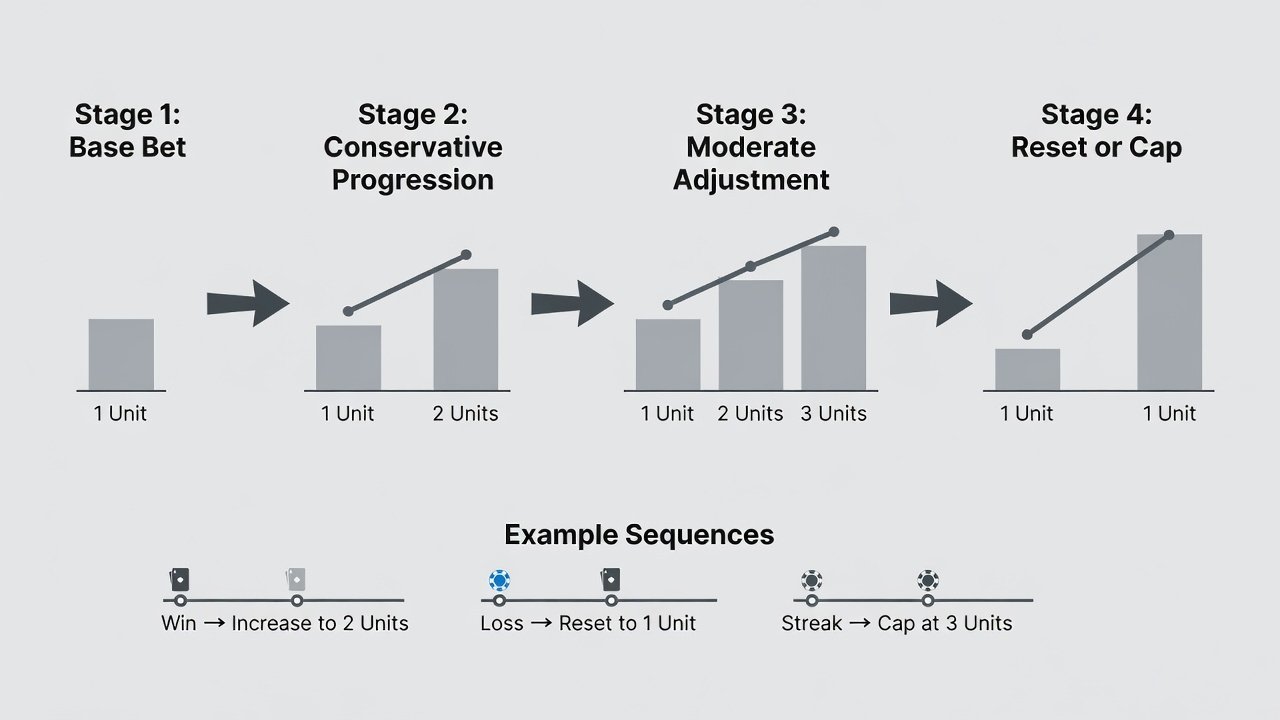
Consider a player starting with a one-hundred-unit session bankroll at a five-unit minimum table. The first hand is always placed at the minimum. Following two consecutive wins the bet rises by exactly one unit. After any loss the wager immediately resets to the original minimum. This measured progression never allows the bet to exceed three units during the session. Another scenario involves a player who reaches their predetermined win target of twenty-five units; they then lock in half the profit and continue only with the remaining portion until either the loss limit or time limit is reached.
Roulette Strategy for Low Stakes
Roulette rewards disciplined outside betting on red/black, odd/even, or high/low. Low-stakes participants achieve better longevity by using flat betting instead of any form of progression system. European wheels featuring a single zero should always be selected when available because they lower the house edge compared with American wheels. Observing ten to fifteen spins before committing money allows identification of short-term tendencies without exposing funds prematurely. Recording these observations in a simple log reinforces disciplined decision making.
Baccarat Tips for Smaller Bets
Baccarat offers one of the lowest house edges when betting exclusively on banker or player. Low-stakes players should avoid the tie bet entirely due to its significantly higher house advantage. Establishing a clear profit target of twenty to thirty percent of the session bankroll before leaving the table helps lock in gains. A practical rotation many experienced players follow is one banker bet, one player bet, then reassessment of the current shoe trend. This cycle reduces mental fatigue and keeps decisions objective.
Variance Management Techniques
Variance describes the normal fluctuations between winning and losing streaks. Effective management includes capping every session at forty-five to sixty minutes to prevent fatigue-driven errors. After every thirty minutes of continuous play, step away for a mandatory ten-minute break that resets focus. Maintaining a personal log of wins, losses, and emotional state during each session reveals behavioral patterns that can be corrected over time. These records also help players recognize when a session should end regardless of current results.
Low-Stakes vs High-Stakes Play Outcomes
High-stakes tables typically feature faster pacing and heightened emotional intensity, which frequently accelerates bankroll depletion for anyone still developing skills. Low-stakes settings permit far more decisions per hour at a fraction of the cost, granting extended practice time to internalize strategies. Long-term tracking data consistently shows that disciplined low-stakes participants preserve capital longer and experience fewer total losses across equivalent playing periods. The slower pace also allows better observation of table dynamics and dealer tendencies.
Real-World Case Studies
One dedicated player began with a modest bankroll and applied strict blackjack basic strategy exclusively at five-unit tables. Over six months of weekly two-hour sessions they recorded a modest net positive outcome by maintaining rigid unit sizing and exiting immediately upon reaching either win or loss thresholds. A second case involved consistent roulette outside bets at two-unit increments combined with a strict forty-five-minute session cap; this approach prevented loss-chasing behavior during extended negative runs and produced small but repeatable weekly gains. A third participant focused solely on baccarat banker bets with a three-bet rotation and documented results showing reduced variance compared with previous unstructured play.
Session Planning Best Practices
- Determine your exact session budget before logging in or arriving at the venue.
- Establish both a win limit and a loss limit in writing prior to the first bet.
- Select only games offering the lowest available house edge at your chosen stake level.
- Review weekly results to identify strengths and areas needing adjustment.
- Schedule breaks and set a hard stop time regardless of current momentum.
Common Mistakes to Avoid
Many beginners increase bet size after losses in an attempt to recover quickly, which often leads to larger deficits. Another frequent error involves playing beyond predetermined time or budget limits when chasing a perceived turnaround. Ignoring basic strategy charts in favor of gut feelings consistently erodes any statistical advantage. Finally, failing to switch tables or games when conditions become unfavorable keeps players in negative situations longer than necessary.
Online Versus Land-Based Considerations
Online platforms generally provide lower minimum bets and built-in practice modes that allow unlimited repetition of strategies without financial exposure. Land-based casinos offer social atmosphere and physical card handling but may enforce higher minimums and faster table turnover. Players benefit from mastering fundamentals online first before transitioning to physical venues where distractions are greater.
Frequently Asked Questions
Can low-stakes strategies really produce consistent wins?
Yes, when paired with strict bankroll discipline and accurate game knowledge, these approaches reduce overall losses and extend playing time, improving long-term outcomes.
How important is variance management?
It is extremely important. Proper techniques stop single adverse sessions from damaging an entire bankroll and support sustainable participation.
Should beginners start online or in land-based casinos?
Online environments provide lower minimums and risk-free practice modes, making them ideal for initial learning before visiting physical locations.
What is the best way to track progress?
Maintain a simple spreadsheet or notebook recording starting bankroll, ending amount, duration, and key decisions after every session.
Are bonuses useful for low-stakes players?
Yes, when the wagering requirements are reasonable they can extend playtime, but always read terms carefully before accepting any offer.
Conclusion
Low-stakes casino strategies deliver sustainable entertainment along with the realistic possibility of modest gains when executed with discipline and patience. Concentrate on mastering blackjack basic strategy, conservative roulette outside bets, and banker wagers in baccarat. Combine these tactics with robust bankroll rules and clearly defined session limits for optimal results. Responsible play must remain the foundation of every decision. Always gamble only with funds you can comfortably afford to lose. For additional guidance on safe gambling practices, consult authoritative resources such as Gambling Commission, BeGambleAware, and World Health Organization.


No comments yet. Be the first!