 GambleLore

Introduction to Multi-Hand Baccarat in 2026
Multi-hand baccarat allows players to place simultaneous bets across multiple hands at virtual or live tables, increasing engagement while demanding sharper discipline. In 2026, casinos emphasize efficient play for intermediate players seeking consistent edges through optimized focus and bankroll strategies. This guide delivers practical baccarat tips tailored to parallel betting, helping you manage variance and maintain control across sessions. Multi-hand formats have grown popular due to faster-paced online platforms and enhanced live dealer technology that supports tracking several outcomes at once. Players who master these elements often report improved session efficiency and better emotional regulation during extended play periods. Understanding the nuances of simultaneous wagering sets the foundation for turning casual sessions into structured, results-oriented experiences.
Understanding Multi-Hand Baccarat Basics
Multi-hand formats let you wager on two to eight hands per round, often in online platforms or dedicated casino pits. Core rules remain identical to standard baccarat: Player, Banker, or Tie bets with fixed payouts. However, simultaneous decisions require adjusted mental tracking. Success hinges on treating each hand as part of a unified session rather than isolated plays. In 2026 environments, many tables feature split-screen interfaces or app integrations that display all active hands clearly. Intermediate players benefit from recognizing that multi-hand play does not alter the house edge but increases the volume of decisions per minute. This volume creates opportunities for refined strategy while introducing new cognitive demands that single-hand play never presents.
Step-by-Step Setup for Tracking Multiple Hands
Effective tracking starts before cards are dealt. First, select a table with clear digital displays or use note-taking apps approved by the venue. Prepare a dedicated notebook or digital template with columns labeled hand number, bet selection, stake amount, outcome, and cumulative balance. Second, assign mental or physical markers to each hand position such as color-coded chips or numbered tokens. Third, log outcomes immediately after each round using the grid system to avoid memory overload. Fourth, review logs every 10 rounds to spot patterns without disrupting flow. Fifth, incorporate a timer to enforce short reflection breaks between blocks of rounds. This structured approach reduces errors in fast-paced environments and builds a data-driven mindset essential for long-term improvement.
Probability Adjustments for Parallel Betting
Single-hand baccarat carries standard probabilities around 44.6% for Banker wins and 45.9% for Player wins, excluding ties. In multi-hand play, these probabilities stay constant per hand but compound across bets. Adjust by calculating combined expected value: for two hands, double the stake exposure while maintaining the same per-hand odds. Account for correlation—consecutive hands at the same table may share subtle shoe depletion effects. Use conservative bet sizing, limiting total exposure per round to 2% of your session bankroll to preserve long-term edges. Consider scenarios where three hands run simultaneously: if two land on Banker and one on Player, net results require quick mental arithmetic to update running totals accurately. Practice these calculations away from the table to build speed and accuracy during actual sessions.
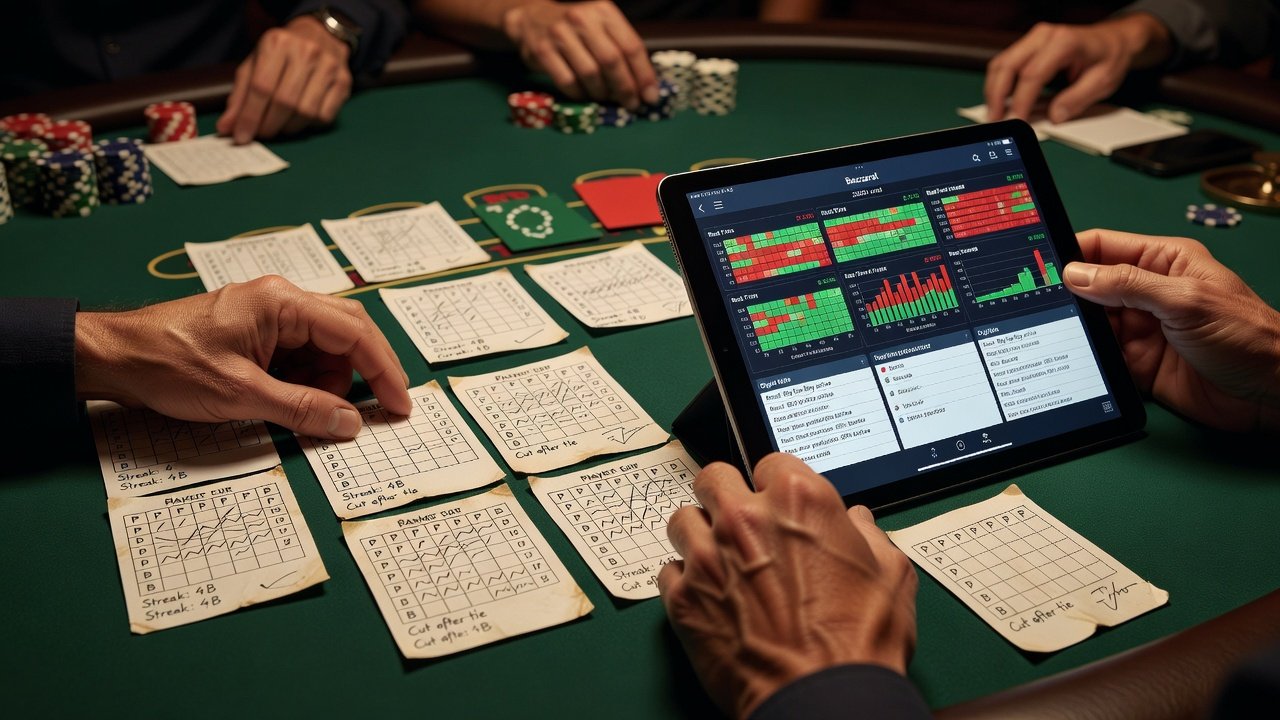
Single vs Multi-Hand Variance Comparison
Single-hand sessions exhibit lower variance with steadier bankroll swings. Multi-hand play amplifies variance because wins and losses cluster across simultaneous bets. For example, a three-hand round can swing your balance by triple the unit size in one outcome. Intermediate players benefit from multi-hand formats only when variance tolerance matches their bankroll size—typically sessions exceeding 100 units. Real-world logs show multi-hand players experience 25-40% wider drawdowns over equivalent rounds compared to single-hand counterparts. Variance also affects psychological factors: larger swings can trigger emotional decisions if not anticipated. Tracking standard deviation across sample sessions helps quantify personal risk tolerance and guides whether scaling to four or more hands is advisable.
Real-World Session Log Examples
Consider a 50-round session starting with a 500-unit bankroll. Hand 1-3: Banker wins on all three (net +6 units). Hand 4-6: Mixed results with two Player wins and one loss (net +2 units). Tracking reveals a 12% bankroll dip at round 30, prompting a 15-minute break. Another example from a four-hand session shows an early streak of three Banker wins followed by a tie and two Player losses, resulting in a net zero after ten rounds. These logs highlight the need for predefined stop-loss triggers at 20% drawdown and illustrate how clustering of outcomes demands flexible response plans rather than rigid bet progression systems.
Practical Checklists for Multi-Hand Sessions
- Pre-session: Verify table limits and software stability; set win goal at 15% and loss limit at 20%.
- During play: Rotate focus every three rounds; log every outcome instantly.
- Post-round: Calculate net variance and adjust bet sizes if needed.
- End-of-session: Review full log for recurring errors before cashing out.
- Weekly review: Analyze aggregated data to refine hand limits and betting patterns.
Common Pitfalls and Fixes
Pitfall 1: Overextending bankroll across too many hands—fix by capping at four simultaneous hands maximum. Pitfall 2: Ignoring table minimums during streaks—fix by scouting tables with flexible limits beforehand. Pitfall 3: Losing focus mid-session—fix by using timed reminders every 15 minutes. Pitfall 4: Miscalculating combined probabilities under pressure—fix by rehearsing quick arithmetic drills daily. Pitfall 5: Chasing losses across multiple hands simultaneously—fix by enforcing strict session limits regardless of current results. These corrections tie directly to core bankroll control principles in baccarat strategies and prevent common escalation into unsustainable play.
Focus and Mental Strategies for Sustained Performance
Maintaining concentration across multiple hands requires deliberate techniques. Use the Pomodoro-inspired method of 25-minute focused blocks followed by five-minute resets. Visualize each hand as a separate lane on a mental highway to avoid cross-contamination of decisions. Breathing exercises between rounds help regulate heart rate during variance spikes. Many successful players also employ brief physical anchors such as tapping specific fingers for each active hand. These methods enhance decision quality and reduce fatigue that often leads to suboptimal choices in extended multi-hand sessions.
FAQ: Table Selection and Software Aids
How do I choose the best multi-hand table?
Prioritize tables with low minimum bets, clear hand tracking interfaces, and reputable licensing. Avoid crowded pits where distractions rise. Look for venues offering real-time statistics overlays that aid quick probability checks.
What software aids support multi-hand tracking?
Approved casino apps with built-in scoreboards work best; third-party tools should never violate house rules. Always cross-check with venue policies. Popular options include integrated logging features that export session data for later review.
Is multi-hand play suitable for beginners?
Intermediate players fare better due to required multitasking skills. Start with two hands before scaling up. Beginners should first master single-hand fundamentals to build foundational discipline.
Can I combine multi-hand with progressive betting systems?
Progressive systems increase risk exponentially in multi-hand formats. Most experts recommend flat betting to control variance across parallel hands.
Conclusion
Mastering multi-hand baccarat in 2026 centers on disciplined tracking, probability awareness, and variance management. Apply these baccarat tips consistently to build sustainable edges while enjoying parallel play. Responsible approaches, including resources from GamCare, BeGambleAware, and UK Gambling Commission, ensure long-term enjoyment and informed decision-making.


No comments yet. Be the first!