 GambleLore

Introduction to Slot Volatility and RTP in 2026
Online slot players in 2026 want more control over their sessions. Understanding RTP (Return to Player) and volatility helps match games to personal risk tolerance and bankroll. RTP shows the theoretical percentage a slot returns over time, while volatility measures payout frequency and size. Together they shape session length and excitement levels. Many players overlook these metrics and rely solely on themes or graphics, leading to mismatched expectations and quicker bankroll depletion. This guide breaks down the concepts with practical examples, real game references, bankroll strategies, and a decision matrix. Players who grasp these elements make smarter choices and enjoy longer, more predictable play. By the end of this article you will know exactly how to evaluate any slot before spinning.
What Is RTP and Why It Matters
RTP represents the average amount a slot pays back to players over many spins. A 96% RTP slot returns $96 for every $100 wagered in the long run. Higher RTP games generally suit players seeking steadier returns, though short-term results vary widely due to randomness. RTP is calculated across millions of spins in certified testing labs, so individual sessions can deviate significantly. Always check the RTP in the game info panel before playing. Reputable developers publish these figures transparently on their sites and within the game itself. Comparing RTP across titles helps identify better value options within the same volatility category. For instance, two high-volatility games may both promise big wins, but the one with 96.5% RTP offers slightly better theoretical returns than one at 95.8%. Over thousands of spins this difference compounds and affects overall profitability.
Understanding Slot Volatility Levels
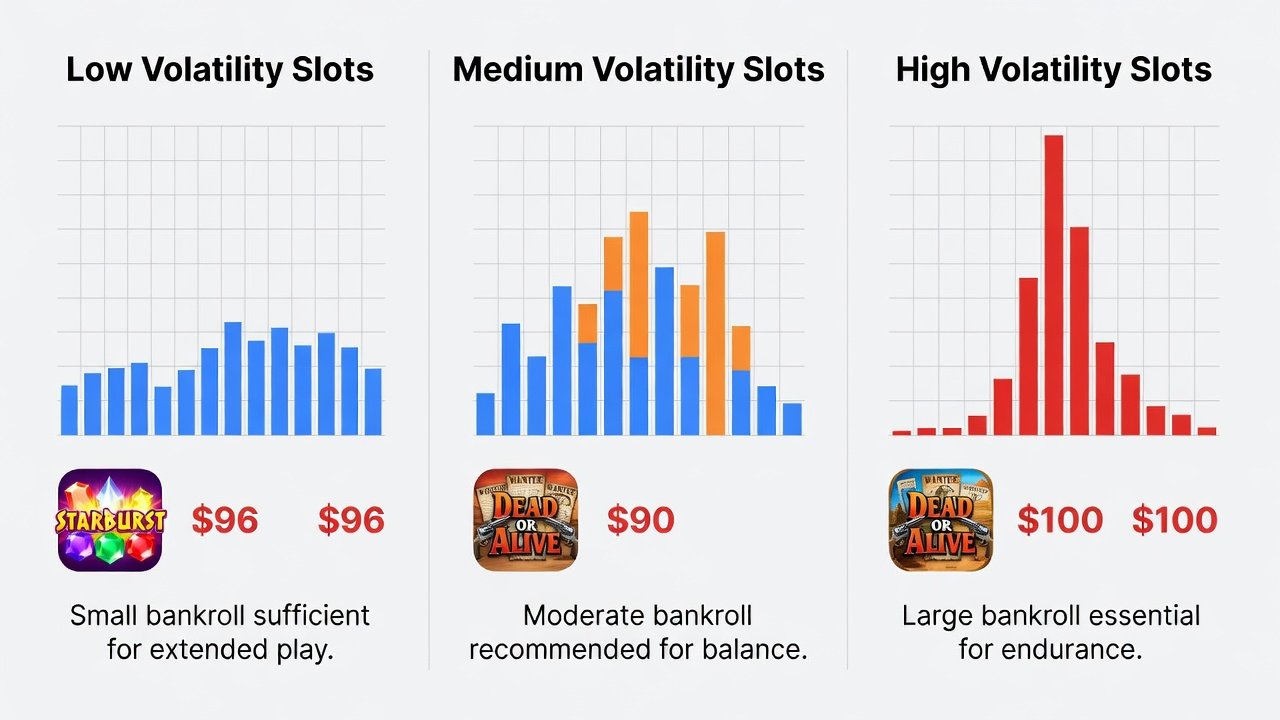
Volatility determines how often and how much a slot pays. Low-volatility games deliver frequent small wins. Medium-volatility slots balance frequency and payout size. High-volatility titles offer rare but substantial rewards. Volatility works independently of RTP yet interacts with it to create the full player experience. A high-RTP high-volatility game still feels different from a high-RTP low-volatility game.
Low Volatility Slots
These games suit cautious players who prefer extended sessions. Wins occur often but remain modest. Examples include Starburst by NetEnt, Blood Suckers, and Twin Spin. Payout patterns show steady small returns that help preserve bankrolls during longer play. Low-volatility slots typically feature simple mechanics with frequent line hits and small bonus triggers. They are ideal for players who enjoy steady progress toward wagering requirements on casino bonuses. Because dry spells are rare, these titles reduce emotional stress and allow players to focus on entertainment rather than chasing losses.
Medium Volatility Slots
Medium volatility strikes a balance. Wins arrive regularly enough to maintain interest while occasional larger payouts add excitement. Popular choices include Gonzo’s Quest, Book of Dead, and Reactoonz. These titles work well for players wanting moderate risk without extreme swings. Medium-volatility games often include layered bonus features such as expanding wilds or progressive multipliers that can elevate a standard win into something more substantial. They suit sessions lasting 30 to 90 minutes and pair nicely with moderate bankrolls.
High Volatility Slots
High volatility games appeal to thrill-seekers. Long dry spells are common, yet one big win can transform a session. Titles such as Dead or Alive 2, Gates of Olympus, and Razor Shark demonstrate this pattern. Bankrolls must be larger to withstand variance. High-volatility slots frequently include complex bonus rounds with multiple levels of multipliers and free-spin retriggers. The payout distribution is heavily skewed toward rare events, making these games less suitable for short sessions or players who dislike long losing streaks.
Bankroll Sizing Tips for Different Volatility
Match your bankroll to volatility for better session control. Low-volatility slots work with smaller amounts, often 50–100 times the bet size. Medium volatility benefits from 150–250 times the stake. High-volatility play requires at least 300–500 times the bet to survive dry periods. Adjust bet size downward on high-volatility games to extend playtime. Track results after 100 spins to see if the chosen volatility matches expectations. Consider splitting your total bankroll into multiple smaller sessions rather than one long marathon. This approach reduces the impact of variance and lets you sample different volatility levels without excessive risk.
Bonus Round Impact on Volatility
Bonus rounds significantly affect overall volatility. Free spins and multipliers in high-volatility slots can create massive swings. Low-volatility games usually feature simpler bonuses that deliver smaller but more frequent boosts. Always review bonus mechanics in the paytable before committing funds. Some games hide volatility inside the bonus structure; a medium-volatility base game can become high-volatility once free spins begin because of stacked multipliers. Test the bonus feature in demo mode to understand the real risk profile before using real money.
Mobile vs Desktop Performance Notes
Modern slots perform consistently across devices, yet mobile interfaces sometimes limit visibility of detailed paytables. Desktop versions often provide clearer RTP and volatility information. Test games on both platforms to ensure comfortable play and easy access to rules. Touch controls on mobile can make rapid spinning easier, but reading fine print about RTP or bonus terms may require zooming. Desktop browsers sometimes load additional statistics panels that mobile apps omit. Players who switch devices mid-session should verify that the same RTP version is active on both platforms.
Simple Decision Matrix for Player Styles
- Conservative players: Choose low volatility with RTP above 96% for steady entertainment and minimal stress.
- Balanced players: Select medium volatility titles with engaging themes and solid bonus features that maintain interest over 60-minute sessions.
- High-risk players: Opt for high volatility games when bankroll allows and session goals focus on big wins rather than extended play.
- Bonus hunters: Prioritise medium or high volatility slots with strong free-spin multipliers and retrigger potential.
- Short-session players: Avoid high volatility and instead pick low or medium titles that deliver action within 20–30 spins.
Common Mistakes to Avoid
Many players chase losses by increasing bets on high-volatility games, which accelerates bankroll depletion. Others ignore RTP entirely and focus only on graphics or marketing claims. Always set loss limits and session timers before starting. Avoid switching volatility mid-session without a clear strategy, as this often leads to chasing patterns that do not exist. Another frequent error is playing high-volatility games with insufficient funds, resulting in early session endings before any bonus feature triggers. Finally, failing to read the paytable means missing crucial details about how bonus rounds alter the overall volatility profile.
FAQ
How does volatility affect long-term play?
High volatility increases variance, meaning bigger swings over thousands of spins. Low volatility produces smoother results but smaller peaks. Over very long periods the RTP still governs average return, yet volatility dictates the emotional journey.
Can I change volatility in a slot?
No. Volatility is fixed by the game design and RNG programming. Choose a different title if the current one does not match your style or bankroll size.
Is higher RTP always better?
Higher RTP improves theoretical returns, yet volatility still dictates session feel. Combine both metrics when selecting games to achieve the desired balance of risk and reward.
Do mobile slots have different RTP?
Reputable operators use identical RTP across platforms. Confirm settings in the game menu regardless of device to ensure you are playing the certified version.
What is the best volatility for beginners?
Low or medium volatility is recommended for beginners because it provides more frequent feedback and reduces the chance of quick bankroll loss while learning game mechanics.
Conclusion
Mastering slot volatility and RTP empowers players in 2026. Use the decision matrix, apply bankroll guidelines, and review bonus mechanics to align games with personal preferences. Responsible play remains essential for enjoyable long-term results. Begambleaware, Gamcare and Gambling Commission offer additional support resources and regulatory information.


No comments yet. Be the first!