 GambleLore
Why Position Remains the Most Underrated Edge in Texas Hold’em
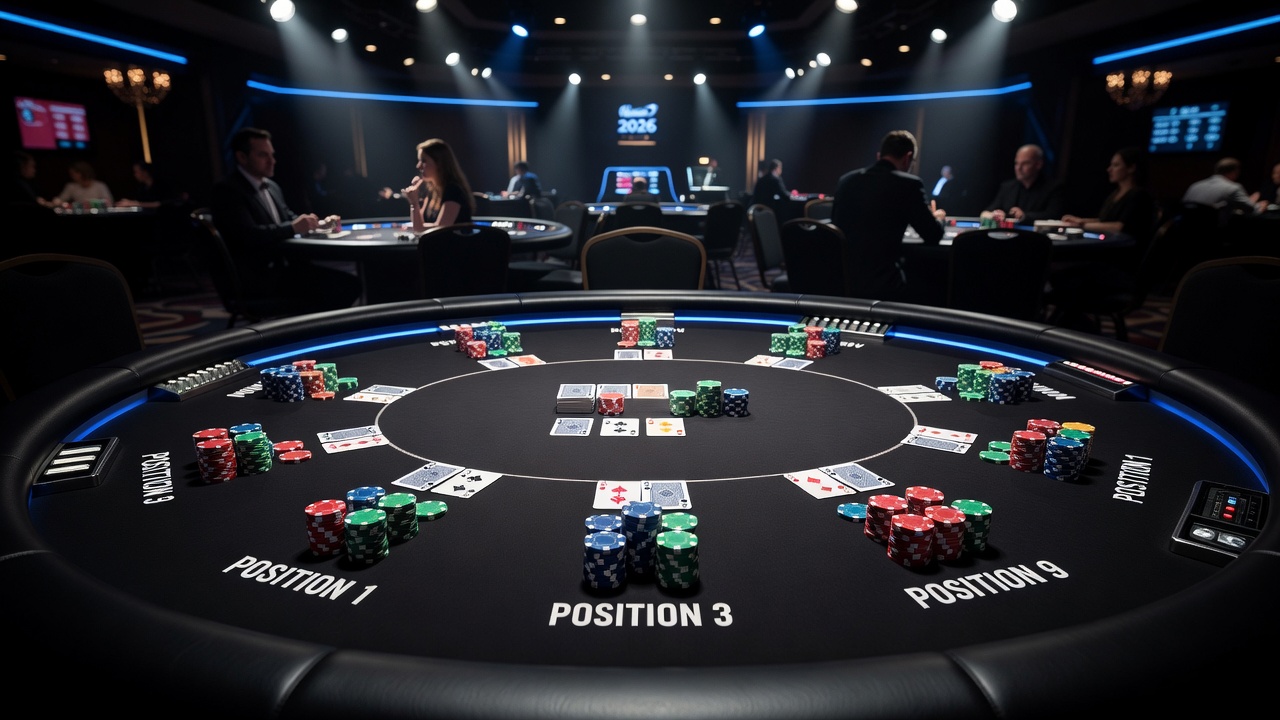
In Texas Hold’em, position determines how much information you have before acting. Players in late position see opponents’ decisions first, allowing wider ranges and better bluffing opportunities. This advantage grows even stronger in 2026 MTTs where aggressive play is common. Position directly impacts expected value (EV). Studies from major poker databases show late-position hands generate 15-25% higher EV than identical hands played from early position. Understanding this edge requires more than memorizing charts; it demands adapting your strategy based on stack sizes, opponent tendencies, and tournament stage. Many recreational players overlook how acting last lets you control pot size and extract maximum value from strong hands while minimizing losses with marginal ones.
Throughout this guide we break down exact adjustments for each seat, including concrete preflop ranges and postflop decision trees you can apply immediately. Whether you play online tournaments or live cash games, mastering position separates consistent winners from those who leak chips over time.
Early Position Strategy: Tighten Up and Protect Your Range
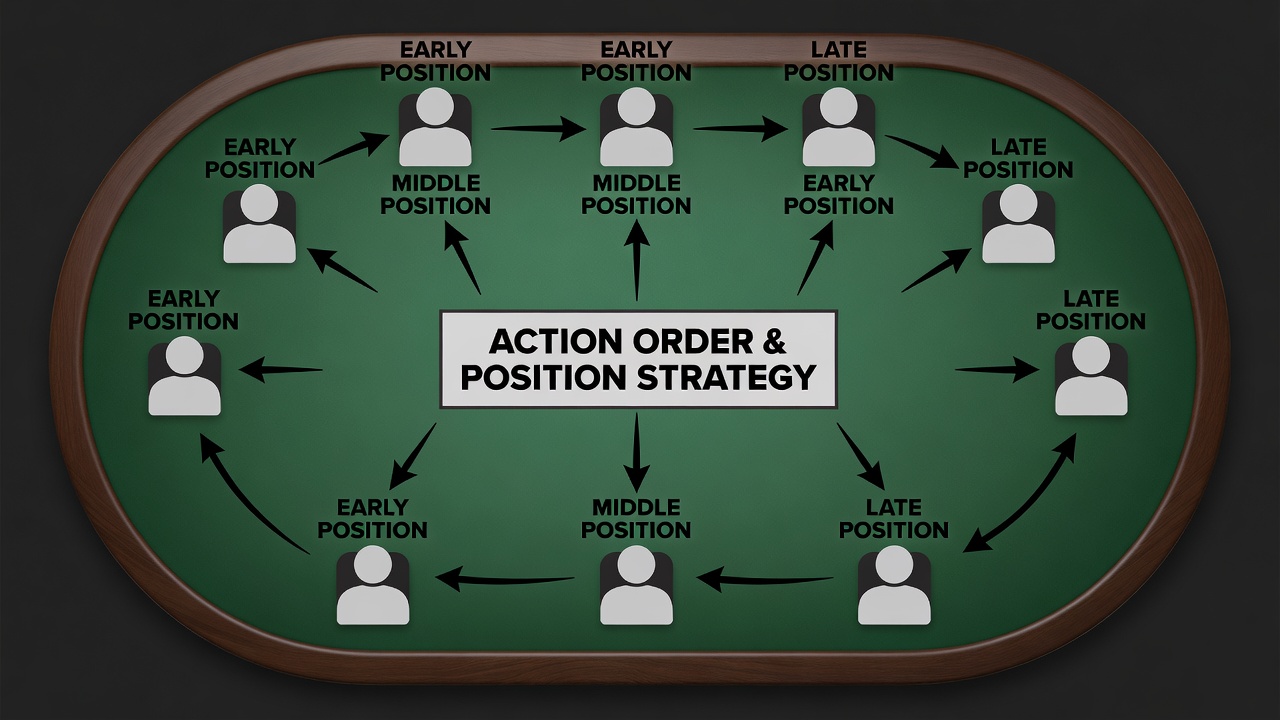
From Under the Gun (UTG) and UTG+1, you act first postflop. Recommended opening ranges shrink to roughly 12-15% of hands. Focus on premium holdings like 88+, AJs+, and KQs. Preflop: Raise to 2.2-2.5x the big blind. Avoid limping, as it invites multiway pots where your positional disadvantage is magnified. When facing raises from later seats, your continuing range should be even tighter, primarily 99+, AK, and AQ suited.
Postflop: Play cautiously on coordinated boards. Check-raising becomes a key tool when you hit strong hands, because opponents expect strength from early position. On dry boards such as K-7-2 rainbow, continuation betting at 40-50% frequency keeps your range balanced. On wet boards like 9-8-7 with two hearts, reduce c-bets and check-call more often with overpairs and strong draws. Always consider stack depth; deeper stacks favor smaller continuation bets to maintain fold equity without overcommitting.
Middle Position Adjustments: Balancing Range and Aggression
Middle position (MP and MP+1) allows slightly wider ranges of 18-22%. You can include suited connectors and small pairs while still respecting players behind you. Preflop opening size should be 2.2x. Three-bet more frequently against late-position opens, especially when you hold position on the original raiser after the flop. Include hands like 77-JJ, A9s-AJs, and KTs+ in your three-betting range.
Postflop: Use continuation bets at 55-65% frequency on dry boards. On wet boards, reduce c-bet frequency and incorporate check-calls with draws. When out of position against the button, adopt a more defensive line by check-folding marginal hands and check-raising value hands plus semi-bluffs. This mixed approach prevents opponents from exploiting your range easily.
Late Position Mastery: Stealing, Defending, and Barreling
The cutoff and button are where skilled players print money. Opening ranges expand to 28-35% from the cutoff and 45-55% from the button. Blind stealing: Raise 2.2-2.5x with a wide range including suited aces, suited kings, and any two Broadway cards. Success rate against tight blinds often exceeds 70%. Defending the big blind: Call wider against steals (roughly 30-35% of hands) because you close the action. Use a mixed strategy of calls and three-bets with suited connectors and pocket pairs.
Barreling in position: On the button, fire second and third barrels on favorable runouts. Your range advantage allows profitable bluffs that would lose money out of position. For example, on a board of A-5-2-7-K, continue betting with air if the opponent’s range is capped. Adjust barrel sizes based on opponent fold rates observed in previous orbits.
Hand Walkthroughs from 2026 MTTs
Example 1: 2026 WSOP Circuit final table, button holds A5s facing a cutoff raise. Three-bet to 2.8x and barrel twice on a K-7-2-4 board for a profitable bluff. The positional advantage allowed reading the opponent’s check-back as weakness.
Example 2: Early position player opens 99 and faces a button three-bet. Folding is correct because the positional disadvantage outweighs set-mining equity. Example 3: Cutoff opens KQo and faces a big blind defend. On a Q-8-3 flop, a 60% pot continuation bet extracts value while denying equity to draws.
Example 4: Button calls a middle position open with 65s. On a 7-6-2 flop the player check-raises for value and protection, then barrels the turn when the board bricks. These examples illustrate how position multiplies the effectiveness of each action.
Position-Based EV Shifts: What the Numbers Show
Using 2026 GTO solvers, the EV gap between button and UTG for the same hand can reach 0.35 big blinds per hand. Over a 500-hand session this compounds into significant stack differences. Late position also improves implied odds because you can realize equity more often when hitting strong hands. Players who track their results by position consistently discover that button play accounts for the majority of their profit.
Step-by-Step Decision Frameworks
When deciding whether to open from any position, follow this sequence: assess your table image, calculate effective stacks, estimate opponent three-bet frequencies, then select your range. Postflop, evaluate board texture first, then your equity against the villain’s range, and finally decide on bet size to maximize fold equity or value. Always ask: “Would I play this hand differently if I had position?” This simple question reveals many leaks.
Common Beginner Errors and How to Fix Them
- Playing too many hands from early position – tighten to 12% and review ranges after each session.
- Over-folding the big blind to steals – defend at least 30% and mix in three-bets.
- Checking too often on the button after calling preflop – increase aggression with draws and weak pairs.
- Ignoring stack depths when deciding steal sizes – use smaller raises when stacks are under 20 big blinds.
- Failing to adjust versus short stacks behind you – reduce opening range when effective stacks drop below 15 big blinds.
FAQ: Position Questions Answered
How should I adjust when short-stacked? Tighten early position ranges further and prioritize all-in shoves from late position.
Is position more important in tournaments or cash games? Both, but ICM pressure in tournaments amplifies late-position advantages near pay jumps. For deeper analysis visit PokerNews.
What if the table is extremely loose? Reduce bluff frequency and value-bet thinner from late position.
Should I change strategy when the blinds are antes only? Yes, widen all ranges by 5-8% because dead money increases steal profitability.
How does position affect multiway pots? Tighten ranges dramatically and prefer hands with high nut potential when three or more players see the flop.
Conclusion
Mastering position separates recreational players from consistent winners. Apply these preflop ranges, postflop frameworks, and barreling guidelines at your next session and watch your results improve immediately. Review hands from recent World Series of Poker events to see how top players exploit positional edges in real time.


No comments yet. Be the first!