 GambleLore

Introduction to MTT vs SNG in 2026 Online Poker
Texas Hold'em players in 2026 face a dynamic landscape where multi-table tournaments (MTTs) and sit-and-go (SNG) formats offer distinct paths to profitability. Understanding variance and return on investment (ROI) is essential for sustainable success. This guide breaks down the key differences, helping you optimize your approach for modern online play. The poker ecosystem has evolved with faster software, larger player pools, and refined algorithms that influence how variance manifests across formats.
Core Format Differences and Payout Structures
MTTs feature large fields with gradual payout structures that reward deep runs, while SNGs deliver quicker resolutions with top-heavy payouts. These structures directly influence variance levels and required skill application under pressure. In MTTs, the payout distribution spreads across many places, creating opportunities for significant scores but also extended periods of minimal returns. SNGs concentrate prizes in the top positions, leading to more binary outcomes that can accelerate bankroll growth when executed correctly.
Variance Management Strategies
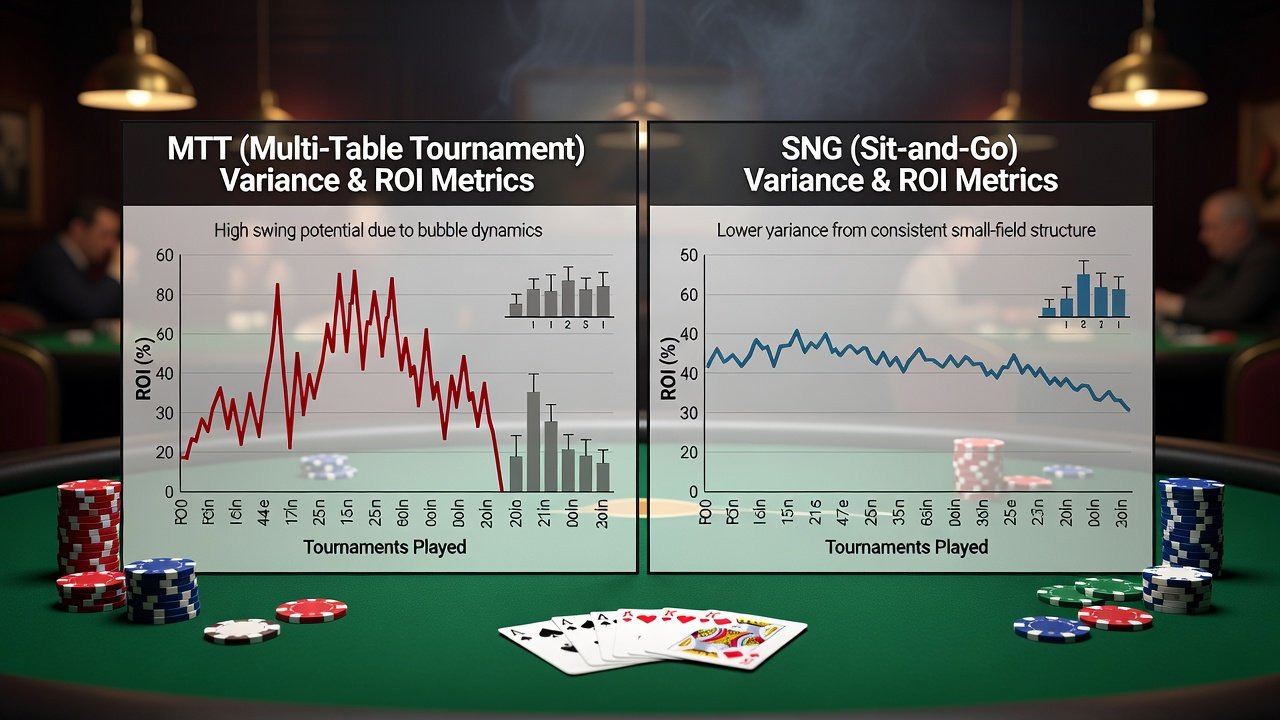
MTTs exhibit higher variance due to larger fields and longer durations, demanding robust emotional control. SNGs provide lower variance with consistent short-term outcomes. Effective management includes tracking results over extended samples and adjusting aggression based on format-specific swings. Players should maintain detailed spreadsheets logging session results, noting factors like field size, stack depths, and personal performance metrics to identify patterns over hundreds of tournaments.
ICM Pressure and Push-Fold Threshold Shifts
Independent Chip Model (ICM) pressure differs significantly. In MTTs, late-stage ICM decisions involve multiple tables and pay jumps. SNGs intensify ICM earlier because of smaller fields. Push-fold thresholds shift accordingly, with MTTs allowing more speculative plays early and tighter ranges near bubbles. For example, in a 100-player MTT, the push-fold range from the button with 12 big blinds might include suited connectors, whereas in a 9-player SNG at the same stack, the range tightens to premium hands only due to immediate payout implications.
ROI Optimization Through Skill Edge Calculations
Calculating your edge requires analyzing win rates against field difficulty. MTT ROI often ranges qualitatively lower due to variance, while SNGs can yield steadier returns. Factor in rake and adjust edges for 2026 meta shifts like increased recreational participation. A practical method involves reviewing your historical data to compute average ROI per format, then projecting future performance by factoring in adjustments for player pool changes observed on major platforms such as PokerStars.
Step-by-Step Bankroll Allocation Examples
1. Assess your total bankroll and risk tolerance by reviewing three months of prior results.
2. Allocate 20-30% to MTTs for high-upside potential while reserving the majority for stability.
3. Reserve 70-80% for SNGs to stabilize variance and ensure consistent volume.
4. Rebalance monthly based on performance metrics and session data, moving funds only after clear trends emerge.
5. Maintain separate tracking for each format to refine allocations over time, including sub-allocations for different buy-in levels.
6. Incorporate a 10% buffer for variance spikes by setting aside emergency funds outside active play.
7. Review and adjust allocations quarterly to align with evolving personal skill edges and market conditions.
These steps help mitigate drawdowns while pursuing growth, with real-world application showing that disciplined allocation reduces tilt-induced errors by maintaining emotional equilibrium during downswings.
Format Selection Criteria for Profitability
Choose MTTs when seeking large score potential and you have time for extended sessions. Opt for SNGs during periods requiring steady volume and lower variance exposure. Consider your schedule, mental stamina, and current bankroll health when deciding. Additional criteria include time of day, as peak hours often feature softer fields in SNGs, and personal preference for game pace, where some players thrive on the marathon nature of MTTs while others prefer the focused intensity of SNGs.
Session Length Effects and Meta Adaptations
Long MTT sessions amplify fatigue-related errors, whereas SNGs allow multiple quick resets. In the 2026 meta, adapt by incorporating shorter MTTs or turbo SNGs during peak hours. Monitor opponent tendencies and adjust strategies for evolving player pools. Adaptations may involve studying recent hand histories from sites like WSOP to spot emerging trends such as increased limp-calling ranges from recreational players.
Practical Comparisons and Mistakes to Avoid
- Mistake: Over-allocating to MTTs without variance buffers, leading to unnecessary bankroll stress during prolonged downswings.
- Mistake: Ignoring ICM in SNG late stages, which often results in suboptimal push-fold decisions that erode ROI.
- Mistake: Failing to track format-specific ROIs separately, masking true performance differences between the two.
- Mistake: Neglecting meta adaptations, such as failing to tighten ranges against aggressive regulars prevalent in 2026 fields.
Advanced Considerations for 2026 Play
Beyond basics, players must account for software tools and multi-tabling capabilities that have advanced since previous years. MTTs benefit from multi-tabling software that tracks multiple tables simultaneously, but this increases cognitive load and variance exposure. SNGs lend themselves better to single-table focus, allowing deeper analysis of opponent patterns. Incorporating study routines from resources on established poker platforms helps refine these edges continuously.
Conclusion
Balancing MTTs and SNGs in 2026 requires deliberate variance management and ROI focus. By applying these insights on payouts, ICM, and bankroll tactics, players can enhance long-term profitability across both formats while adapting to ongoing changes in the online poker environment.
FAQ
When should I switch from MTTs to SNGs?
Switch when seeking lower variance or quicker sessions, especially if bankroll constraints tighten or personal schedule limits long commitments. Many players transition temporarily during high-variance periods to rebuild confidence and stabilize results.
How does 2026 meta affect push-fold ranges?
Increased recreational players loosen early ranges but tighten late-stage ICM spots in both formats. Regulars have also adapted with more balanced strategies, requiring ongoing study to maintain an edge.
Can I play both formats profitably?
Yes, with proper allocation and separate tracking to manage distinct variance profiles. Successful players often maintain a primary format while using the secondary one for volume or score opportunities.
What role does mental game play in format choice?
Mental resilience is crucial in MTTs due to extended variance, while SNGs test focus through rapid decision cycles. Developing routines like meditation or breaks between sessions supports sustained performance in either format.


No comments yet. Be the first!