 GambleLore

Introduction to Online vs Live Texas Hold'em
Texas Hold'em remains the king of poker variants, but playing it online versus in live tournaments demands distinct strategies. Online poker features rapid action with multiple tables, while live events like the WSOP offer deeper psychological battles. Key differences lie in bluffing frequencies, table dynamics, and hand selection. Faster online paces require tighter play, whereas live settings enable exploits of opponents' tells and timing.
This guide breaks down these elements with actionable tips, drawing from trends seen in 2026 high-stakes events. Whether you're grinding online MTTs or eyeing live bracelets, adapting is crucial for success.
Bluffing Frequencies: Online Speed vs Live Patience
Bluffing is poker’s art of deception, but frequencies vary sharply between formats.
Online Poker: With hands per hour exceeding 60-80 on platforms like PokerStars, players face constant decisions. Bluffing too often gets punished by HUD-tracked stats and aggressive regs. Optimal frequency hovers at 15-25% on the river, per solver data. In 2026's online SCOOP series, pros like Viktor Blom reduced bluffs by 10% against solver-trained fields, folding to 3-bets more selectively.
Live Tournaments: Slower pace (30-40 hands/hour) allows reads on physical tells. Bluff frequencies climb to 25-35%, exploiting recreational players. During the 2026 WSOP $10K event, Daniel Negreanu bluffed a massive pot with air against a hesitant amateur, using speech and bet sizing to induce folds.
Actionable Tips:
- Online: Use GTO solvers for polarized ranges; bluff less vs tight players (check PokerNews for strategy tools).
- Live: Time bluffs after opponents' shaky calls; vary bet sizes to mask strength.
Table Dynamics: Multi-Tabling Online vs Single-Table Live
Table dynamics shape every decision, amplified by format differences.
Online: Multi-tabling (4-12 tables) creates anonymous, stats-driven environments. Dynamics shift quickly with player pools rotating. Fish abound in low stakes, but high-stakes turbo events feature nits. In 2026's WCOOP High Roller, tables broke every 45 minutes, forcing hyper-aggressive dynamics early.
Live: Fixed tables foster familiarity; image matters over hours. Stack sizes, ICM pressure, and side conversations influence play. The 2026 Triton Poker Series in Cyprus saw pros exploit drunk deep-stacked recs, turning tables into personal playgrounds.
Actionable Tips:
- Online: Track VPIP/PFR via HUDs; exploit weak dynamics post-bubble.
- Live: Build loose image early, tighten late; chat to tilt opponents.
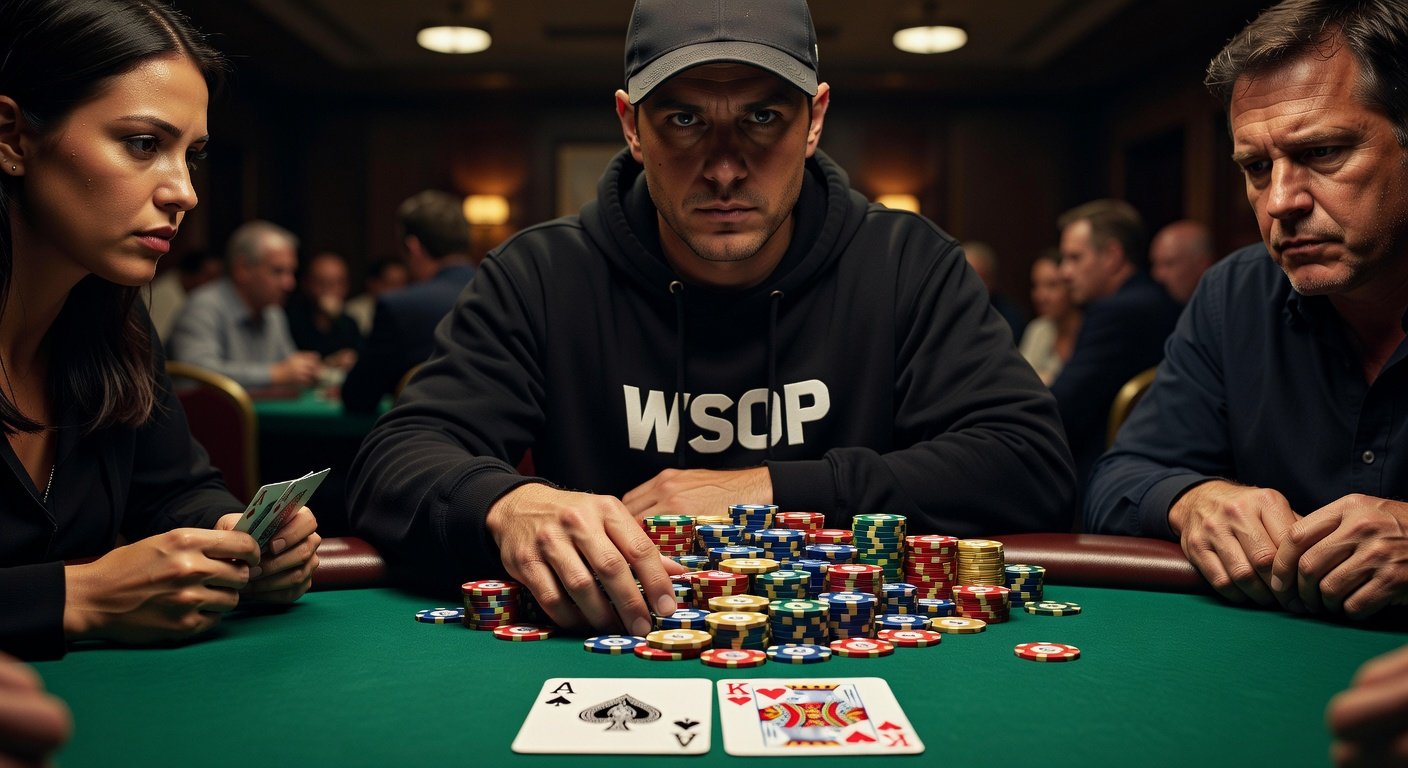
Hand Selection: Tight Online Ranges vs Loose Live Specs
Hand selection is foundational, tightened online, loosened live.
Online Poker: Faster blind climbs demand premium hands. Open-raise 18-22% from late position; fold marginal spots. Solvers recommend AA-KK, AK, suited broadways. In 2026 online events, pros like Linus Loeliger shoved 12% wider preflop but folded 70% more postflop due to pace.
Live Tournaments: Deeper stacks and psych reads allow speculative hands like suited connectors. Play 25-30% hands early to build pots. Phil Hellmuth's 2026 PCA win featured 88 flopping sets against loose callers.
Actionable Tips:
- Online: Chart ranges by position; avoid 3-bet bluffs vs unknowns.
- Live: Speculate with position; use hand history to note patterns.
Adapting Strategies: Hybrid Tips for 2026 Pros
Top players blend formats. Online hones math; live sharpens people skills.
Online Adaptation: Play tighter (VPIP 20%), focus on position. Tip: Use ICMIZER for late stages. In 2026's GG Poker Super MILLION$, winners averaged 1.5bb/100 winrates with minimal bluffs.
Live Adaptation: Exploit psychology; slow-play monsters. Tip: Mirror opponents' timing. Reference the WSOP for event recaps.
Hybrid Drills:
- Practice live tells via streams.
- Simulate online speed in home games.
- Review hands with solvers post-session.
Examples from 2026 High-Stakes Events
In the 2026 WSOP Main Event, Adrian Mateos crushed online satellites then dominated live final table with 32% bluff frequency, reading twitches absent online. Conversely, online champ Fedor Holz flamed out live early, unable to adjust from turbo pace.
The EPT Monte Carlo 2026 saw live specialist Sam Grafton bluff a 500bb pot with J-high, using stare-downs. Online, in the same year's PokerStars Sunday Million, grinders stuck to nuts-or-nothing, winning via volume.
Lesson: Online rewards discipline; live, deception.
Conclusion: Master Both for Poker Dominance
Success in Texas Hold'em demands format-specific tweaks. Online: Tighten up, trust stats. Live: Loosen specs, weaponize psych. Practice both, and 2027 events await. For more, explore PokerStrategy resources.


No comments yet. Be the first!