 GambleLore

Introduction to Bankroll Management in Modern Betting
Effective bankroll management forms the foundation of responsible gambling, helping bettors maintain control over their finances while enjoying the excitement of wagering. In 2026, with betting platforms evolving rapidly, understanding how to allocate and protect your funds is more critical than ever for minimizing risks and promoting long-term sustainability. This approach not only safeguards money but also supports mental well-being by reducing the stress associated with uncontrolled losses.
This comprehensive guide explores proven strategies that target users seeking to control spending and reduce gambling-related harm. By defining core concepts and providing actionable steps, readers can develop disciplined habits that support safer betting practices across sports, casino games, and other forms of wagering.
What Is a Betting Bankroll and Why It Matters
A betting bankroll represents the dedicated amount of money set aside exclusively for gambling activities. It should be funds you can afford to lose without impacting essential expenses such as rent, bills, or savings goals. Separating this money from daily finances creates a clear boundary that supports responsible decision-making and prevents the common pitfall of chasing losses with money meant for other purposes.
Establishing a bankroll begins with an honest assessment of your disposable income. Many experts recommend starting small and scaling gradually as experience grows. This approach prevents overcommitment and builds confidence through consistent, measured participation. Without a defined bankroll, bettors often find themselves dipping into emergency funds or borrowing, which can lead to significant financial strain over time.
The 1-5% Rule and Percentage Allocation Strategies
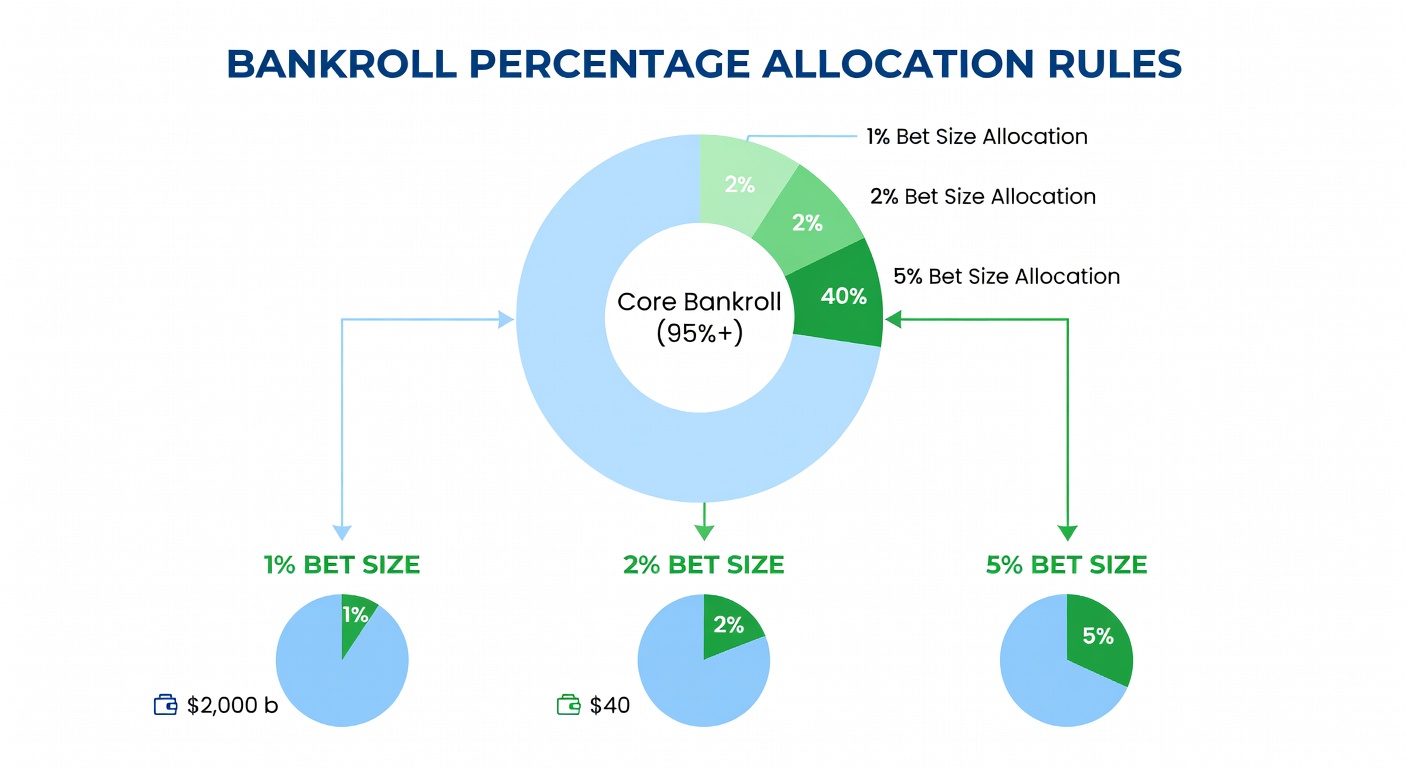
One of the most widely adopted frameworks involves limiting individual bets to a small percentage of the total bankroll. The 1-5% rule suggests wagering no more than 1% to 5% on any single outcome, depending on confidence level and risk tolerance. Conservative players often stick to 1-2%, while those with higher risk appetite may use up to 5% in selective situations.
- 1% allocation: Ideal for beginners or volatile markets, preserving capital over extended sessions and allowing for recovery from inevitable downswings.
- 2-3% allocation: Suitable for intermediate bettors with proven strategies who have demonstrated consistent results over months of play.
- 5% allocation: Reserved for high-confidence plays within a diversified portfolio of wagers, used sparingly to avoid rapid erosion of funds.
These percentages help prevent rapid depletion during losing streaks and encourage strategic thinking rather than emotional reactions. Variations exist for different bet types, such as lower percentages for high-variance bets like parlays and slightly higher for value bets in lower-risk markets.
Tracking Methods to Maintain Control and Accountability
Accurate tracking is essential for long-term success. Digital spreadsheets, dedicated apps, or simple notebooks can record every bet, including stake, odds, outcome, and running balance. Reviewing these records weekly reveals patterns and highlights areas for improvement, such as over-betting on certain sports or times of day.
Advanced users may incorporate automated tools that sync with betting accounts to generate real-time reports and visualizations. Key metrics to track include win rate, average bet size, largest drawdown, and return on investment. Regardless of method, consistency in logging data ensures transparency and accountability, turning raw results into actionable insights for refining future approaches.
Adjusting Strategies Based on Performance Outcomes
Bankroll management is not static. After a series of wins, consider increasing the overall bankroll modestly while maintaining the same percentage limits to capitalize on momentum without overextending. Conversely, during downturns, reduce bet sizes proportionally to protect remaining capital and avoid compounding losses. This dynamic adjustment prevents both overextension after success and panic-driven decisions after losses, fostering resilience.
Thresholds for adjustment might include a 20% bankroll increase triggering a review or a 15% decrease prompting temporary stake reductions. Regular monthly audits help identify when external factors, such as changes in betting markets, require strategy tweaks.
Practical Examples of Successful Management Plans
Consider a $2,000 bankroll using the 2% rule: each bet would be capped at $40. Over ten wagers with mixed results, including five wins and five losses at even odds, the disciplined approach preserves most of the fund even if variance swings unfavorably. Another example involves a monthly allocation where 10% of entertainment budget goes into the bankroll, creating natural replenishment cycles without dipping into necessities.
A third scenario features a tiered system for advanced users: 50% of the bankroll allocated to low-risk bets at 1%, 30% to medium-risk at 2%, and 20% to high-confidence opportunities at 3-5%. This diversification mirrors portfolio management in investing and provides built-in protection.
Strict vs Flexible Approaches: A Detailed Comparison
Strict management enforces rigid percentage limits and no exceptions, offering maximum protection but potentially limiting flexibility during favorable conditions or unique opportunities. Flexible strategies allow occasional adjustments based on situational analysis, providing adaptability at the cost of higher risk if discipline slips. Most successful bettors blend elements of both, starting strict and introducing controlled flexibility only after months of proven consistency.
Pros of strict: Reduced emotional interference, easier adherence for novices. Cons: May miss profitable spots. Pros of flexible: Opportunity to exploit edges. Cons: Requires strong self-awareness to avoid abuse. The choice often depends on individual personality and experience level.
Psychological Benefits and Common Pitfalls to Avoid
Beyond finances, strong bankroll management delivers psychological advantages including reduced anxiety, improved focus, and greater enjoyment of the process. It counters cognitive biases like the gambler's fallacy by enforcing data-driven decisions.
Common mistakes include chasing losses by increasing stakes beyond allocated percentages, creating multiple separate funds that obscure overall exposure, and failing to adjust for life changes such as income fluctuations. Avoid borrowing money to replenish a depleted bankroll and resist the urge to ignore tracking during winning streaks. Regular self-assessments, perhaps quarterly, help identify these pitfalls early and reinforce positive habits.
Step-by-Step Guide to Implementing Your Plan
- Calculate your total disposable income and decide on an initial bankroll amount.
- Choose a percentage rule that matches your risk tolerance and experience.
- Set up a tracking system and commit to daily or weekly entries.
- Establish review points for adjustments based on performance.
- Monitor emotional responses and seek support if needed from resources like World Health Organization guidelines on behavioral health.
Conclusion
Mastering bankroll management empowers bettors to enjoy wagering responsibly while safeguarding their financial well-being. By implementing percentage rules, diligent tracking, and adaptive strategies, individuals can reduce risks significantly in 2026 and beyond. Start today by defining your bankroll and committing to consistent records for lasting success.
FAQ
How much should I allocate as my initial bankroll?
Choose an amount you can comfortably lose, typically 1-3% of monthly disposable income, to maintain financial balance and avoid stress.
Can I adjust percentages mid-session?
Only make planned adjustments during scheduled reviews, not in the heat of play, to preserve discipline and avoid impulsive errors.
What tools help with tracking?
Spreadsheets or specialized apps provide reliable logging and analytics for ongoing oversight and pattern recognition.
How does bankroll management tie into broader responsible gambling?
It serves as a practical tool that aligns with guidelines from organizations such as the World Health Organization on preventing harmful behaviors and promoting mental health.
Is strict management always better than flexible?
Strict rules offer strong protection, but flexible yet disciplined approaches often suit experienced players who monitor performance closely and adjust thoughtfully.
What if I experience a prolonged losing streak?
Reduce stakes immediately according to your plan, take a break if needed, and review your strategy with data rather than emotion to rebuild effectively.
Are there external resources for additional support?
Yes, consult evidence-based materials from National Center for Biotechnology Information on gambling behaviors and seek professional help when patterns become concerning.


No comments yet. Be the first!