 GambleLore
Lottery vs Casino: Responsible Gambling Differences 2026
Gambling comes in many forms, but lotteries and casinos present distinct risk profiles that every player should understand before participating. Lotteries offer the allure of life-changing jackpots through simple ticket purchases, while casinos provide a variety of games with immediate feedback and social elements. Understanding these differences helps players make informed choices that prioritize safety and enjoyment over potential losses. This comprehensive guide explores statistical odds, psychological factors, addiction risks, and practical responsible gambling methods tailored specifically to each format, ensuring readers can engage mindfully in 2026 and beyond.
Understanding the Core Differences in Risk Profiles
Lotteries rely on massive jackpots with extremely low odds of winning the top prize, creating a low-frequency, high-reward scenario. In contrast, casinos offer frequent smaller wins alongside higher house edges across games like blackjack, slots, and roulette. Both formats can lead to financial losses, but the pace of play, emotional involvement, and long-term impact differ significantly. Responsible gambling begins with recognizing these mechanics and setting boundaries before any money is wagered. Players who understand the inherent house advantage in both systems are better equipped to treat gambling strictly as entertainment rather than a financial strategy.
Statistical analysis consistently shows lottery odds often exceed 1 in 300 million for major prizes in popular draws. Casino games typically feature house edges between 2% and 10%, varying by game type and rules. For instance, European roulette carries a 2.7% house edge while many slot machines range higher. This knowledge allows individuals to select formats that align with their tolerance for volatility and session length preferences.
Statistical Odds and Probability Breakdown
Diving deeper into probabilities reveals why lotteries appeal to dreamers while casinos attract those seeking action. A typical national lottery might require matching six numbers from 49, yielding odds around 1 in 14 million for smaller tiers but astronomical figures for the jackpot. Casinos, however, provide more transparent probabilities per spin or hand. Blackjack with basic strategy reduces the house edge to under 1% in optimal conditions, offering players a sense of control absent in pure chance games like lotteries. Understanding these numbers helps set realistic expectations and prevents chasing unrealistic outcomes.
Psychological Triggers Unique to Each Format
Lotteries primarily trigger hope through dream-like jackpot fantasies, encouraging occasional large purchases during big draws. The simplicity of buying a ticket and waiting for results fosters anticipation without immediate pressure. Casinos leverage near-misses, flashing lights, sounds, and social atmospheres to create urgency and encourage prolonged sessions. These environmental cues exploit the brain's reward system, making it harder to walk away after a loss. Recognizing these psychological mechanisms empowers players to pause and reassess their decisions mid-session. Research from leading health organizations underscores how such triggers can escalate into habitual behavior if left unchecked.
Intermittent reinforcement schedules in casino environments increase session duration compared to the one-time purchase model of lotteries. World Health Organization resources on behavioral addictions provide valuable context for understanding these patterns and developing coping strategies.
Addiction Potential and Long-Term Considerations
Addiction risk varies between formats due to accessibility and reinforcement speed. Lotteries present lower frequency risks because purchases are typically infrequent and lack immediate results. Casinos, with continuous play options both online and in-person, can accelerate habit formation through rapid feedback loops. Both can contribute to problem gambling when combined with poor financial management or emotional triggers such as stress or boredom. Early awareness of personal vulnerability factors, including family history or previous issues with impulse control, is essential for maintaining healthy boundaries.
Recognizing Early Warning Signs of Problem Gambling
Identifying issues early allows for timely intervention. Common indicators include increasing bet sizes to chase previous losses, neglecting work or family responsibilities, experiencing anxiety when unable to gamble, hiding activities from loved ones, and using funds allocated for essentials like rent or groceries. Additional signs involve borrowing money to continue playing or feeling guilt after sessions. Both lottery enthusiasts and casino regulars should conduct weekly self-assessments to monitor these behaviors. Keeping a simple journal of time and money spent can highlight patterns before they escalate.
- Increasing bet sizes to chase losses across multiple draws or sessions
- Neglecting work, social, or family obligations due to gambling time
- Feeling restless or irritable when attempting to cut back
- Hiding gambling activity or expenses from partners or friends
- Using funds meant for bills, savings, or necessities
- Repeated unsuccessful attempts to stop or reduce participation
Setting Personal Limits Effectively
Establishing firm time and money boundaries before any participation is fundamental to responsible gambling. Lottery players might cap ticket purchases at a fixed weekly amount, while casino visitors can implement session timers, loss limits, or win goals using platform tools. Writing these limits down and sharing them with a trusted friend increases accountability. Review and adjust limits monthly based on changing financial circumstances. This proactive approach transforms gambling from a potential hazard into a controlled leisure activity.
Bankroll Allocation Methods Compared
Effective bankroll management begins with dividing disposable income using adapted budgeting principles. Consider allocating no more than 5-10% of monthly entertainment funds specifically to gambling, splitting between formats according to preference. Within that portion, track every transaction meticulously in a dedicated app or spreadsheet. For example, a player with $500 monthly leisure budget might reserve $250 for lotteries and $250 for casino play, enforcing strict stop-loss rules at 50% depletion. This method promotes transparency, reduces emotional spending, and provides clear data for future planning. Regular reviews help identify when adjustments are needed to stay within sustainable levels.
Advanced techniques include the envelope system for cash-based play or automated deposit limits on digital platforms. These strategies ensure gambling remains affordable regardless of winning or losing streaks.
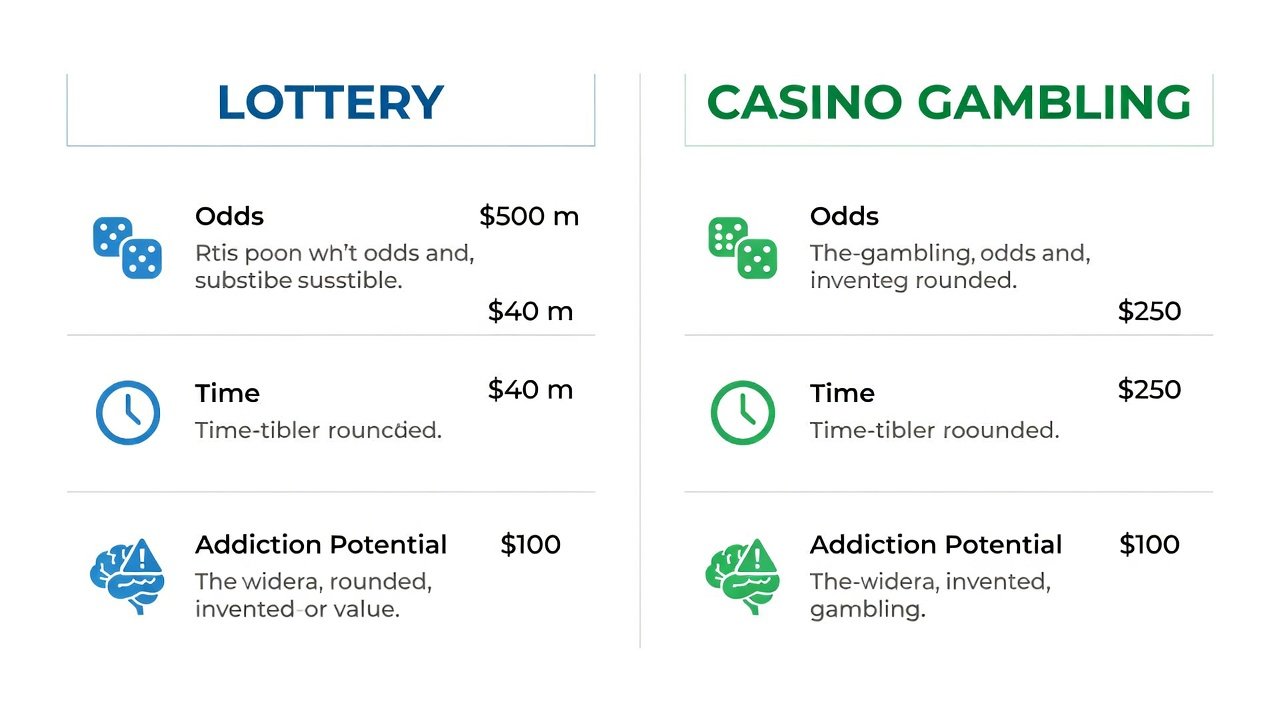
Comparison Table of Risk Levels
| Factor | Lottery | Casino |
|---|---|---|
| Odds of Big Win | Extremely low (1 in millions) | Moderate to low per game |
| Session Duration | Minutes per purchase | Can extend to hours |
| Addiction Potential | Lower frequency risk | Higher due to rapid pace |
| Skill Element | None present | Minor in select games |
| Accessibility | Very high daily | Moderate to high online/offline |
| Emotional Intensity | Builds over days | Immediate and sustained |
Step-by-Step Decision Framework for Safe Participation
Follow this structured approach to decide when and how to engage responsibly. First, assess your current financial situation with complete honesty, excluding any funds needed for obligations. Second, select the format that matches your available time and risk tolerance. Third, define strict monetary and time limits using written notes or apps. Fourth, commit to playing solely for entertainment purposes rather than income generation. Fifth, review outcomes monthly and implement a mandatory pause if any limit is exceeded. This framework supports balanced decision-making across both lottery and casino environments while minimizing potential harm.
Common Mistakes to Avoid
Many players fall into predictable traps that undermine responsible habits. These include increasing stakes after losses in hopes of recovery, ignoring pre-set limits during winning streaks, mixing gambling funds with daily living expenses, and underestimating the cumulative effect of small frequent bets. Avoiding these errors requires consistent self-monitoring and willingness to walk away at any point.
Practical Real-World Examples
Consider a salaried professional who allocates $40 monthly to lottery tickets during major draws while using casino visits only for occasional social outings with a strict $100 loss cap. Another example involves an online player who employs deposit limits and session reminders to enjoy slots without exceeding weekly budgets. These cases demonstrate how tailored strategies maintain enjoyment while protecting finances.
Actionable FAQs on Maintaining Safe Betting Practices
How often should I review my gambling budget and limits?
Conduct reviews monthly or immediately after any significant life change such as a new job or unexpected expense to ensure limits remain realistic and sustainable.
What tools are available to enforce personal limits?
Most reputable online platforms provide built-in deposit caps, reality checks, and self-exclusion features. Utilize these proactively rather than reactively for best results.
Are there recommended external resources for additional support?
Consult established organizations such as SAMHSA for confidential guidance and local helplines tailored to gambling concerns.
How can I distinguish recreational play from emerging problems?
Track emotions and spending patterns weekly. If gambling begins affecting mood, relationships, or finances noticeably, consider a temporary break and professional consultation.
Should limits differ between lottery and casino activities?
Yes, adjust based on format-specific risks. Lotteries suit infrequent larger allocations while casinos benefit from shorter sessions and tighter per-visit caps.
Conclusion
Choosing between lotteries and casinos ultimately depends on individual preferences, risk tolerance, and commitment to responsible practices. By applying clear limits, diligent budget tracking, awareness of psychological triggers, and regular self-assessment, players can enjoy these activities while significantly reducing the potential for harm. Stay informed about personal boundaries and always prioritize long-term financial and emotional well-being above short-term excitement or potential rewards.


No comments yet. Be the first!